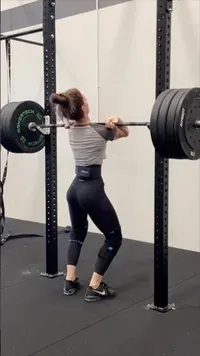
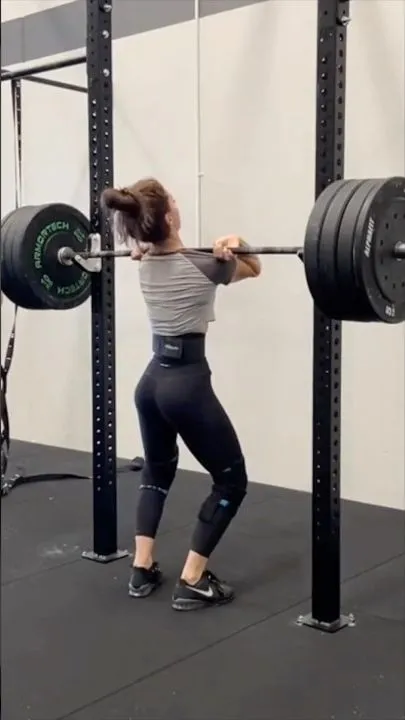
Her Front Squat Was PERFECT!❤️
Her Front Squat Was PERFECT!❤️
- Views
- 287.6K
- Likes
- 5.6K
- Comments
- 120
- Topics
Analysis
Verbal hook
A great looking front squat has a high elbow position, hands on the outside of the shoulders.
A great looking front squat has a high elbow position, hands on the outside of the shoulders. But if you can't do this without your elbows dropping, here's a tip. This patient of mine had that exact issue. In fact, just holding the bar created shoulder and wrist pain. Now, he could easily raise his arms overhead during my testing, showing his lats were flexible enough to achieve a high elbow position. But remember, the hands also need to be on the outside of the shoulder. This requires external rotation. >> This position, can you get your hands on the outside? >> They just don't want to move to the outside. >> Yeah. Now, come right here. >> Okay. So, from here, I can get your arm out this far. You just can't control it. Because what I want you to do now is hold right here. Okay? Don't let me push your hand back in. >> See how easy that that forces back down? >> Yep. So, you have the available range of motion to get out here, which is where you need to be for a front squat. >> I just can't. I don't own it. >> You just can't own it. So, what we're going to do is build stability in that externally rotated position. One drill I gave him was a banded external rotation, using his free hand to help him into as much rotation as possible. Pause for a moment to build ownership of that position, and then slowly return back to the start. When retesting after, he noticed his front rack was significantly easier to get into, showing he was now on the right track.
- 01The Form Standard
Show the ideal movement position and name the key body or technique requirements. This gives viewers a clear benchmark.
OriginalA great looking front squat has a high elbow position, hands on the outside of the shoulders.
- 02The Problem and Case
Invite viewers who cannot meet the standard to keep watching, then introduce a real person with the same issue and a concrete symptom.
OriginalBut if you can't do this without your elbows dropping, here's a tip. This patient of mine had that exact issue. In fact, just holding the bar created shoulder and wrist pain.
- 03Rule Out the Obvious Cause
Test the person's available range of motion. Show that they can reach the general position, which points away from a simple flexibility limitation.
OriginalNow, he could easily raise his arms overhead during my testing, showing his lats were flexible enough to achieve a high elbow position.
- 04Reveal the Missing Requirement
Add the second technical requirement and explain the physical quality it demands. This creates the diagnosis before the demonstration.
OriginalBut remember, the hands also need to be on the outside of the shoulder. This requires external rotation.
- 05Live Assessment
Use short back-and-forth dialogue to test the exact position. Demonstrate that the person can be moved into it but cannot actively hold or resist being moved out of it.
Original>> This position, can you get your hands on the outside? >> They just don't want to move to the outside. >> Yeah. Now, come right here. >> Okay. So, from here, I can get your arm out this far. You just can't control it. Because what I want you to do now is hold right here. Okay? Don't let me push your hand back in. >> See how easy that that forces back down? >> Yep.
- 06Name the Diagnosis
Clarify the difference between having the range of motion and being able to control or 'own' it. Then state the training goal in simple terms.
OriginalSo, you have the available range of motion to get out here, which is where you need to be for a front squat. >> I just can't. I don't own it. >> You just can't own it. So, what we're going to do is build stability in that externally rotated position.
- 07Prescribe the Drill
Give one targeted exercise that trains the missing quality. Include assistance into the end position, a pause to build control, and a slow return.
OriginalOne drill I gave him was a banded external rotation, using his free hand to help him into as much rotation as possible. Pause for a moment to build ownership of that position, and then slowly return back to the start.
- 08Retest and Payoff
Immediately retest the original movement and report a noticeable improvement. This closes the diagnosis loop and proves the drill addressed the real problem.
OriginalWhen retesting after, he noticed his front rack was significantly easier to get into, showing he was now on the right track.