
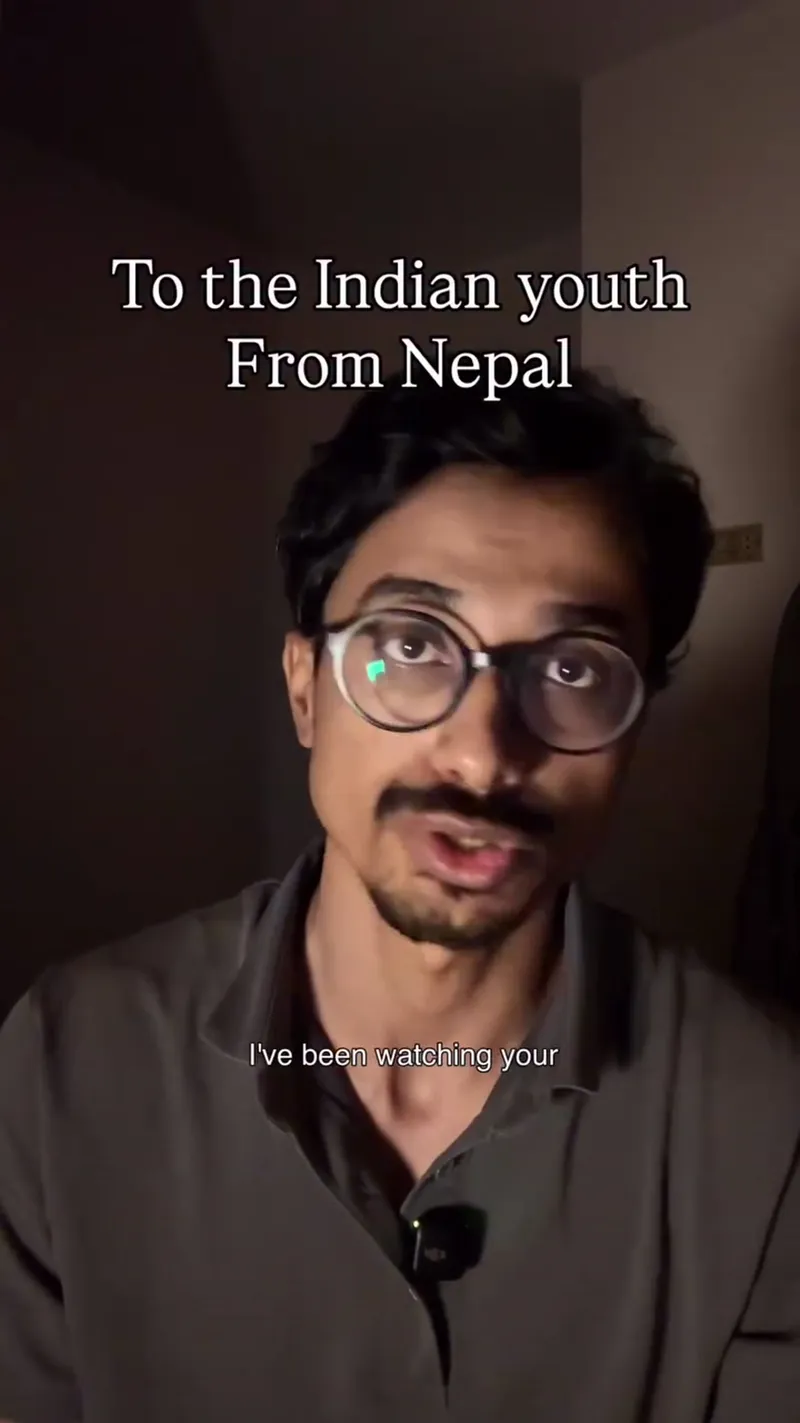
A creator from Nepal shares a heartfelt message of solidarity and five pieces of advice for young people protesting in India. He emphasizes emotional validation, staying focused on long-term goals, and building movements on a foundation of care rather than just anger.
A Supportive Message to Protesting Indian Youth from Nepal
A creator from Nepal shares a heartfelt message of solidarity and five pieces of advice for young people protesting in India. He emphasizes emotional validation, staying focused on long-term goals, and building movements on a foundation of care rather than just anger.
- Views
- 630K
- Likes
- 80.5K
- Comments
- 825
- Topics
Analysis
A creator from Nepal shares a heartfelt message of solidarity and five pieces of advice for young people protesting in India. He emphasizes emotional validation, staying focused on long-term goals, and building movements on a foundation of care rather than just anger.
Verbal hook
Hello, young people of India. I've been watching you protest your struggles all day today from right across the border here in Nepal. And as someone who has gone through severe protests about eight months ago, here are some things that I wanted to tell you.
Visual hook
Talking headHello, young people of India. I've been watching you protest your struggles all day today from right across the border here in Nepal. And as someone who has gone through severe protests about eight months ago, here are some things that I wanted to tell you. Number one, whatever you're feeling is valid. Do not let anyone tell you that your feelings are too much, that you're thinking too much, that you're overreacting. All of it, all of what you're saying makes sense and you don't have to justify it. Number two, don't get distracted. Always remember what your goal is. Speaking from personal experience, it's really easy to lose sight of what you're fighting for once the fight begins. But please hold on to it all the way through. Because that is something I couldn't manage to do until the end when I was protesting here. Number three, you're not alone in this. Not in your city, not in your generation, not even outside your country. There are people who are watching you from all across the world. And we care. Four, take care of each other first. Check on your friends. Rest when you need to. A movement is only as strong as the people inside it feel supported. Number five, however you choose to stand up, make sure that it comes from a place of care. I understand you're frustrated. I understand you must be angry. But please remember that whatever you started, it comes from a place of care. You care about all those students who lost their lives. You care about all those students who struggle day in, day out to make sure that they can become something in the country. Any movement, any protest built on this foundation of care lasts more much longer than frustration or anger. Now, whatever happens next, I hope it's good. And I hope you take care of yourselves while you get there.
- 01The Empathetic Hook
Address a specific group and establish your credibility by mentioning a similar experience you had in the past.
OriginalHello, young people of India. I've been watching you protest your struggles all day today from right across the border here in Nepal. And as someone who has gone through severe protests about eight months ago, here are some things that I wanted to tell you.
- 02Immediate Validation
Tell the viewer that their feelings are correct and they don't need to apologize for them.
OriginalNumber one, whatever you're feeling is valid. Do not let anyone tell you that your feelings are too much, that you're thinking too much, that you're overreacting. All of it, all of what you're saying makes sense and you don't have to justify it.
- 03The Warning of Personal Failure
Give advice based on a mistake you made when you were in their shoes.
OriginalNumber two, don't get distracted. Always remember what your goal is. Speaking from personal experience, it's really easy to lose sight of what you're fighting for once the fight begins. But please hold on to it all the way through. Because that is something I couldn't manage to do until the end when I was protesting here.
- 04The Solidarity Scope
Remind the viewer that people outside their immediate circle are supporting them.
OriginalNumber three, you're not alone in this. Not in your city, not in your generation, not even outside your country. There are people who are watching you from all across the world. And we care.
- 05The Sustainability Check
Advise them to prioritize their health or community to keep the momentum going.
OriginalFour, take care of each other first. Check on your friends. Rest when you need to. A movement is only as strong as the people inside it feel supported.
- 06The Value Reframe
Identify the negative emotion they feel and reframe it as a positive value (like care or love).
OriginalNumber five, however you choose to stand up, make sure that it comes from a place of care. I understand you're frustrated. I understand you must be angry. But please remember that whatever you started, it comes from a place of care. You care about all those students who lost their lives. You care about all those students who struggle day in, day out to make sure that they can become something in the country. Any movement, any protest built on this foundation of care lasts more much longer than frustration or anger.
- 07The Hopeful Outro
End with a wish for a good outcome and a final reminder of self-care.
OriginalNow, whatever happens next, I hope it's good. And I hope you take care of yourselves while you get there.