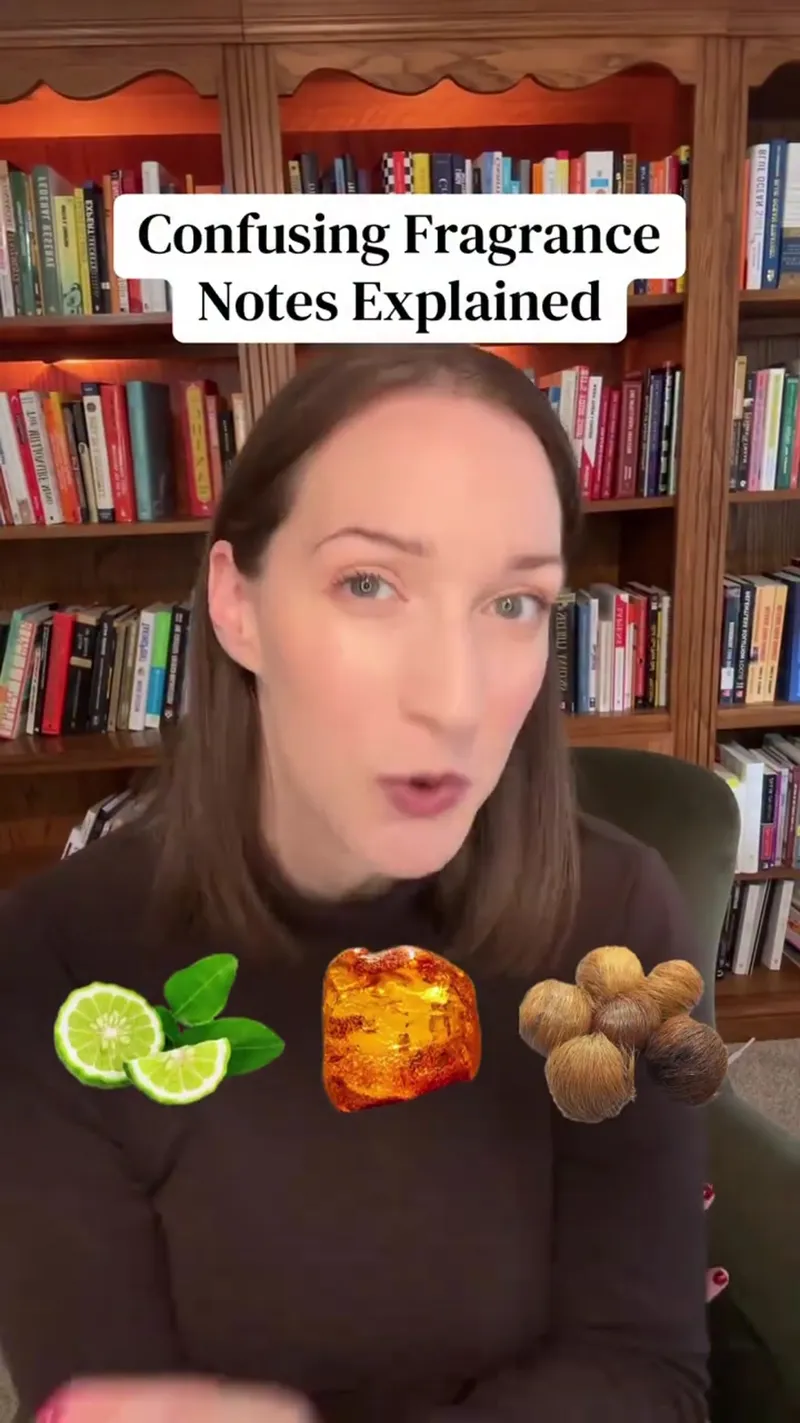
This video breaks down common but misunderstood perfume ingredients like musk, bergamot, and patchouli. The creator explains what these notes actually smell like and clarifies that amber is a 'fantasy accord' rather than a single natural ingredient.
Common Fragrance Notes Explained: Musk, Bergamot, and More
This video breaks down common but misunderstood perfume ingredients like musk, bergamot, and patchouli. The creator explains what these notes actually smell like and clarifies that amber is a 'fantasy accord' rather than a single natural ingredient.
- Views
- 678.7K
- Likes
- 42.7K
- Comments
- 321
- Topics
Analysis
Here's what every confusing fragrance note actually smells like so you can better understand and describe fragrance.
Here's what every confusing fragrance note actually smells like so you can better understand and describe fragrance. First, we got musk. And there's actually three main types of musk, and they all smell completely different. The first is white musk, which is soft, clean, and airy, like fresh laundry skin. Musk smells like an idealized version of skin. It is very warm and intimate. And then we have animalic musk. And this is a dirtier, sexier kind of musk that can smell a little bit like body heat or sweat. Next we got tonka bean, which is not just another type of vanilla. It's. It smells similar, but it's warmer, it's darker, and it has hints of almond, spices, and tobacco. So overall, it just makes a fragrance feel sweet, warm, and smooth. Number three is bergamot. Now, most people confuse bergamot with lemon, but bergamot is a smoother, softer, and more elegant citrus than lemon. It's not so harsh and acidic. It's a little bit sweet, a little bit bitter, and it has some interesting spicy and floral nuances to it. Number four is amber. Now, amber is not a real ingredient in fragrance, and it doesn't come from this amber. It is a fantasy accord designed to catch capture the vibe of amber, which is like, golden, deep, rich, warm, and sweet. So an amber accord will pretty much always have vanilla and resins, but it will sometimes have other ingredients thrown in there, like tonka bean, spices, or woods. Now, patchouli smells earthy, woody, herbal, and damp. It's kind of like a forest after the rain type of smell. It's used as a base note in a lot of fragrances because it lasts a long time, and it also helps balance out any sweet or heavy notes. But. But it is also a very polarizing ingredient in fragrance because some people think it's very comforting and nostalgic, and some people think it smells kind of dirty. And here is your class homework with examples.
- 01The Problem-Solving Hook
Identify a common point of confusion and promise a clear explanation.
- 02The Sub-Type Breakdown
Take a broad term and break it down into specific variations.
- 03The False Equivalent
Compare a topic to a common alternative and highlight the subtle differences.
- 04Correcting a Common Misconception
Address a common error people make when identifying this item.
- 05The 'Industry Secret' Reveal
Explain the technical reality behind a common name or marketing term.
- 06Functional Utility and Polarization
Describe what the item does in the mix and why people have strong opinions on it.
- 07The Call to Action (Engagement)
Give the viewer a task or next step to reinforce what they learned.