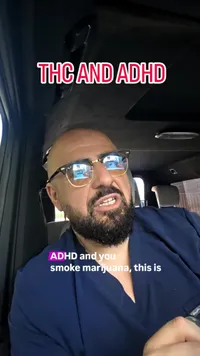
A neuroscience-based explanation of why marijuana use can feel like medicine for ADHD while actually worsening the condition over time. The video details how THC affects dopamine levels and cognitive functions like memory and impulse control.
The Truth About ADHD and Marijuana
A neuroscience-based explanation of why marijuana use can feel like medicine for ADHD while actually worsening the condition over time. The video details how THC affects dopamine levels and cognitive functions like memory and impulse control.
- Views
- 849.2K
- Likes
- 30.3K
- Comments
- 2.2K
- Topics
Analysis
If you've ever thought that you have ADHD and you smoke marijuana, this is what's actually happening inside your brain.
If you've ever thought that you have ADHD and you smoke marijuana, this is what's actually happening inside your brain. Like this. Share this and follow me for more on the neuroscience of adhd. And stay to the end, because most people with ADHD have never been told any of this, and it might be the most important thing you hear today. Your brain is already dopamine deficient. The reward system that drives motivation, focus, and the ability to feel satisfaction is chronically underactive. And then you smoke, and THC floods your brain with an artificial surge of dopamine that feels like everything your brain has been searching for. Calm, focus, quiet. For the first time. It's what feels like forever. The noise stops. The feeling is a trap. Because your brain is extraordinary, remembering where it found that relief. And it will want to bring you back again and again. Not because you're weak, but because your dopamine system is doing exactly what it was designed to do. But here is what the research shows. Regular marijuana use in people with ADHD does not treat the condition. It actually makes it worse. THC disrupts the prefrontal cortex, the part of the brain already most affected by adhd, the part responsible for planning, impulse control, working memory, and emotional regulation, the very things that you are already struggling with. Regular use accelerates cognitive decline in these areas, and it increases anxiety and emotional dysregulation over time. And because your dopamine system adapts to that artificial surge, your baseline drops even lower, meaning you need more to feel normal. And without it, you feel worse than before. The cruel irony in that marijuana and ADHD is that it feels like medicine. It feels like the one thing that finally helps while quietly making everything harder. If you have ADHD or you think you do, and you're using marijuana to cope, know that you're not weak. You're not broken. You are a brain that was never given the right tools. And those right tools do exist. Proper diagnosis, the right medication and therapy that actually addresses how your brain works. That is what changes things. Not something that borrows tomorrow's dopamine to get through today. So save this and share this with someone who needed to understand why this is happening to them. And type I see you in the comments and follow me for more on the neuroscience of ADHD and the conversations that no one else is having.
- 01The Specific Audience Hook
Identify a specific group of people and a specific habit they have, then promise a behind-the-scenes explanation.
- 02Early Engagement & High-Stakes Tease
Request engagement early and establish why this video is essential to finish.
- 03The Internal Deficit
Explain the baseline problem or deficiency the viewer is starting with.
- 04The Artificial Fix
Explain how the habit creates a temporary, misleading sense of relief.
- 05The Biological Reframe
Reframe the habit as a natural biological response rather than a personal failure.
- 06The Research-Backed Pivot
Introduce the negative long-term reality based on evidence.
- 07The Mechanism of Decline
Explain the specific physiological or technical way the habit backfires.
- 08The Depleting Baseline
Explain why the viewer now needs more of the habit to stay at zero.
- 09The Cruel Irony
Summarize the paradox of the situation.
- 10Validation and The Real Path
Tell the viewer they aren't the problem and point them to the actual solution.
- 11The Community Call to Action
Final engagement request with a specific community-building prompt.