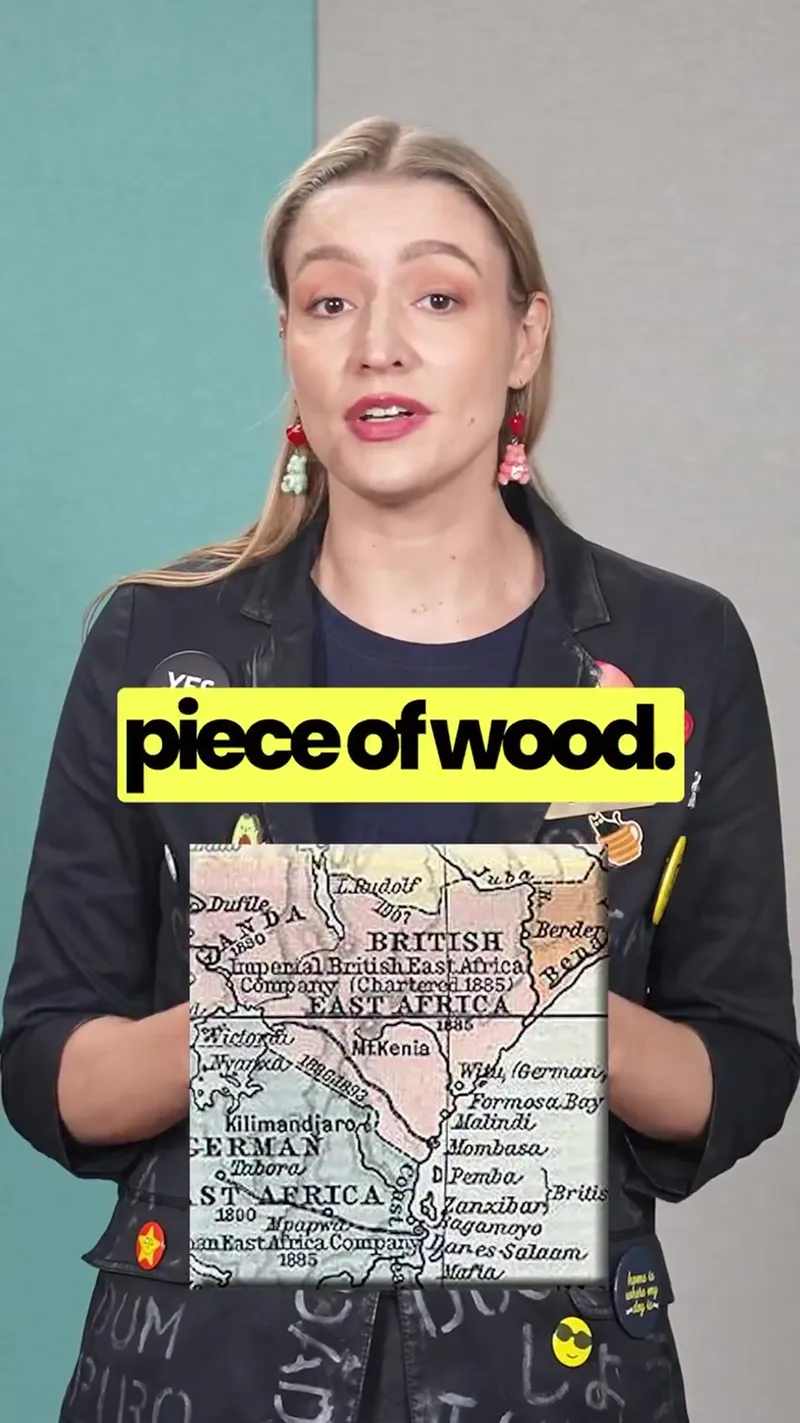
This video explains how colonial schools in Kenya used 'shame boards' to punish children for speaking their native languages. It follows the journey of writer Ngũgĩ wa Thiong'o, who eventually rejected English to write in his mother tongue as an act of decolonization.
How Colonial Schools Controlled Minds Through Language
This video explains how colonial schools in Kenya used 'shame boards' to punish children for speaking their native languages. It follows the journey of writer Ngũgĩ wa Thiong'o, who eventually rejected English to write in his mother tongue as an act of decolonization.
- Views
- 489.2K
- Likes
- 40.2K
- Comments
- 1.4K
- Topics
Analysis
In colonial Kenya, there was a piece of wood. If a teacher caught you speaking gikuyu or loao or kikamba or any African language, they hung it around your neck.
In colonial Kenya, there was a piece of wood. If a teacher caught you speaking gikuyu or loao or kikamba or any African language, they hung it around your neck, words carved into it. I am stupid. I was caught speaking my mother tongue. You wore it until you caught another child doing the same. At the end of the day, whoever was still wearing it got caned. But the British didn't just ban African languages. They built a system where African children policed each other, where shame about your own language passed from student to student like a disease. And the logic was deliberate. Control the language of people thinking, and you start to control what they can think. English didn't just replace gikigu in the classroom. It replaced it in the mind. Ways of describing land, family, justice, belonging, concept alive in one language had no clean translation in the other. You didn't just lose words, you lost the frameworks the word carried. A boy named James Gugguy grew up inside that system. He learned English so well, he became one of the most celebrated novelists in Africa. Then, in 1977, giggly, he stopped. He announced he would never write fiction in English again. His next novel was written entirely in geiki, with the first draft scratched out in secret on prison toilet paper. While he was jailed without trial by the Kenyan government, he changed his name, too. James was the name the colonial school had given him. He became Gukui wa Tiong, his father's name and his father's language. His argument was simple. You cannot fully decolonize a country while its literature is written in the language of the colonizer. The the liberation of a people has to include the liberation of the tongue. The wood around those children's necks was real. An entire generation grew up believing their mother tongue was something to be ashamed of. Not because it was inferior, but because someone with power decided shame was a useful tool. That's what language really is. Not just communication, but the boundary of what a people are permitted to be. Kogui spent his life insisting every tongue is a world worth holding onto if you feel the same, that's the whole reason he learn exists.
- 01The Symbolic Object
Introduce a specific, physical object from a historical or specific context that represents a problem or rule.
- 02The Punishment Rule
Explain the rule associated with the object and the social cost of breaking it.
- 03The Systemic Analysis
Describe the deeper psychological intent behind the rule.
- 04The Loss of Framework
Explain how the replacement of one thing with another causes a loss of deeper meaning or structure.
- 05The Exception Protagonist
Introduce a character who excelled within the oppressive system.
- 06The Radical Pivot
Describe the moment the character rejected the system and the extreme circumstances of their defiance.
- 07The Reclaiming of Identity
Show the character discarding the system-given identity for their original/authentic one.
- 08The Core Argument
State the character's main thesis or the 'moral' of the story.
- 09The Reality Check
Remind the audience that the struggle was real and driven by power, not quality.
- 10The Universal Re-Definition
Reframing the topic and connecting it to the creator's mission or brand.