A lawyer evaluates several real-world scenarios to determine if they are worth pursuing in court. He uses a 0-10 scale to explain how factors like injury severity, emotional distress, and financial value dictate the strength of a legal claim.
Is It Worth Suing? Rating 8 Legal Scenarios from 0 to 10
A lawyer evaluates several real-world scenarios to determine if they are worth pursuing in court. He uses a 0-10 scale to explain how factors like injury severity, emotional distress, and financial value dictate the strength of a legal claim.
- Views
- 290K
- Likes
- 14.3K
- Comments
- 66
- Topics
Analysis
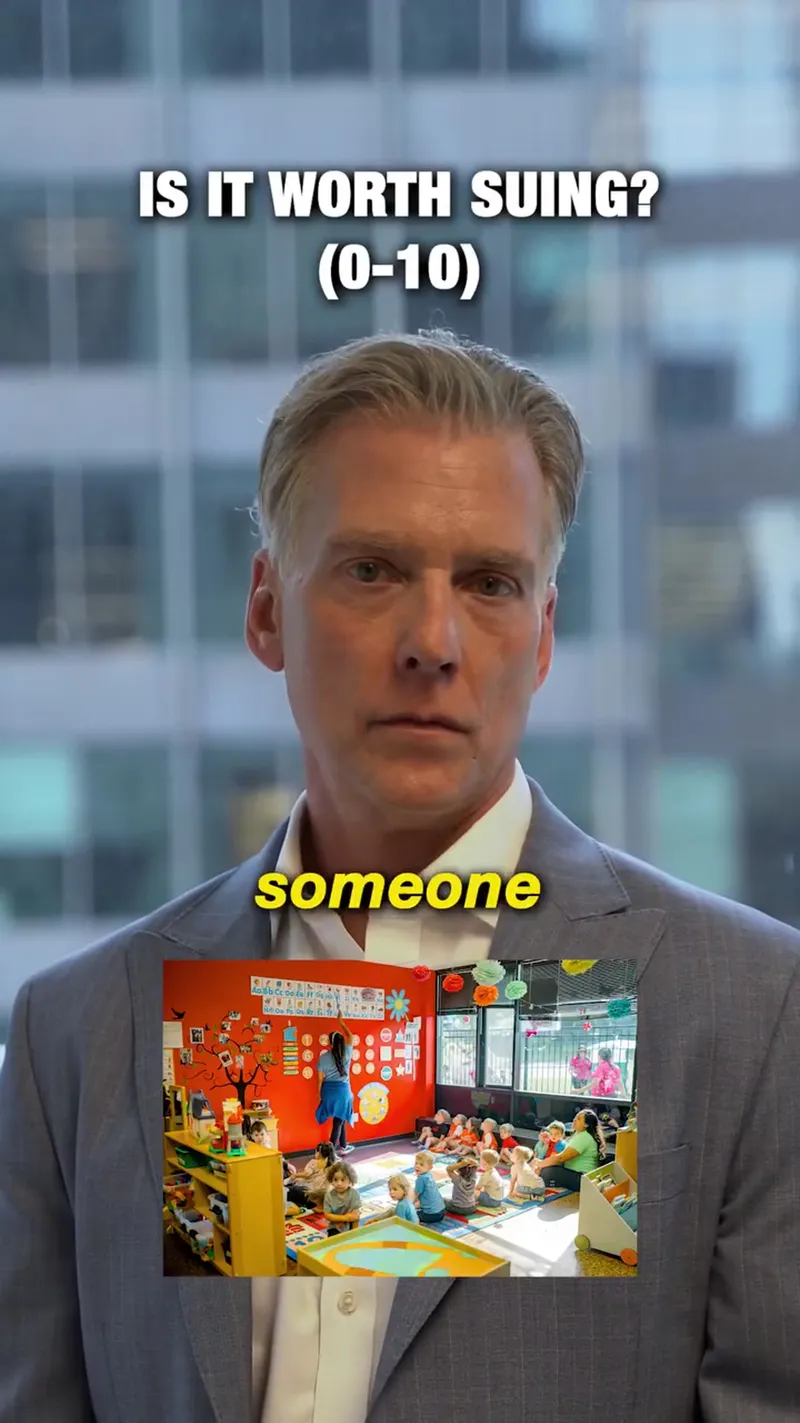
A daycare releases your child to someone not on the pickup list. That is a 10.
A daycare releases your child to someone not on the pickup list. That is a 10. An immense amount of emotional distress. And again, assuming that person has deep enough pockets to go after, you certainly would have a lawsuit be very viable. A restaurant serves food that's clearly undercooked one because there's. There's no damage, there's no injury. What you're entitled to is your money back. A wedding guest knocks over your expensive cake before the photos. Cakes nowadays are extremely expensive, so you have a right to sue for sure. Is it worth suing? Yeah, probably. Maybe put it at a 5. A friend borrows your designer bag and returns it damaged about a 4. A neighbor sets off fireworks that start a fire on your property. That would be at a 10, but again, only if there was severe damage. I mean, if it's just a minor fire on your lawn, then it's not gonna be worth suing for. A child at school breaks your child's glasses during recess. You wouldn't have any luck suing the child. So I put that at a 1. A hairdresser dyes your hair the wrong color right before an event. No law firm's gonna take the case because the value's just not there. So I would put it at about a 2o. A personal trainer pushes you past your limits and you get hurt. In that case, it's at about a 1. Because as much as a personal trainer, you're relying on his advice and such, it's still your decision whether you're going to push yourself or not. Ultimately, it comes down to you. A theme park ride stops suddenly and causes injury. That's going to be a 10 again, depending on the severity of the injury. But if you have injury that's sufficient enough that requires surgery or missing work, then you have no problem at all walking that into court. Follow for more legal insights.
- 01The High-Stakes Hook
Start with an emotionally charged, high-stakes scenario and give it a maximum score.
- 02The Low-Damage Reality Check
Present a common annoyance that feels like a big deal but has low technical value.
- 03The Mid-Tier Financial Loss
Describe a scenario involving expensive property and give it a mid-range score.
- 04The Minor Social Conflict
A quick, relatable social mishap with a low-mid score.
- 05The Conditional High-Stakes
A dangerous scenario that only gets a high score if specific damage occurred.
- 06The Uncontrollable Party
A scenario where the blame is hard to pin down, resulting in a very low score.
- 07The Professional Rejection
A service failure that professionals won't touch because of low value.
- 08The Personal Responsibility Twist
A scenario where someone gets hurt but it's ultimately their own fault.
- 09The Corporate Negligence Payoff
A major corporate/public failure that is a guaranteed win if the injury is real.
- 10The Authority Outro
A simple call to action following the niche expert advice.