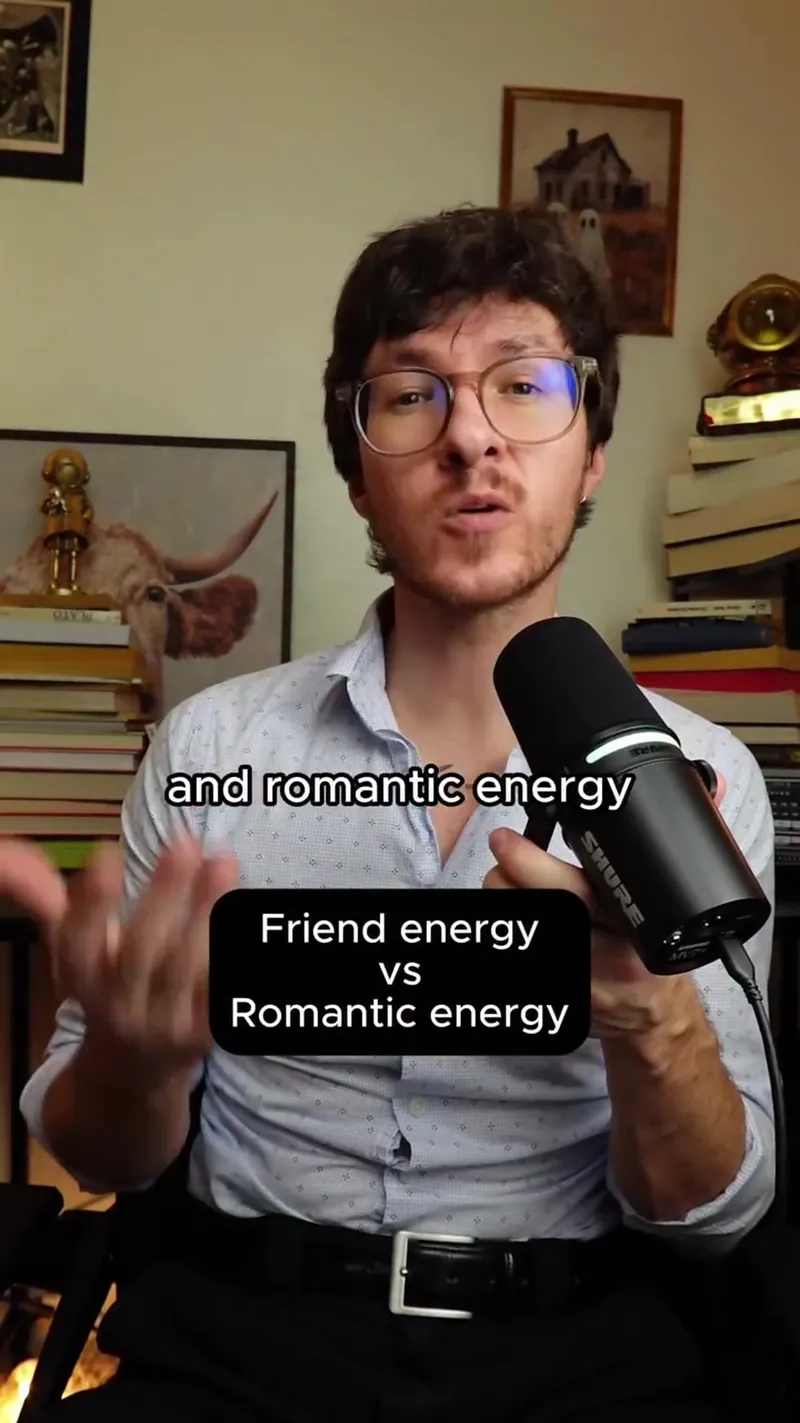
This video explains how to distinguish between platonic and romantic feelings by looking at how you feel after an interaction. It argues that friendship feels like a 'closed loop' of completion, while romantic energy leaves a lingering sense of anticipation and ongoing thought.
The Real Difference Between Friend Energy and Romantic Energy
This video explains how to distinguish between platonic and romantic feelings by looking at how you feel after an interaction. It argues that friendship feels like a 'closed loop' of completion, while romantic energy leaves a lingering sense of anticipation and ongoing thought.
- Views
- 1.1M
- Likes
- 32.1K
- Comments
- 554
- Topics
Analysis
There's a difference between friend energy and romantic energy. And the easiest way to tell them apart isn't how the interaction feels in the moment, it's what the interaction leaves behind.
There's a difference between friend energy and romantic energy. And the easiest way to tell them apart isn't how the interaction feels in the moment, it's what the interaction leaves behind. Friendship energy creates this feeling of completion. You talk, you catch up, and when it ends, you feel finished. For example, you can hang out with a friend and talk with them for two hours and you don't think about them until the next time you see them. It doesn't feel unresolved. Romantic energy creates anticipation. And that doesn't mean intensity or anxiety. It's just a sense that something isn't fully closed yet. Like you're still slightly in that interaction even after it ends. For example, you talk to someone and then later that night you're still thinking about the last thing they said, or wondering when you'll see them again, or replaying small moments that didn't feel important at the time. And so that's the difference. Friend energy is a closed loop. Romantic energy continues after the moment ends. If you like learning about love, follow for more.
- 01The Comparison Hook
State that two commonly confused things are actually different.
- 02The Strategic Reframe
Tell the audience the obvious way to judge them is wrong, and offer a new lens.
- 03Define Concept A
Describe the core feeling or result of the first concept.
- 04Relatable Example for A
Provide a specific, mundane scenario showing Concept A in action.
- 05Define Concept B
Describe the core feeling of the second concept and debunk a misconception about it.
- 06The Deep Nuance
Explain the subtle internal state Concept B creates.
- 07Relatable Example for B
Provide a specific scenario of what happens in the viewer's head after the event.
- 08The Punchy Summary
Summarize the difference in one short, metaphorical sentence pair.
- 09Niche CTA
Call to action based on the specific topic discussed.