Big breath. Brave, courageous, relational questions, my friends. Feedback is often an invitation for shame, guilt, embarrassment, defensiveness, etc to enter in. To receive the answer to any of these questions might be really uncomfortable, deeply confronting. And yet, that’s not a reason to avoid inquiring in a safe relationship. You must have compassion and grace for yourself. It’s a tender, tender place to ask someone you love to give you feedback. Tell me how you really feel. Tell me what it’s been like to be with me. Tell me what I’ve been missing…in you…and in me. Tell me so I can face it and confront it. Not so I can shame myself or go into a space of self-protection. I know this is not easy. And even if you’re not quite ready to ask the questions out loud, notice what the sensations in your body are communicating to you. What are they revealing? Notice your reactivity to these questions and what information it offers to you? What are you protecting yourself from by not asking? Be gentle with yourself here, while encouraging yourself to look. #mindfulmft #mindfulrelationships
Big breath.
This educational carousel presents three questions couples can ask to deepen their relationship. It moves from a provocative hook, to the emotional risks of receiving feedback, and then to practical questions about overlooked needs, difficult-to-give support, and acceptance.
- Likes
- 48K
- Comments
- 151
- Slides
- 3
- Topics
Analysis
This educational carousel presents three questions couples can ask to deepen their relationship. It moves from a provocative hook, to the emotional risks of receiving feedback, and then to practical questions about overlooked needs, difficult-to-give support, and acceptance.
Sign in to see the full analysis.
Sign inSlide 1
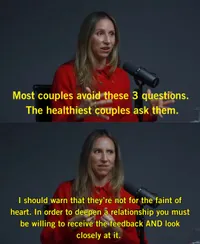
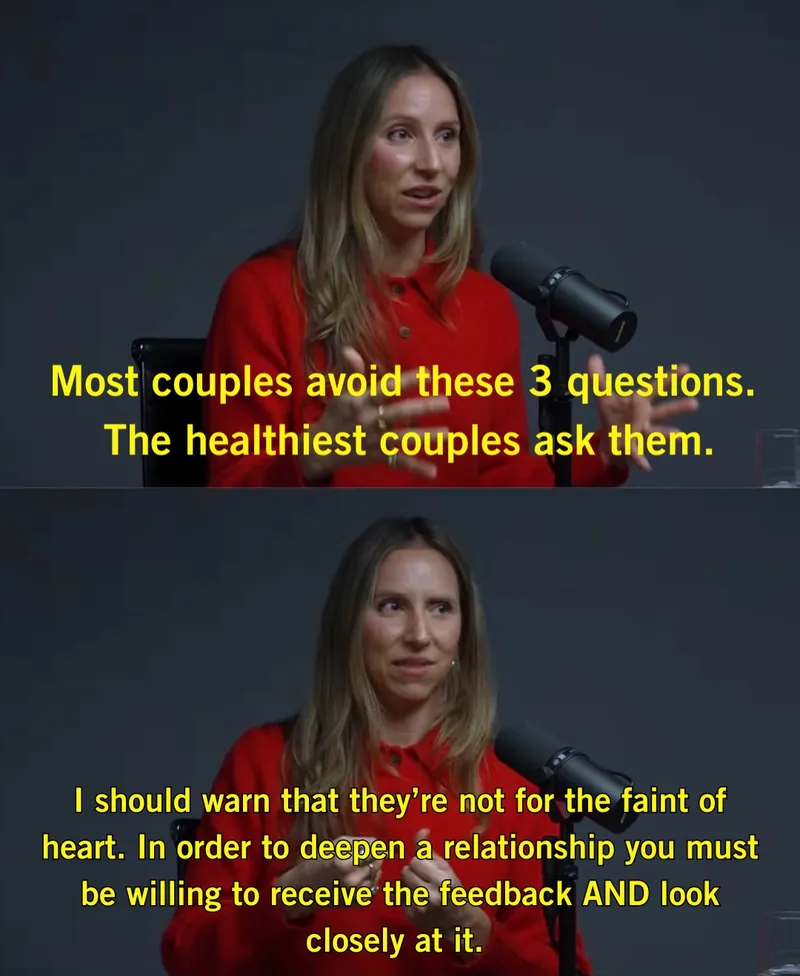
Most couples avoid these 3 questions. The healthiest couples ask them. I should warn that they’re not for the faint of heart. In order to deepen a relationship you must be willing to receive the feedback AND look closely at it.
The large yellow contrast is easy to read while scrolling and creates an in-group challenge: “Am I avoiding these?” The warning adds tension and makes the promised questions feel powerful. Viewers swipe to discover the three hidden questions and learn whether they can handle them.
The slide establishes that three important questions separate ordinary couples from healthier ones, but hides the questions themselves. The warning raises emotional stakes: viewers must face uncomfortable feedback to improve something they value, forcing them to swipe for the list.
The bold yellow headline: “Most couples avoid these 3 questions. The healthiest couples ask them.”
Bright yellow text on a dark blue-gray background creates strong contrast and urgency. The red shirt adds energy and emotional heat, while the dark setting feels serious and intimate.
Speaker in a red shirt creates a strong human focal point. Podcast microphone signals an expert conversation. Lower text warns that the questions require emotional courage. Two stacked frames create a sense of progression.
The core driver is a curiosity gap paired with social comparison: viewers are told that most couples avoid these questions but healthy couples ask them. They keep swiping to discover the questions and assess whether they could handle the answers in their own relationship.
Slide 1
Contrast ClaimMost couples avoid these 3 questions. The healthiest couples ask them. I should warn that they’re not for the faint of heart. In order to deepen a relationship you must be willing to receive the feedback AND look closely at it.
Slide 2
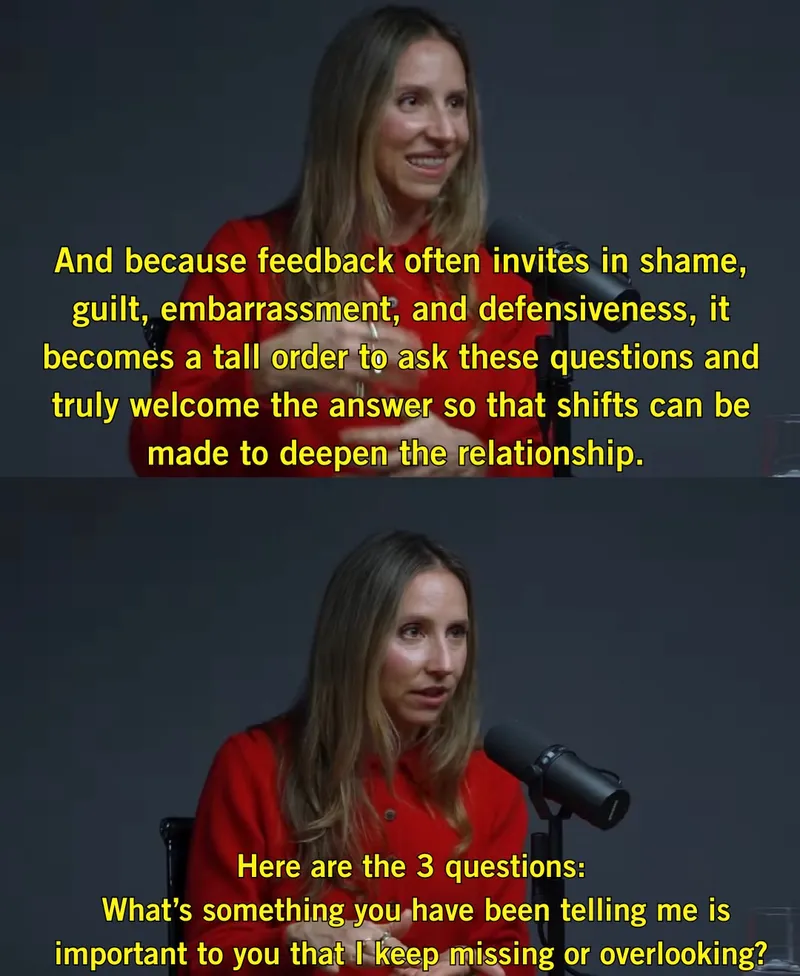
Barrier RevealAnd because feedback often invites in shame, guilt, embarrassment, and defensiveness, it becomes a tall order to ask these questions and truly welcome the answer so that shifts can be made to deepen the relationship. Here are the 3 questions: What’s something you have been telling me is important to you that I keep missing or overlooking?
- 01The Contrast Hook
Challenge a common behavior by contrasting what most people do with what a more successful or healthy group does. Promise a numbered set of difficult but useful questions, then warn that honest answers require uncomfortable action.
- 02The Emotional Barrier
Explain why the promised questions are difficult to ask or answer. Name the uncomfortable emotions or consequences, then begin the payoff by revealing the first question while keeping the rest open.
- 03The Complete Prompt Reveal
Finish the promised list with the remaining questions. Focus on the core problems the audience needs to examine, such as an unmet need and a gap between acceptance and reality. End with usable prompts rather than extra explanation.
Slide 1
Most couples avoid these 3 questions. The healthiest couples ask them. I should warn that they’re not for the faint of heart. In order to deepen a relationship you must be willing to receive the feedback AND look closely at it.
The large yellow contrast is easy to read while scrolling and creates an in-group challenge: “Am I avoiding these?” The warning adds tension and makes the promised questions feel powerful. Viewers swipe to discover the three hidden questions and learn whether they can handle them.
The slide establishes that three important questions separate ordinary couples from healthier ones, but hides the questions themselves. The warning raises emotional stakes: viewers must face uncomfortable feedback to improve something they value, forcing them to swipe for the list.
The bold yellow headline: “Most couples avoid these 3 questions. The healthiest couples ask them.”
Bright yellow text on a dark blue-gray background creates strong contrast and urgency. The red shirt adds energy and emotional heat, while the dark setting feels serious and intimate.
Speaker in a red shirt creates a strong human focal point. Podcast microphone signals an expert conversation. Lower text warns that the questions require emotional courage. Two stacked frames create a sense of progression.
Slide 2
And because feedback often invites in shame, guilt, embarrassment, and defensiveness, it becomes a tall order to ask these questions and truly welcome the answer so that shifts can be made to deepen the relationship. Here are the 3 questions: What’s something you have been telling me is important to you that I keep missing or overlooking?
This slide reinforces the first slide’s promise by showing that the questions are not simple tips; they require emotional openness. It also starts delivering value with the first question, which builds trust while the two unrevealed questions maintain curiosity.
The slide explains why the questions are hard, but only reveals the first question while the remaining items stay hidden. The emotional risks create stakes, and the partial list creates an open loop that encourages viewers to swipe for the next questions.
The large yellow statement: “And because feedback often invites in shame, guilt, embarrassment, and defensiveness…”
Yellow text remains highly visible against the dark blue-gray background. The red clothing adds warmth, while the muted background keeps attention on the emotionally charged words and question.
The speaker’s smiling but engaged expression softens the difficult subject. The microphone reinforces an expert or interview setting. The lower panel begins revealing the first question. Repeated dark background and yellow type connect it to slide 1.
Slide 3 · Final Questions Reveal
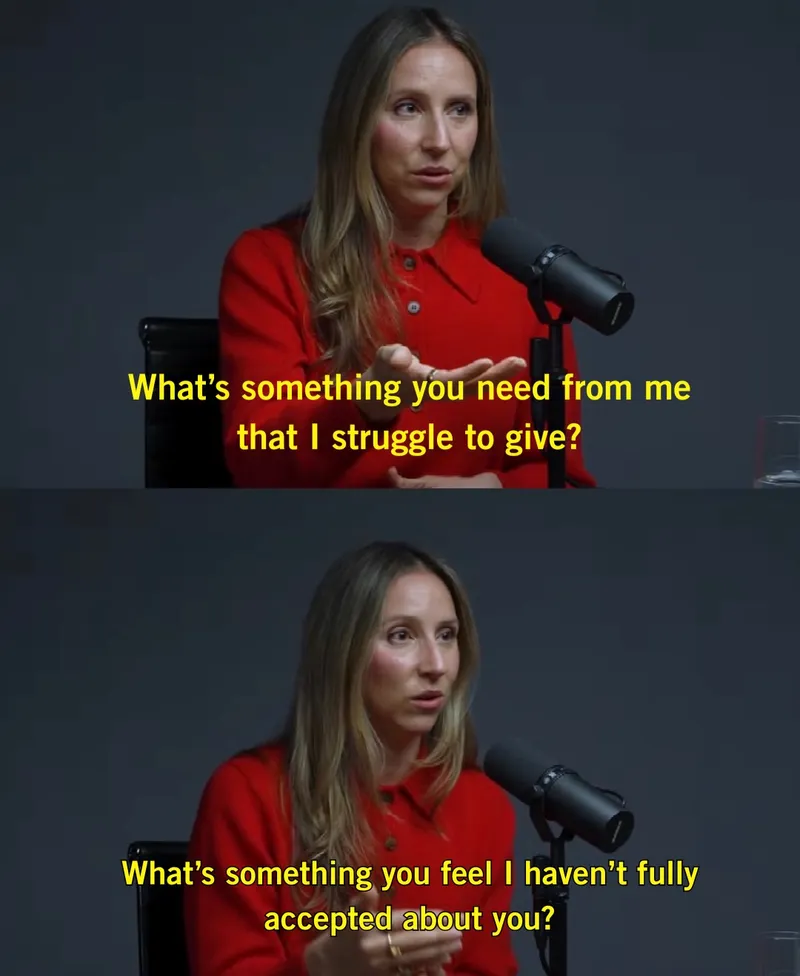
This slide reveals the remaining questions and completes the promised set of difficult feedback prompts.
What’s something you need from me that I struggle to give? What’s something you feel I haven’t fully accepted about you?
It leaves the viewer with self-reflection prompts about unmet needs and feeling accepted, but does not create a separate open loop.
Yes. It fulfills the hook’s promise to reveal three questions for healthier couples. Along with the first question on slide 2, it provides the remaining two.
A woman in a red top speaks into a podcast microphone in two stacked studio frames. Bold yellow captions show two emotionally difficult feedback questions.