 Docker@docker
Today we're introducing Cloud Sandboxes: same microVM isolation as Docker Sandboxes on your laptop, same CLI, always-on Docker-managed compute. Close your laptop. Keep the agent running. Move between local and cloud with one command. $250 credit for new accounts: t.co/VbLQI48fHX
- Views
- 105,150
- Likes
- 701
- Replies
- 39
- Reposts
- 67
- Quotes
- 28
- Bookmarks
- 454
Today we're introducing Cloud Sandboxes: same microVM isolation as Docker Sandboxes on your laptop, same CLI,…
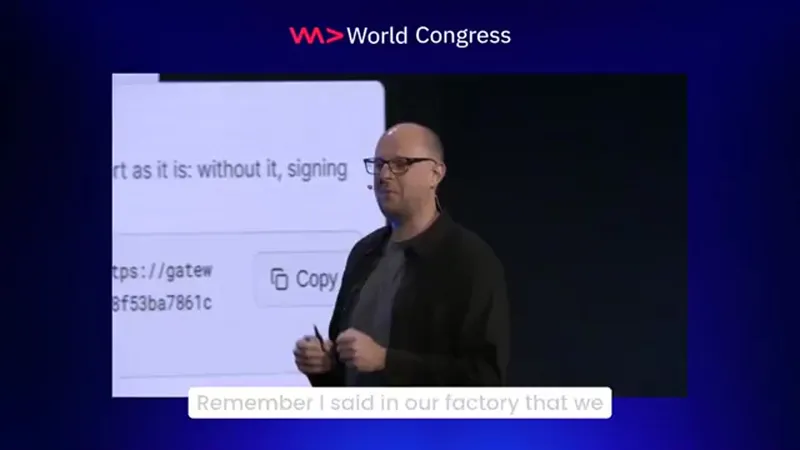
A speaker announces Docker Cloud Sandboxes, describing fast-starting cloud compute, per-second billing, and built-in tools. He explains moving work between a laptop and the cloud, then promotes $250 in signup credits.
- Views
- 105.2K
- Likes
- 701
- Replies
- 39
- Reposts
- 67
- Quotes
- 28
- Bookmarks
- 454
- Docker cloud sandboxesCloud computeMicroVM isolationDeveloper tools
Analysis
A speaker announces Docker Cloud Sandboxes, describing fast-starting cloud compute, per-second billing, and built-in tools. He explains moving work between a laptop and the cloud, then promotes $250 in signup credits.
- Talking headLectureProduct showcase
- The presenter speaks alongside slides showing the sandbox cloud interface and a $250 credit offer, illustrating the product features and promotion.
“Today we're introducing Cloud Sandboxes: same microVM isolation as Docker Sandboxes on your laptop, same CLI, always-on Docker-managed compute. Close your laptop. Keep the agent running. Move between local and cloud with one command. $250 credit for new accounts: https://t.co/VbLQI48fHX”
- Text
“Remember I said in our factory that we needed capacity and reproducibility?”
- 01Recall the need and reveal the solution
Connects the announcement to an established problem, then gives the audience the central news.
Revisits a previously stated need, pivots into an enthusiastic announcement, and introduces the product as the answer.
“Remember I said in our factory that we needed capacity and reproducibility? Well, I'm incredibly excited to announce that as of today, Docker has that machinery available.”
- 02Name the offering and summarize capabilities
Supplies concrete information supporting the announcement and helps viewers assess what the offering provides.
Names the new offering, characterizes its flexibility and pricing, then lists speed, billing, and built-in features.
“We're announcing today Docker Cloud Sandboxes, which is a simple, flexible set of compute shapes with simple, low, low pricing. We have cloud sandboxes that boot in hundreds of milliseconds. They're billed by the second, and they have secrets, policy networks, agent config, cloud, MCP gateways, all built in.”
- 03Establish continuity and explain the workflow
Resolves whether adopting the new offering means losing familiar tools or flexibility, and shows how the workflow can scale without a capacity constraint.
Emphasizes that the offering retains familiar elements from an existing product, then explains movement between local and remote use and back.
“And as you just saw importantly, it's the same look and feel, the same dx, the same kits, the same trust model as the SBX cli. What's important about that, if you didn't quite catch it, is that you can start locally on your laptop for free. You can move it to the cloud, you can scale it out again, you're not gated on capacity, and you can bring it back to your laptop whenever you want.”
- 04Add an incentive and close with a low barrier
Turns the announcement into a concrete invitation to try the offering; the promised later presentation of the code gives a specific reason to stay for that detail.
Expresses enthusiasm, offers a sign-up credit, mentions an additional in-person perk, and ends by encouraging the audience to get started.
“We think this is awesome. We think you should be excited. But if you're not excited just yet. Well, actually, we're giving away $250 in free credits when you sign up with that QR code, which I'll bring up at the end of the talk. Don't worry. But also, if you stop by the booth, look at that. And some limited edition free swag. But that is a lot of compute to get started with. There's nothing holding you back.”