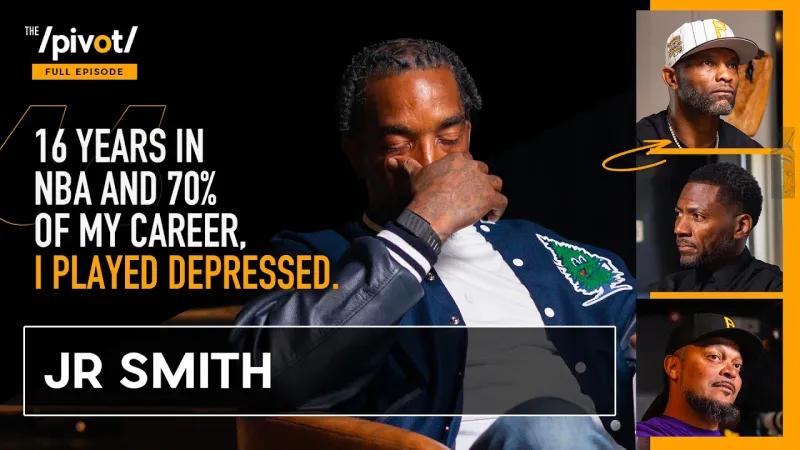
JR Smith reveals truth about NBA Finals play, Knicks, depression and LeBron's lifestyle| The Pivot
The Pivot Podcast@thepivotpodcastJR Smith reveals truth about NBA Finals play, Knicks, depression and LeBron's lifestyle| The Pivot
JR Smith speaks with The Pivot hosts about his path from a multi-sport high school athlete to a 16-year NBA career, including playing alongside LeBron James and the NBA Finals moment that drew public scrutiny. The episode description says he also discusses depression, personal hardships, fatherhood, and finding purpose beyond basketball.

- Views
- 680.1K
- Likes
- 11.3K
- Comments
- 962
- JR Smith's NBA careerNBA Finals decisionDepression and mental healthLife beyond basketball
Analysis
JR Smith speaks with The Pivot hosts about his path from a multi-sport high school athlete to a 16-year NBA career, including playing alongside LeBron James and the NBA Finals moment that drew public scrutiny. The episode description says he also discusses depression, personal hardships, fatherhood, and finding purpose beyond basketball.
- InterviewPodcast episode
- Title
- JR Smith reveals truth about NBA Finals play, Knicks, depression and LeBron's lifestyle| The Pivot
“I'm thinking we going to call time out. >> 107-107 >> It looked like they was trying to deny Bron, so I'm dribbling it out to get the ball to Bron. Like, bro, if I shoot this [ __ ] they going to be mad as You shoot this [ __ ] they going to be like, well, we going to live and die with that. I'm literally looking at him like >> [laughter] >> I'm trying to get you the ball. >> Like, bro, this is your This is your job. He was like, that's why you get the big bucks. They don't pay me enough for this [ __ ] [singing] >> Welcome to The Pivot, J.R. Smith, man, two-time NBA champion, once called a hobbyist, actually. That's what Kevin Love called you. A great hobbyist. This is Fred Taylor, Channing >> Crowder. I'm Ryan Clark, Pivot Fam. Thank y'all for pivoting with us. I want to ask you about that, though. There are people in the world, Odell Beckham Jr., but like he could do everything. He could hoop, he could play soccer, he could play baseball. You're the same, man. You played football, baseball, ping-pong, you could golf, all of these different things. Was it hard to sort of settle down into doing one thing because you were so good at so many? >> Yeah, like for me it was I was I said it's crazy cuz I still say it, but like I was a football player. I consider myself a football player. Football was like the one of the sports It was It was actually at one point the only sport I had a scholarship in. And once I my dad and my high school coach kind of tricked me into transferring into a prep school cuz I didn't have the grades and I didn't really understand where I was at and not being able to go to college even though I had all these offers. When they tricked me and sent me to this prep school, they didn't have a football team. So, it was pretty much it was all basketball and they kind of like threw all my eggs in one basket. And then once I reclassified to get to really to get the grades, I went from I was in bronze class and I would think I was like 74th or something like that in the country. And once I reclassified and did my junior year over again, I went literally in 48 hours I went from 76 to number one player in the country. >> Oh, wow. >> So, all the school like literally overnight just start offering me for basketball. So, and that's kind of kind of how that went. >> Pat Riley says it all the time. Make the main thing the main thing, but you didn't have a main thing. But then you went and played 16 at the highest level. Do you think if you if somebody if you did basketball, it would have been you could have been better because you balled out, but could you have been better if you were locked in? >> If I had locked in the basketball earlier? >> Yeah, from nine, from eight.”
- 01Cold-open anecdote
The short scene opens with a concrete interpersonal exchange and establishes the guest's perspective on a consequential moment before the show is formally introduced.
A speaker recounts a tense, specific play: they pass to a teammate, explain why they hesitate to shoot, and recall telling the teammate it is their job.
“I'm thinking we going to call time out. >> 107-107 >> It looked like they was trying to deny Bron, so I'm dribbling it out to get the ball to Bron. Like, bro, if I shoot this [ __ ] they going to be mad as You shoot this [ __ ] they going to be like, well, we going to live and die with that. I'm literally looking at him like >> [laughter] >> I'm trying to get you the ball. >> Like, bro, this is your This is your job. He was like, that's why you get the big bucks. They don't pay me enough for this [ __ ] [singing] >>”
- 02Show and guest introduction
The show identification and guest credentials orient the audience after the cold open and establish who will answer the coming question.
The hosts welcome Smith to The Pivot, identify him as a two-time NBA champion, and introduce the hosts.
“Welcome to The Pivot, J.R. Smith, man, two-time NBA champion, once called a hobbyist, actually. That's what Kevin Love called you. A great hobbyist. This is Fred Taylor, Channing >> Crowder. I'm Ryan Clark, Pivot Fam. Thank y'all for pivoting with us.”
- 03Set up the career question
The question turns the broad biographical detail into a focused issue—whether many abilities made it harder to settle on one path.
A host points out the guest's range of athletic interests and asks whether settling on one pursuit was difficult because he was good at many things.
“I want to ask you about that, though. There are people in the world, Odell Beckham Jr., but like he could do everything. He could hoop, he could play soccer, he could play baseball. You're the same, man. You played football, baseball, ping-pong, you could golf, all of these different things. Was it hard to sort of settle down into doing one thing because you were so good at so many?”
- 04Background and turning point
The account explains how circumstances redirected him toward basketball and gives the later question about focus a concrete personal history. The opening ends as the hosts react and begin to frame that path in terms of having a main thing.
Smith says he considered himself a football player, describes his academic difficulties and transfer to a prep school without a football team, then recounts moving up the basketball rankings and becoming the country's top player.
“>> Yeah, like for me it was I was I said it's crazy cuz I still say it, but like I was a football player. I consider myself a football player. Football was like the one of the sports It was It was actually at one point the only sport I had a scholarship in. And once I my dad and my high school coach kind of tricked me into transferring into a prep school cuz I didn't have the grades and I didn't really understand where I was at and not being able to go to college even though I had all these offers. When they tricked me and sent me to this prep school, they didn't have a football team. So, it was pretty much it was all basketball and they kind of like threw all my eggs in one basket. And then once I reclassified to get to really to get the grades, I went from I was in bronze class and I would think I was like 74th or something like that in the country. And once I reclassified and did my junior year over again, I went literally in 48 hours I went from 76 to number one player in the country. >> Oh, wow. >> So, all the school like literally overnight just start offering me for basketball. So, and that's kind of kind of how that went. >> Pat Riley says it all the time. Make the main thing the main thing, but you didn't have a main thing. But then you went and played 16 at the highest level. Do you think if you if somebody if you did basketball, it would have been you could have been better because you balled out, but could you have been better if you were locked in? >> If I had locked in the basketball earlier? >> Yeah, from nine, from eight.”