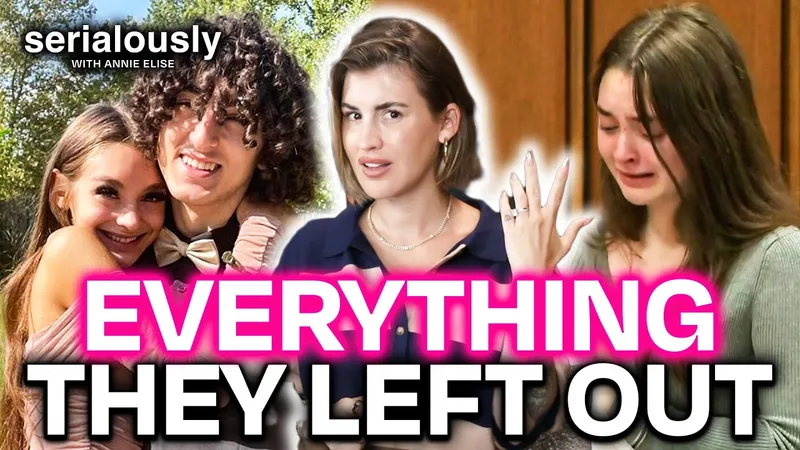
What Netflix's "The Crash" Left Out | Proof, Receipts & Timelines | Mackenzie Shirilla Deep Dive
Annie Elise@annieeliseWhat Netflix's "The Crash" Left Out | Proof, Receipts & Timelines | Mackenzie Shirilla Deep Dive
Annie Elise revisits the Mackenzie Shirilla case, discussed in Netflix’s The Crash, and the dispute over whether the fatal car crash was intentional or accidental. She says she will examine evidence and timelines, including messages, prison calls and claims of medical episodes; the opening also shares her view that the crash was intentional while noting that others disagree.
- Views
- 1.6M
- Likes
- 44K
- Comments
- 11K
- Mackenzie shirilla caseThe crash netflix documentaryCrash Evidence and TimelinesMurder or Accident Debate
Analysis
Annie Elise revisits the Mackenzie Shirilla case, discussed in Netflix’s The Crash, and the dispute over whether the fatal car crash was intentional or accidental. She says she will examine evidence and timelines, including messages, prison calls and claims of medical episodes; the opening also shares her view that the crash was intentional while noting that others disagree.
- DocumentaryCommentaryPodcast episode

- Title
- What Netflix's "The Crash" Left Out | Proof, Receipts & Timelines | Mackenzie Shirilla Deep Dive
The crime we're investigating is an aggravated vehicular homicide. I was just kind of shocked, really. I didn't really know how to process it all. The car's split in two. It truly was a horrific crash scene. >> There's a occupant inside. [singing and music] We got to bust the window out. I just felt like there was more to the story than just an accidental crash. Hey true crime besties, welcome back to an all new episode of Serialously. Hello, hello, hello, and welcome back to an all new episode of Serialously with me, your host and your true crime BFF, Annie Elise. Now, if you are brand new listening to this podcast or watching this YouTube channel for the very first time, let me just give you a breakdown. My name is Annie and what I like to do on here is not only deliver and present a true crime case to you, but do it in a way where it is the full deep dive. Going down the rabbit hole so that you don't have to. All the details, the social media activity, past relationships, everything that you find yourself googling yourself when you're watching a documentary. I find all that information out and then I present all of it to you. But my goal in doing that is to do it in more of a conversational way as if your friend or best friend was telling you about this case that they just heard about and that they can't stop researching or thinking about or talking about. So, again, if you're brand new, that's what we do over here. If you enjoy it, subscribe and follow the podcast. And, you know, well, that's how it goes. Every single Monday, a brand new case, and then every Thursday, I do an episode called headline highlights, where I talk about everything happening in real time that week in the true crime world. Now, today, we are doing one of the infamous deep dives, and you may have heard about this case if you listen to true crime or follow true crime. You may have also seen clips of the trial or footage from the case in your TikTok feed or your Instagram Reels feed, because it's the case of Mackenzie Shirilla. A name that a lot of people do know, but many don't. You also might be familiar with the name because Netflix just released a documentary about this case called The Crash. And what's really interesting is there's a lot of division with this case. Many people believe that what happened was intentional, that this is, you know, the product and result of a spoiled young girl who had everything in her life, and then the moment she did something went wrong, she decided to take it out on everybody else. While some say, "No, this was absolutely accidental. She was too young to know how severe this was going to be and what her actions would truly cause." And there's a little bit of conflicting opinion out there. Now, I will say this personally. I first covered Mackenzie's case years ago, and with that, I have done extensive research. I've interviewed a lot of people close to the case. I participated in a documentary back then, where I was shown a lot of privileged information before it even went to trial, different things like that, to where my belief is that this was absolutely intentional. But again, not everybody agrees with that, and that's certainly okay, which that's my point in why I'm coming on here today.
- 01Cold-open incident
Starts with the event itself rather than a greeting, establishing its severity and an immediate human response. The witness’s words provide a sharp lead-in to the next speaker’s sense that the story may be more complicated than an accident.
States the type of case, gives a first-person reaction, and offers brief crash-scene context before a witness’s urgent line and another speaker’s account.
“The crime we're investigating is an aggravated vehicular homicide. I was just kind of shocked, really. I didn't really know how to process it all. The car's split in two. It truly was a horrific crash scene. >> There's a occupant inside. [singing and music] We got to bust the window out. I just felt like there was more to the story than just an accidental crash.”
- 02Show identification
Identifies the recurring program and host after the cold open, shifting from the reported event to the show’s regular presentation.
A speaker welcomes returning listeners to a new episode, followed by the host’s repeated welcome and self-identification.
“Hey true crime besties, welcome back to an all new episode of Serialously. Hello, hello, hello, and welcome back to an all new episode of Serialously with me, your host and your true crime BFF, Annie Elise.”
- 03Format and audience promise
Sets expectations for the kind of coverage and tone viewers can expect, then identifies the episode as one of the show’s deep dives. The promised breadth of research and accessible presentation offers a reason to continue beyond the initial case excerpt.
The host explains the show’s deep-dive approach, the kinds of context she gathers, and its conversational style. She gives a brief subscription invitation and previews the program’s recurring weekly formats.
“Now, if you are brand new listening to this podcast or watching this YouTube channel for the very first time, let me just give you a breakdown. My name is Annie and what I like to do on here is not only deliver and present a true crime case to you, but do it in a way where it is the full deep dive. Going down the rabbit hole so that you don't have to. All the details, the social media activity, past relationships, everything that you find yourself googling yourself when you're watching a documentary. I find all that information out and then I present all of it to you. But my goal in doing that is to do it in more of a conversational way as if your friend or best friend was telling you about this case that they just heard about and that they can't stop researching or thinking about or talking about. So, again, if you're brand new, that's what we do over here. If you enjoy it, subscribe and follow the podcast. And, you know, well, that's how it goes. Every single Monday, a brand new case, and then every Thursday, I do an episode called headline highlights, where I talk about everything happening in real time that week in the true crime world.”
- 04Case identification and divided views
Identifies the episode’s subject and its connection to the documentary, then establishes the central dispute that makes the account worth following. The two interpretations are presented as positions held by others, not as independently established facts.
The host introduces the episode as a deep dive, names Mackenzie Shirilla, connects the case to a recently released Netflix documentary, and describes disagreement over whether the crash was intentional or accidental.
Now, today, we are doing one of the infamous deep dives, and you may have heard about this case if you listen to true crime or follow true crime. You may have also seen clips of the trial or footage from the case in your TikTok feed or your Instagram Reels feed, because it's the case of Mackenzie Shirilla. A name that a lot of people do know, but many don't. You also might be familiar with the name because Netflix just released a documentary about this case called The Crash. And what's really interesting is there's a lot of division with this case. Many people believe that what happened was intentional, that this is, you know, the product and result of a spoiled young girl who had everything in her life, and then the moment she did something went wrong, she decided to take it out on everybody else. While some say, "No, this was absolutely accidental. She was too young to know how severe this was going to be and what her actions would truly cause." And there's a little bit of conflicting opinion out there.
- 05Host’s position and experience
Gives relevant experience and a stated position before the longer case discussion. The qualification that not everyone agrees preserves the dispute, while the cited prior work supports the host’s role as a guide without settling the issue in this excerpt.
The host states her personal view, recounts earlier case coverage, research, interviews, and participation in a documentary where she says she saw privileged information before trial. She repeats her conclusion, acknowledges disagreement, and says the disagreement explains why she is there.
“Now, I will say this personally. I first covered Mackenzie's case years ago, and with that, I have done extensive research. I've interviewed a lot of people close to the case. I participated in a documentary back then, where I was shown a lot of privileged information before it even went to trial, different things like that, to where my belief is that this was absolutely intentional. But again, not everybody agrees with that, and that's certainly okay, which that's my point in why I'm coming on here today.”