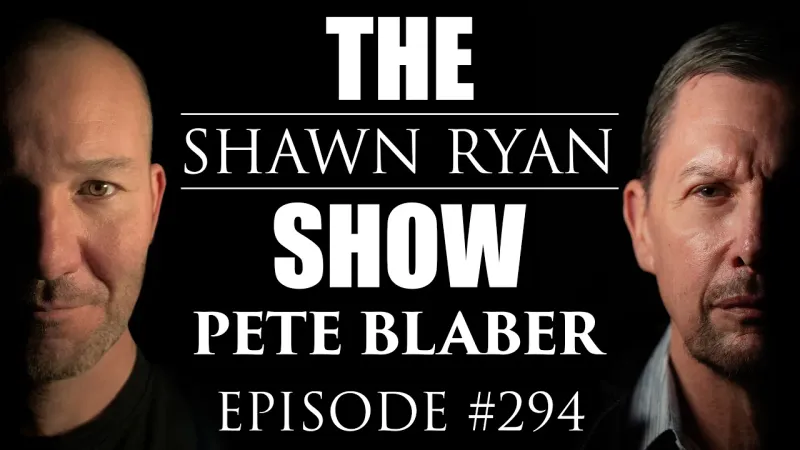
Pete Blaber - Delta Force Commander Exposes the Failures Behind Pat Tillman’s Death | SRS #294
Shawn Ryan Show@ShawnRyanShowPete Blaber - Delta Force Commander Exposes the Failures Behind Pat Tillman’s Death | SRS #294
Retired Delta Force commander Pete Blaber joins Shawn Ryan for a long-form conversation about special operations, intelligence gathering and leadership. The episode title foregrounds failures surrounding Pat Tillman’s death; the listed topics also include Afghanistan, Ukraine, and Blaber’s military career. The opening exchange considers why cartel operations would require discreet, locally informed intelligence work.

- Views
- 1.7M
- Likes
- 26.3K
- Comments
- 6.7K
- Special operations leadershipCartel intelligence operationsPat Tillman caseAfghanistan battlefield accountsMilitary decision-making
Analysis
Retired Delta Force commander Pete Blaber joins Shawn Ryan for a long-form conversation about special operations, intelligence gathering and leadership. The episode title foregrounds failures surrounding Pat Tillman’s death; the listed topics also include Afghanistan, Ukraine, and Blaber’s military career. The opening exchange considers why cartel operations would require discreet, locally informed intelligence work.
- InterviewPodcast episode

- Title
- Pete Blaber - Delta Force Commander Exposes the Failures Behind Pat Tillman’s Death | SRS #294
The Pete Blabber hot question. If tomorrow you were tasked with eradicating the cartels, but you could only bring five movie actors or fictional characters, who's on your team and why? And in the most general terms, what's your weapon of choice? And what air support would you want overhead? [laughter] >> Wow. Well, I don't, you know, I I wouldn't go down that I wouldn't use that approach. I wouldn't I'd use and you know, you've been down there. You've been and we're going to talk about Colombia. We've both been to Colombia. Um, you know, through with and by clandestine. Um, especially in, you know, south of the Rio Grand. If you're a gringo and you're seen in some of these places, uh especially now after Venezuela, you know, they're gonna they're going to see you, they're going to ID you. It's, you know, you're going to have a really hard time collecting the on the ground intel you need. I don't want to throw a damper on that. So, like if I had the five I don't I don't you know, as soon as you said that, I was going, "Well, I' I'd take Larry. I think you just interviewed Larry. you know, I take a really good shot. Yeah, >> Larry would be my shoot one of my shooters. Um, and you know, I probably wouldn't take any Hollywood actors because >> I wouldn't either [laughter] >> because you know, they're just not again the you when you go into a contentious very sensitive area like that like counter narcotics um where it's sensitive because as you know the the narot traffickers are embedded in the local society >> and uh not All of them are the rich cartel kingpins. >> Some of them are the fruit stands. >> Yeah. Exactly. >> Side of the road. >> Exactly. So you start, you know, if some of them are included collateral damage or whatever, you've you've just lost the hearts and minds for further ops. You might get one cartel kingpin, but >> yeah, >> you're not going to clean up the cartels. So again, my advice would be go low viz, make it a clandestine. uh we should never say we have we're even you know uh that mission is ongoing but the infiltration should be starting right now. Um obviously Spanish speakers are a lot of seventh group guys a lot of guys who you know can blend in down there um would be needed and I think you know it would not be that hard to do some serious damage to him. >> You don't think it would be? I don't I think I think if we had the intel uh >> what would what how do you I just go to drones marking a target drone it. >> Yeah. >> Is that is that what you would do? >> Well, but the drone you know who you you'd have to know who the guy you're going for and where he's at. And if you got that, yeah, the drone would work. But, you know, again, uh, as soon as you start that, they're going to start looking for the drones. And, uh, you know, we had drones. We had predators, uh, for Bin Laden. And we couldn't find him. We couldn't find Zarohhiri. We couldn't, you know, find Mula Umar uh, and most of their lieutenants, uh, we couldn't find. And we had those drones. >> Yeah. >> Flying all the time. And, you know, a Predator is better than most of the drones that are flying today.
- 01Pose the hypothetical
This establishes a playful, specific question for the guest to answer and supplies the frame for the exchange.
The host presents an imagined high-stakes task, limits the team to five fictional or movie characters, and asks who belongs on the team and what tools or support they would choose.
“The Pete Blabber hot question. If tomorrow you were tasked with eradicating the cartels, but you could only bring five movie actors or fictional characters, who's on your team and why? And in the most general terms, what's your weapon of choice? And what air support would you want overhead? [laughter] >> Wow.”
- 02Reject the premise and reframe
The answer reverses the playful setup into a more grounded discussion. The guest’s objection raises the question of what would work instead and why the premise is operationally difficult.
The guest hesitates, rejects the proposed approach, and connects the hypothetical to Colombia and prior experience there. He begins explaining why a visible outsider would struggle to collect the intelligence needed.
“Well, I don't, you know, I I wouldn't go down that I wouldn't use that approach. I wouldn't I'd use and you know, you've been down there. You've been and we're going to talk about Colombia. We've both been to Colombia. Um, you know, through with and by clandestine. Um, especially in, you know, south of the Rio Grand. If you're a gringo and you're seen in some of these places, uh especially now after Venezuela, you know, they're gonna they're going to see you, they're going to ID you. It's, you know, you're going to have a really hard time collecting the on the ground intel you need.”
- 03Offer a counterexample and operational reasoning
This develops the guest’s alternative into a broader problem: success is not just choosing capable people or removing a leader, but avoiding consequences that could undermine further efforts.
The guest names a skilled shooter as a possible team member, agrees that Hollywood actors would not fit, and explains the sensitivity of working where traffickers are embedded in local society. The exchange notes that collateral harm to ordinary people could cost local support, making a single high-profile target insufficient.
I don't want to throw a damper on that. So, like if I had the five I don't I don't you know, as soon as you said that, I was going, "Well, I' I'd take Larry. I think you just interviewed Larry. you know, I take a really good shot. Yeah, >> Larry would be my shoot one of my shooters. Um, and you know, I probably wouldn't take any Hollywood actors because >> I wouldn't either [laughter] >> because you know, they're just not again the you when you go into a contentious very sensitive area like that like counter narcotics um where it's sensitive because as you know the the narot traffickers are embedded in the local society >> and uh not All of them are the rich cartel kingpins. >> Some of them are the fruit stands. >> Yeah. Exactly. >> Side of the road. >> Exactly. So you start, you know, if some of them are included collateral damage or whatever, you've you've just lost the hearts and minds for further ops. You might get one cartel kingpin, but >> yeah, >> you're not going to clean up the cartels.
- 04State the alternative and qualify it
This supplies a provisional alternative while keeping its conditions visible: intelligence and discretion matter, and the proposal is not presented as a simple or unconditional solution.
The guest recommends a low-visibility, clandestine approach and describes blending in as important. When asked whether causing serious damage would be difficult, he qualifies his answer by saying it depends on having intelligence; the host raises drones and target-marking, and the guest explains the need to know who and where the target is.
“So again, my advice would be go low viz, make it a clandestine. uh we should never say we have we're even you know uh that mission is ongoing but the infiltration should be starting right now. Um obviously Spanish speakers are a lot of seventh group guys a lot of guys who you know can blend in down there um would be needed and I think you know it would not be that hard to do some serious damage to him. >> You don't think it would be? I don't I think I think if we had the intel uh >> what would what how do you I just go to drones marking a target drone it. >> Yeah. >> Is that is that what you would do? >> Well, but the drone you know who you you'd have to know who the guy you're going for and where he's at. And if you got that, yeah, the drone would work.”
- 05Qualify the tool with past experience
The account gives a concrete qualification to the earlier suggestion: having the technology does not guarantee the necessary intelligence or a successful search. The supplied excerpt ends during this discussion, so the introduction boundary cannot be confirmed beyond this point.
The guest warns that using drones would prompt people to look for them, then cites past difficulty finding named targets despite having Predator drones.
“But, you know, again, uh, as soon as you start that, they're going to start looking for the drones. And, uh, you know, we had drones. We had predators, uh, for Bin Laden. And we couldn't find him. We couldn't find Zarohhiri. We couldn't, you know, find Mula Umar uh, and most of their lieutenants, uh, we couldn't find. And we had those drones. >> Yeah. >> Flying all the time. And, you know, a Predator is better than most of the drones that are flying today.”