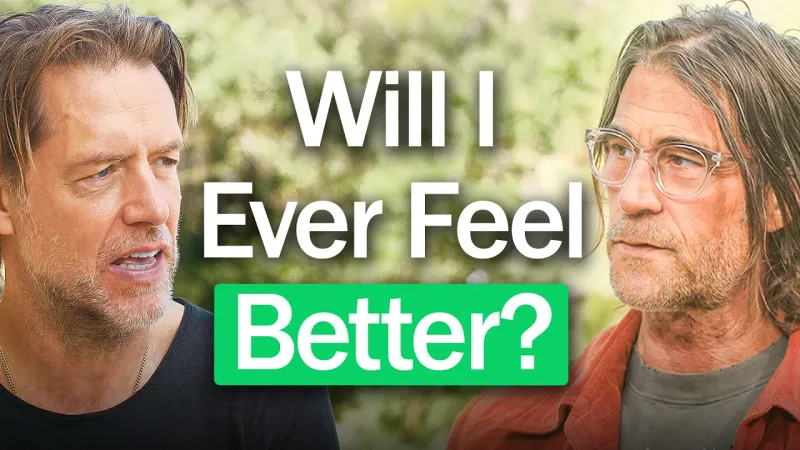
Radiohead’s Ed O’Brien Opens Up About Depression, Fatigue & Childhood Trauma
Rich Roll@richrollRadiohead’s Ed O’Brien Opens Up About Depression, Fatigue & Childhood Trauma
Rich Roll talks with Radiohead’s Ed O’Brien about years of depression, childhood trauma, and the process of healing. They also discuss how making his solo album Blue Morpho relates to personal transformation, alongside songwriting, AI and music, and Radiohead’s present and future.

- Views
- 118.7K
- Likes
- 3.4K
- Comments
- 475
- Depression and HealingChildhood traumaCreative processRadiohead and Solo Music
Analysis
Rich Roll talks with Radiohead’s Ed O’Brien about years of depression, childhood trauma, and the process of healing. They also discuss how making his solo album Blue Morpho relates to personal transformation, alongside songwriting, AI and music, and Radiohead’s present and future.
- InterviewPodcast episode

- Title
- Radiohead’s Ed O’Brien Opens Up About Depression, Fatigue & Childhood Trauma
This underlying depression had been going on for years. It just seemed so bleak and it seemed how do I get out of that? >> Depressions, breakdowns, illnesses, the body is saying there's something not right here. >> Ed O'Brien of Radiohead >> one of the architects of modern rock and rock and roll Hall of Fame inductee >> has a solo record called Blue Morpho. >> The idea that the guy from Radiohead is going to complain >> [music] >> about not being happy, you know, nobody wants to hear that. >> No. And it was exactly that. It felt very indulgent. I'm not like that. I'm a rocker. But but but my body was just saying enough. I felt like I was carrying a weight every day that was weighing me down. It was very very very physical. I cared so much before what people thought of me. The healing process is a process of self-love and going, "I'm okay. I'm okay. I'm no longer hiding." You have to ask, "Well, why was I hiding?" Well, I was hiding because >> Hey everybody, real quick before we dive in here, I wanted to take a quick second to genuinely thank you for being here. The fact that you give us your time and your attention is something I do not take for granted ever. And if you're getting something out of these conversations and you haven't already, I want you to consider subscribing to the channel. It's really the single easiest way to help us out. It's free, it only takes a second, and it's actually a huge part of how we keep growing this show and bringing on the kinds of guests that make it worth your while. And according to our metrics, 67% of you watching right now aren't subscribed yet. So, if you're in that group, tap subscribe. It feels silly to ask, but it really is very helpful for us more than you know. All right. Let's get into it. It's like perfect timing that I'm sitting with you today to have this conversation. >> There were no coincidences. >> Yeah. That's right. Just synchronicities and In your case, like I'm curious >> Yeah. >> of the ways in which the album Blue Morpho mimics like the process of creating that work of art mirrors the journey that you went on with your with your mental health and your depression and and um this process of trying to make sense and and come to some place of healing and wholeness. >> Mhm. I mean it's it completely mirrors that. Um and it is a it's a transformation and creativity is a I I guess it's a transformation of sorts. And there's a start a middle and an end. And the middle is where it gets really challenging. I feel like I haven't got enough experience of this a transformation but my experience of transformation is it feels impossible without the deeply challenging aspect >> Mhm. >> that is at the heart of it.
- 01Personal struggle and bodily signal
This personal excerpt establishes the emotional and physical context for the conversation. The contrast between a rocker’s expected public role and the body’s demand to stop makes the account specific, while his description of healing begins to suggest a possible way forward.
The excerpt begins with years of depression and a question about getting out of a bleak state, then broadens to the body’s signals. It identifies Ed O’Brien and Radiohead, introduces his solo record, and recounts the conflict between public expectations and what his body was telling him.
This underlying depression had been going on for years. It just seemed so bleak and it seemed how do I get out of that? >> Depressions, breakdowns, illnesses, the body is saying there's something not right here. >> Ed O'Brien of Radiohead >> one of the architects of modern rock and rock and roll Hall of Fame inductee >> has a solo record called Blue Morpho. >> The idea that the guy from Radiohead is going to complain >> [music] >> about not being happy, you know, nobody wants to hear that. >> No. And it was exactly that. It felt very indulgent. I'm not like that. I'm a rocker. But but but my body was just saying enough. I felt like I was carrying a weight every day that was weighing me down. It was very very very physical. I cared so much before what people thought of me. The healing process is a process of self-love and going, "I'm okay. I'm okay. I'm no longer hiding." You have to ask, "Well, why was I hiding?" Well, I was hiding because >>
- 02Host's channel appeal
This is a direct channel-growth appeal inserted before the conversation resumes. It gives a stated reason to subscribe and uses the host’s cited viewer statistic as support.
The host briefly thanks viewers for their time, asks those who value the conversations to consider subscribing, and cites a channel metric before returning to the interview.
“Hey everybody, real quick before we dive in here, I wanted to take a quick second to genuinely thank you for being here. The fact that you give us your time and your attention is something I do not take for granted ever. And if you're getting something out of these conversations and you haven't already, I want you to consider subscribing to the channel. It's really the single easiest way to help us out. It's free, it only takes a second, and it's actually a huge part of how we keep growing this show and bringing on the kinds of guests that make it worth your while. And according to our metrics, 67% of you watching right now aren't subscribed yet. So, if you're in that group, tap subscribe. It feels silly to ask, but it really is very helpful for us more than you know.”
- 03Return to the interview and topic framing
The question reconnects the solo record to the conversation’s mental-health subject and frames the discussion around a creative journey. The answer introduces transformation and the challenge at its center, setting up the fuller discussion that follows.
After the host says it is time to begin, the exchange returns to the conversation. The host asks how the creative process behind Blue Morpho mirrors the interviewee’s mental-health journey; the interviewee describes the work as a transformation and says its challenging middle is central.
“All right. Let's get into it. It's like perfect timing that I'm sitting with you today to have this conversation. >> There were no coincidences. >> Yeah. That's right. Just synchronicities and In your case, like I'm curious >> Yeah. >> of the ways in which the album Blue Morpho mimics like the process of creating that work of art mirrors the journey that you went on with your with your mental health and your depression and and um this process of trying to make sense and and come to some place of healing and wholeness. >> Mhm. I mean it's it completely mirrors that. Um and it is a it's a transformation and creativity is a I I guess it's a transformation of sorts. And there's a start a middle and an end. And the middle is where it gets really challenging. I feel like I haven't got enough experience of this a transformation but my experience of transformation is it feels impossible without the deeply challenging aspect >> Mhm. >> that is at the heart of it.”