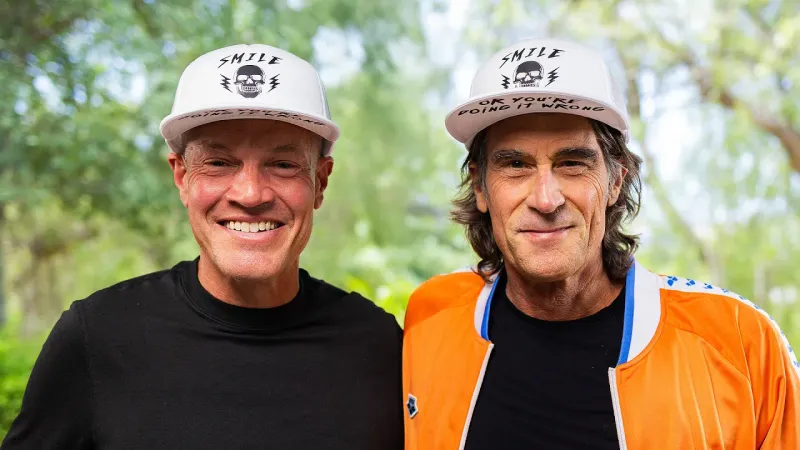
I Was Addicted to Meth & Now I Run 100 Miles a Week | Andy Glaze
Rich Roll@richrollI Was Addicted to Meth & Now I Run 100 Miles a Week | Andy Glaze
Rich Roll interviews firefighter paramedic and ultrarunner Andy Glaze about his early meth addiction, family trauma, recovery, and the life changes that led him to endurance running. They also discuss running's limits as a coping tool, emotional healing, and advice for people who feel stuck.

- Views
- 138.4K
- Likes
- 2.2K
- Comments
- 249
- Meth addiction recoveryUltrarunning and HealingFamily Trauma and AddictionCoping and Sobriety
Analysis
Rich Roll interviews firefighter paramedic and ultrarunner Andy Glaze about his early meth addiction, family trauma, recovery, and the life changes that led him to endurance running. They also discuss running's limits as a coping tool, emotional healing, and advice for people who feel stuck.
- InterviewPodcast episode
- Title
- I Was Addicted to Meth & Now I Run 100 Miles a Week | Andy Glaze
“I did a ridiculous amount of meth at a very young age. When they found me, I was, you know, emaciated, strung out, like probably hadn't slept in days. I was like, I don't want to feel like this anymore. I'm going in a different direction. >> The one and only Andy Glaze, >> arguably the most inspiring ultra endurance athlete in the world. >> He serves others while juggling his passion for running. >> I have like a intense fire inside that burns. That's what allows me to do all this crazy stuff from triathlons to ultra running and every flavor cuz it's all fun. Yeah, it hurts and yeah, it's uncomfortable but dead people don't get to suffer and I'm alive, you know. >> How long is your 100 mile a week running streak been going on at this point? >> 320 weeks. >> Andy, man, so good to meet you. This is long overdue. So excited to talk to you, brother. >> I'm so excited to be here. This is uh a dream come true honestly. Yeah. >> You're the guy who's running all these races. You're putting in, you know, these 100 mile weeks and you're the guy who is known for smiling. It's the title of your book. So, you're the smiling ultrarunner guy. But honestly, to me, there's so much more to your story. It's about two things in my opinion. It's about the space between falling down and getting back up. And second, how physical movement is a catalyst for emotional healing. >> Yeah. I mean, so I mean, the beginning of sort of the downfall was probably my parents' divorce. Um, they got divorced when I was about 10. And they split up. And so then I had two kind of different households that I was having to navigate um at a young age. My dad was like a workaholic, so he was never home. And then my mom was like a loving mom, but she had been a stay-at-home mom and then had to go back to work because now she was divorced. So she was at work, my dad was at work. And so I kind of, you know, a Gen Xer kind of raised myself, right? I mean, we were we were of that age where we came back home when the street lights came on and like um not a lot of parental supervision, you know, before cell phones, before pagers, all that sort of stuff. And so I had a lot of time just without any parental supervision. And that sort of led me into maybe not hanging out with like the best group of friends, >> which then led to, you know, starting to smoke pot and then um just experimenting with all sorts of other drugs and alcohol. >> Um which then, you know, got into like some really heavy stuff like, you know, crystal meth. And then I just really spiraled out of control at a, you know, at a very rapid descent um at a young age.”
- 01Crisis and decision
The candid account gives the episode a personal starting point and creates a clear turning point. It establishes what changed without explaining the full path from addiction to endurance running.
Andy describes his heavy meth use at a young age, the condition he was in when found, and his resolve to change direction.
“I did a ridiculous amount of meth at a very young age. When they found me, I was, you know, emaciated, strung out, like probably hadn't slept in days. I was like, I don't want to feel like this anymore. I'm going in a different direction.”
- 02Introduce the present-day achievement
The present-day identity sharply contrasts with the opening crisis, while Andy's description supplies his own perspective on what sustains him. This extends the premise beyond a simple before-and-after transformation.
A speaker introduces Andy as an exceptional endurance athlete. Andy describes the inner drive behind his activities and says he accepts pain and discomfort because he is alive.
“>> The one and only Andy Glaze, >> arguably the most inspiring ultra endurance athlete in the world. >> He serves others while juggling his passion for running. >> I have like a intense fire inside that burns. That's what allows me to do all this crazy stuff from triathlons to ultra running and every flavor cuz it's all fun. Yeah, it hurts and yeah, it's uncomfortable but dead people don't get to suffer and I'm alive, you know.”
- 03Measure the achievement and frame the conversation
The concrete duration gives scale to the present-day achievement, and the interviewer's framing signals that the conversation will address recovery as well as running. The connection between physical movement and emotional healing sets up the discussion without resolving how that change unfolded.
The interviewer asks how long Andy's 100-mile-a-week streak has lasted; Andy answers 320 weeks. The interviewer then welcomes him and identifies two themes: getting back up after falling and movement's role in emotional healing.
“>> How long is your 100 mile a week running streak been going on at this point? >> 320 weeks. >> Andy, man, so good to meet you. This is long overdue. So excited to talk to you, brother. >> I'm so excited to be here. This is uh a dream come true honestly. Yeah. >> You're the guy who's running all these races. You're putting in, you know, these 100 mile weeks and you're the guy who is known for smiling. It's the title of your book. So, you're the smiling ultrarunner guy. But honestly, to me, there's so much more to your story. It's about two things in my opinion. It's about the space between falling down and getting back up. And second, how physical movement is a catalyst for emotional healing. >> Yeah.”
- 04Begin the backstory
This begins the promised account of what preceded his addiction, moving from the interviewer's broad framing into Andy's own explanation. The supplied excerpt cuts off during that explanation, so the introduction's eventual transition into sustained main discussion cannot be confirmed here.
Andy starts tracing the beginning of his decline to his parents' divorce and describes navigating two households with limited parental supervision.
“I mean, so I mean, the beginning of sort of the downfall was probably my parents' divorce. Um, they got divorced when I was about 10. And they split up. And so then I had two kind of different households that I was having to navigate um at a young age. My dad was like a workaholic, so he was never home. And then my mom was like a loving mom, but she had been a stay-at-home mom and then had to go back to work because now she was divorced. So she was at work, my dad was at work. And so I kind of, you know, a Gen Xer kind of raised myself, right? I mean, we were we were of that age where we came back home when the street lights came on and like um not a lot of parental supervision, you know, before cell phones, before pagers, all that sort of stuff. And so I had a lot of time just without any parental supervision. And that sort of led me into maybe not hanging out with like the best group of friends, >> which then led to, you know, starting to smoke pot and then um just experimenting with all sorts of other drugs and alcohol. >> Um which then, you know, got into like some really heavy stuff like, you know, crystal meth. And then I just really spiraled out of control at a, you know, at a very rapid descent um at a young age.”