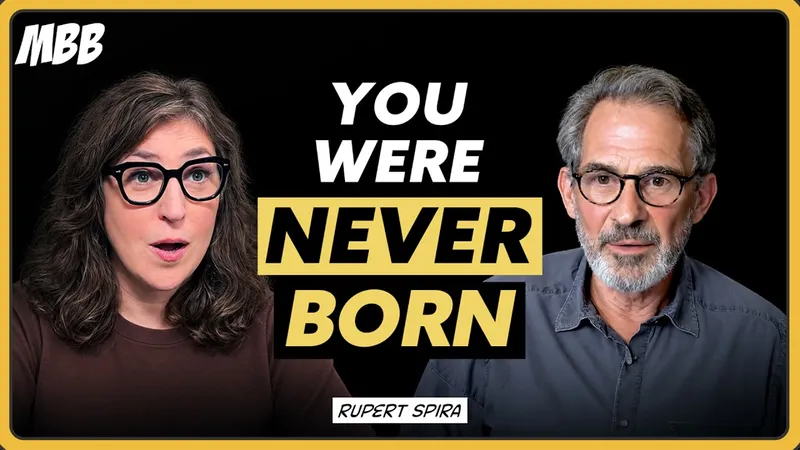
You Have Never Seen Reality: Discover Who You Actually Are in Only Two Minutes | Rupert Spira
Dr. Mayim Bialik@MayimBialikYou Have Never Seen Reality: Discover Who You Actually Are in Only Two Minutes | Rupert Spira
Mayim Bialik and Jonathan Cohen interview Rupert Spira about nonduality, consciousness, enlightenment, and the nature of reality. Spira presents the view that awareness is fundamental rather than produced by matter, and discusses religion, death, suffering, and relationships. The episode description also promises practical reflections on presence and happiness.

- Views
- 840.7K
- Likes
- 12.5K
- Comments
- 1.6K
- Nonduality and ConsciousnessEnlightenment and IdentityReligion and SpiritualityDeath and AwarenessSuffering and Relationships
Analysis
Mayim Bialik and Jonathan Cohen interview Rupert Spira about nonduality, consciousness, enlightenment, and the nature of reality. Spira presents the view that awareness is fundamental rather than produced by matter, and discusses religion, death, suffering, and relationships. The episode description also promises practical reflections on presence and happiness.
- InterviewPodcast episode

- Title
- You Have Never Seen Reality: Discover Who You Actually Are in Only Two Minutes | Rupert Spira
“The world is not really physical. Whether you're having a psychedelic trip, a vision of God, a near-death experience, consciousness, it hasn't changed. It's perception that's changed. Materialist scientists say that consciousness is generated by matter. It's like believing that waves generate oceans and movies generate screens. Most people feel that being the body is their primary experience. That's a mistake. God's being is infinite and eternal. Enlightenment is the most misunderstood word in the entire spiritual literature. >> The truest essence is not what many of us are interacting with. >> If you unblend your experience just by going back to the simple awareness of being. There's a place in you that has never been traumatized. This recognition of the nature of your being, it's the ultimate healing. >> What happens to our knowing when our physical bodies no longer exist? >> It was never a separate space to begin with. Hi, I'm Miami. >> And I'm Jonathan Cohen. >> And welcome to our breakdown. We've got a lot of shocking questions to ask today. What if every major religion has actually misunderstood not only the true nature of God, but our true essence? What if there was a fast track to enlightenment that all of us can access for free right now? >> And what if we've actually been lied to about what enlightenment actually is? We've been sold courses and books and steps and paths and none of them are actually leading there. >> Our guest today does not promise anything except access to the part of you that has always been and will always be. Rupert Spyra is a leading voice of clarity in contemporary spirituality. He is known for his ability to guide people to a direct experience of their innate happiness, their essential nature. He uses what's called the direct path approach. I had never heard of it, but he's going to explain nonduality to us. And this is, I'd say, one of our more intellectually astonishing episodes. He listened to our episode with Bernardo Castreup to prepare for this episode and um he holds incredible retreats which you can learn about at rupertspra.com/events. He's got a podcast. It's the Rupert Spyra podcast. Um I highly recommend you are the happiness you seek uncovering the awareness of being um which is a fantastic exploration of all of the questions that we ask. But I'm going to be honest, we ask a lot of them today. It is a pleasure to welcome Rupert Spyra to the breakdown. >> Break it down. >> Thank you for inviting me. Pleasure to be with you. >> I've heard your name from many different people. Pete Holmes uh who we've had on the podcast spoke about you actually in our episode and obviously we have a lot of other um overlap. You're one of these names that kind of keeps coming into my life. People keep mentioning you here and there. Um, and obviously your your body of work is is vast and so important and we can't wait to get into all of it, but I wonder if you can give our audience um a little bit of an introduction to um you know to put it plainly who you are in terms of your mission and your life path and how you intersect with others and why it's important. So I have been um exploring and uh practicing the non-dual understanding for um exactly 50 years and um for the first 35 years it was just my my private practice. I was working in my studio as an artist.”
- 01State the central claim
This immediately establishes the episode’s unconventional premise and invites the viewer to consider what the claim means across several kinds of experience.
The opening asserts that the world is not really physical, then says that experiences such as a psychedelic trip, a vision of God, a near-death experience or consciousness have not changed the world, but perception has.
“The world is not really physical. Whether you're having a psychedelic trip, a vision of God, a near-death experience, consciousness, it hasn't changed. It's perception that's changed.”
- 02Challenge familiar explanations
These comparisons and challenges sharpen the opening’s disagreement with familiar assumptions, while introducing the concepts the episode will explore.
The speaker attributes a consciousness claim to materialist scientists, compares it to waves generating oceans and movies generating screens, then calls bodily identity a mistake and characterizes enlightenment as widely misunderstood.
“Materialist scientists say that consciousness is generated by matter. It's like believing that waves generate oceans and movies generate screens. Most people feel that being the body is their primary experience. That's a mistake. God's being is infinite and eternal. Enlightenment is the most misunderstood word in the entire spiritual literature.”
- 03Preview guest excerpts
The short excerpts preview the guest’s account of awareness and healing before the hosts identify him and develop the episode’s questions.
Two guest excerpts characterize the truest essence as different from what people usually interact with and propose returning to simple awareness of being. Another excerpt says there is a place that has never been traumatized and calls recognizing one’s nature the ultimate healing.
“>> The truest essence is not what many of us are interacting with. >> If you unblend your experience just by going back to the simple awareness of being. There's a place in you that has never been traumatized. This recognition of the nature of your being, it's the ultimate healing. >>”
- 04Raise a question about death
The exchange offers a concrete philosophical question and a compact, unexpected-sounding answer that points toward the discussion of nonduality.
A question asks what happens to knowing when physical bodies no longer exist, and the guest’s excerpt answers that it was never a separate space to begin with.
“What happens to our knowing when our physical bodies no longer exist? >> It was never a separate space to begin with.”
- 05Introduce the show and its questions
The show identification establishes the episode format, while the hosts’ questions turn the opening claims into the main subjects of the conversation.
The hosts identify themselves and welcome viewers to the breakdown, then ask whether major religions have misunderstood God and human essence, whether enlightenment is freely accessible, and whether people have been misled about what enlightenment is.
“Hi, I'm Miami. >> And I'm Jonathan Cohen. >> And welcome to our breakdown. We've got a lot of shocking questions to ask today. What if every major religion has actually misunderstood not only the true nature of God, but our true essence? What if there was a fast track to enlightenment that all of us can access for free right now? >> And what if we've actually been lied to about what enlightenment actually is? We've been sold courses and books and steps and paths and none of them are actually leading there. >>”
- 06Present the guest and his approach
This introduces the guest’s perspective and the approach under discussion, while connecting the earlier questions to the episode’s forthcoming conversation.
The host says the guest promises access to an enduring part of oneself, introduces Rupert Spira as a contemporary spiritual voice known for guiding people toward direct experience, and names his direct-path approach and nonduality as the topics he will explain.
“Our guest today does not promise anything except access to the part of you that has always been and will always be. Rupert Spyra is a leading voice of clarity in contemporary spirituality. He is known for his ability to guide people to a direct experience of their innate happiness, their essential nature. He uses what's called the direct path approach. I had never heard of it, but he's going to explain nonduality to us. And this is, I'd say, one of our more intellectually astonishing episodes.”
- 07Add context and hand over
This completes the guest introduction and establishes the conversational handoff. The excerpt ends as the interview begins, so it does not include the guest’s fuller self-introduction.
The host notes that the guest listened to an earlier episode to prepare, mentions his retreats and podcast, offers a recommendation, and says the hosts will ask many questions. The host welcomes him to the show; the guest thanks the hosts and says he is pleased to be there.
“He listened to our episode with Bernardo Castreup to prepare for this episode and um he holds incredible retreats which you can learn about at rupertspra.com/events. He's got a podcast. It's the Rupert Spyra podcast. Um I highly recommend you are the happiness you seek uncovering the awareness of being um which is a fantastic exploration of all of the questions that we ask. But I'm going to be honest, we ask a lot of them today. It is a pleasure to welcome Rupert Spyra to the breakdown. >> Break it down. >> Thank you for inviting me. Pleasure to be with you. >>”
- 08Invite the guest’s account
The host’s question invites relevant background, and the guest begins establishing his experience. The supplied opening ends during that account, before the introduction’s transition into the main interview can be heard.
The host says the guest’s name has come up through other people and mentions overlap and his substantial body of work, then asks him to explain who he is in terms of his mission, life path and connections with others. The guest begins by saying he has practiced nondual understanding for 50 years, first privately, while working as an artist.
“I've heard your name from many different people. Pete Holmes uh who we've had on the podcast spoke about you actually in our episode and obviously we have a lot of other um overlap. You're one of these names that kind of keeps coming into my life. People keep mentioning you here and there. Um, and obviously your your body of work is is vast and so important and we can't wait to get into all of it, but I wonder if you can give our audience um a little bit of an introduction to um you know to put it plainly who you are in terms of your mission and your life path and how you intersect with others and why it's important. So I have been um exploring and uh practicing the non-dual understanding for um exactly 50 years and um for the first 35 years it was just my my private practice. I was working in my studio as an artist.”