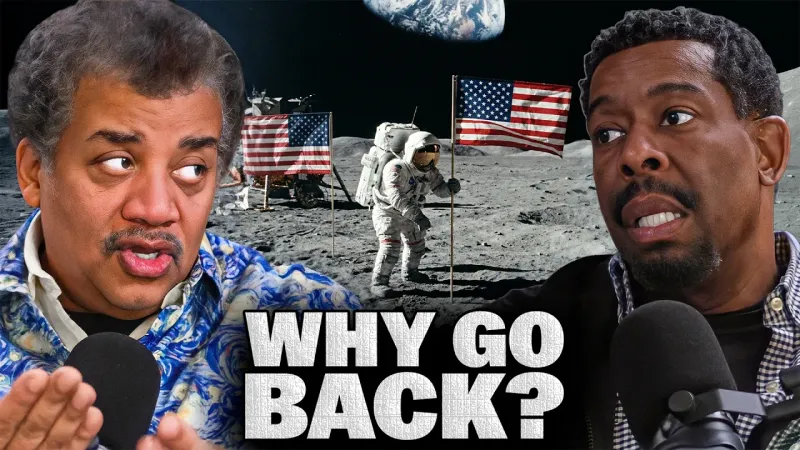
The Missions Bringing Us Back to the Moon
StarTalk@StarTalkThe Missions Bringing Us Back to the Moon
Neil deGrasse Tyson and Chuck Nice discuss why the US went to the Moon during Apollo and why it is returning through Artemis. The opening reviews Apollo missions and argues that Cold War rivalry, rather than exploration alone, helped persuade Congress to fund the lunar effort; the description also promises discussion of rockets, spacecraft, the Artemis treaty and politics.

- Views
- 5M
- Likes
- 127.9K
- Comments
- 8.6K
- Apollo moon missionsArtemis programSpace race historyLunar exploration
Analysis
Neil deGrasse Tyson and Chuck Nice discuss why the US went to the Moon during Apollo and why it is returning through Artemis. The opening reviews Apollo missions and argues that Cold War rivalry, rather than exploration alone, helped persuade Congress to fund the lunar effort; the description also promises discussion of rockets, spacecraft, the Artemis treaty and politics.
- Co hosted conversationExplainer

- Title
- The Missions Bringing Us Back to the Moon
Chuck, yes. We're going back to the moon. I didn't know I'd been in the first place. [laughter] >> NASA NASA >> All right. NASA's going back to the moon. Yes. Let's back up a little. >> All right. >> Okay? The first and only other time we went to the moon was the Apollo program. >> Correct. >> As you know, we went to the moon nine times. We faked it nine times. >> [laughter] >> Not even in my marriage has that much faking taken place. >> Apollo 8 >> Okay. >> went to the moon, orbited and came back. >> Okay. >> Took that famous picture of Earthrise >> with the Earth rising. >> Apollo 10 >> Okay. >> went to the moon, orbited the moon, deployed the lander, >> Mhm. >> and then came back up. >> Right. >> So, that's Apollo 10. >> Right. >> Apollo 11, everyone remembers Buzz Aldrin, Neil Armstrong, walk on the moon. They leave Michael Collins up in the capsule. >> Just left him up there. >> [laughter] >> Didn't even give him the opportunity to go down later and check it out for himself. That >> It's in the plan. These are professionals. >> That is rough. Yeah, I mean, you're going to make me the chauffeur? Can't go to the moon. You don't make me the moon chauffeur. >> Then there's Apollo 12, Apollo 13, the ill-fated one. >> Right. >> Hollywood movie >> Yes. >> on that, directed by Ron Howard. And then Apollo 14, 15, 16, and 17. >> All right. >> Why did we go? We're Americans. We're explorers. It's in our DNA is what we are told. >> Right. >> That's propaganda. That's not why we went. >> No, why did we go? >> You could want to go for those reasons, but that's not what makes it we write a check. >> Yeah, exactly. >> Who writes the check? Congress writes the check. >> Right. >> You got to spook Congress somehow into writing the check. >> Mhm. >> So, Kennedy says >> We go to the moon and do this, that, and the other thing because it is hard. >> So, so Yuri Gagarin comes out of orbit. >> Okay. >> Okay? >> Right. >> First man in space. >> Yeah. >> In order to orbit the Earth. >> Right. >> Six weeks later we have a joint session of Congress. President Kennedy says stirring words, put a man on the moon, return him safely to Earth before the decade is out. Go earlier a couple of paragraphs in that same speech. If the events of recent weeks couldn't even utter the man's name. >> Right. >> The events of recent weeks are any indication of the impact of this adventure on the minds of men everywhere, then we need to show the world the path of freedom over the path of tyranny. >> VOLDEMORT IS BACK. >> [laughter] >> DUMBLEDORE, I TELL YOU, Voldemort is back. >> The enemy is established. >> Right. >> The godless enemy is established. >> Right. >> The checks were written. >> And and yeah, well, there you go. >> They'd already beaten us with the first animal in space, Laika. They they already beat us at all of that. We needed something to beat them. So, we said, "Let's go to the moon." >> We're going to land on the moon. >> And walk around. >> And walk around. >> Even though they beat us in all these other categories. >> Right. >> And we did.
- 01Return and humorous reset
The quick joke establishes the subject and a light conversational tone, then signals that the speakers will provide background before addressing the return.
A speaker says they are going back to the Moon; another jokingly says they did not realize they had been there before. The conversation resets to NASA and asks to back up.
“Chuck, yes. We're going back to the moon. I didn't know I'd been in the first place. [laughter] >> NASA NASA >> All right. NASA's going back to the moon. Yes. Let's back up a little. >> All right. >> Okay?”
- 02Earlier missions and comic aside
The historical recap supplies context for the discussion and uses banter to carry the exchange through the mission list.
The speakers identify Apollo as the only earlier trip, list Apollo missions, and trade jokes about the crew and the person left in orbit.
“The first and only other time we went to the moon was the Apollo program. >> Correct. >> As you know, we went to the moon nine times. We faked it nine times. >> [laughter] >> Not even in my marriage has that much faking taken place. >> Apollo 8 >> Okay. >> went to the moon, orbited and came back. >> Okay. >> Took that famous picture of Earthrise >> with the Earth rising. >> Apollo 10 >> Okay. >> went to the moon, orbited the moon, deployed the lander, >> Mhm. >> and then came back up. >> Right. >> So, that's Apollo 10. >> Right. >> Apollo 11, everyone remembers Buzz Aldrin, Neil Armstrong, walk on the moon. They leave Michael Collins up in the capsule. >> Just left him up there. >> [laughter] >> Didn't even give him the opportunity to go down later and check it out for himself. That >> It's in the plan. These are professionals. >> That is rough. Yeah, I mean, you're going to make me the chauffeur? Can't go to the moon. You don't make me the moon chauffeur. >> Then there's Apollo 12, Apollo 13, the ill-fated one. >> Right. >> Hollywood movie >> Yes. >> on that, directed by Ron Howard. And then Apollo 14, 15, 16, and 17. >> All right. >>”
- 03Ask why and reject the simple answer
The direct question shifts the opening from mission history to motives. Rejecting the familiar answer establishes that the underlying explanation remains to be explored.
The speakers ask why the missions happened, briefly offer national identity and exploration, then call that explanation propaganda and ask again.
“Why did we go? We're Americans. We're explorers. It's in our DNA is what we are told. >> Right. >> That's propaganda. That's not why we went. >> No, why did we go? >>”
- 04Follow the funding decision
This exchange shifts the explanation from personal ideals to the political decision behind the project, making the question of how support was secured central.
The speakers distinguish personal reasons for wanting the project from the reason funding was approved, identify the legislature as the funder, and discuss persuading it to pay.
“You could want to go for those reasons, but that's not what makes it we write a check. >> Yeah, exactly. >> Who writes the check? Congress writes the check. >> Right. >> You got to spook Congress somehow into writing the check. >> Mhm. >>”
- 05Historical rivalry and the cutoff
The historical example supplies a concrete political and competitive motive. The excerpt cuts off during the account, so the introduction's complete endpoint cannot be confirmed from the supplied ledger.
The speakers invoke a president's argument that the project was worth doing because it was hard, then recount the Soviet space milestone and the United States' response. The excerpt ends as they note that the United States did land and walk on the Moon.
So, Kennedy says >> We go to the moon and do this, that, and the other thing because it is hard. >> So, so Yuri Gagarin comes out of orbit. >> Okay. >> Okay? >> Right. >> First man in space. >> Yeah. >> In order to orbit the Earth. >> Right. >> Six weeks later we have a joint session of Congress. President Kennedy says stirring words, put a man on the moon, return him safely to Earth before the decade is out. Go earlier a couple of paragraphs in that same speech. If the events of recent weeks couldn't even utter the man's name. >> Right. >> The events of recent weeks are any indication of the impact of this adventure on the minds of men everywhere, then we need to show the world the path of freedom over the path of tyranny. >> VOLDEMORT IS BACK. >> [laughter] >> DUMBLEDORE, I TELL YOU, Voldemort is back. >> The enemy is established. >> Right. >> The godless enemy is established. >> Right. >> The checks were written. >> And and yeah, well, there you go. >> They'd already beaten us with the first animal in space, Laika. They they already beat us at all of that. We needed something to beat them. So, we said, "Let's go to the moon." >> We're going to land on the moon. >> And walk around. >> And walk around. >> Even though they beat us in all these other categories. >> Right. >> And we did.