How to End the Addiction Cycle & Transform Your Life
Rich Roll@richrollHow to End the Addiction Cycle & Transform Your Life
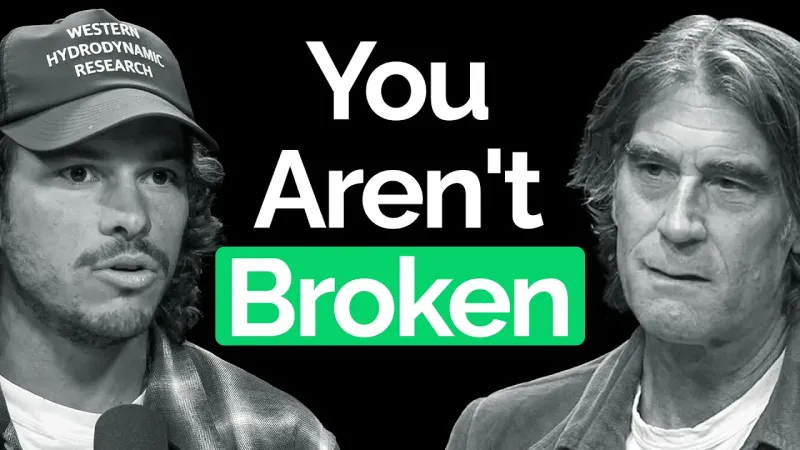
Rich Roll speaks with ultrarunner Max Jolliffe about his family history of addiction, the experiences that led to his sobriety, and the support and tools he used in recovery. They also discuss how those lessons relate to his running, including the demands of the Moab 240 and his development as an athlete.
- Views
- 106K
- Likes
- 2.4K
- Comments
- 139
- Addiction and RecoveryUltrarunningSobriety and PerformancePersonal transformation
Analysis
Rich Roll speaks with ultrarunner Max Jolliffe about his family history of addiction, the experiences that led to his sobriety, and the support and tools he used in recovery. They also discuss how those lessons relate to his running, including the demands of the Moab 240 and his development as an athlete.
- InterviewPodcast episode

- Title
- How to End the Addiction Cycle & Transform Your Life
“I've been sober for 12 years. It's a big part of who I am. I just come from like a really long line of alcoholics and drug addicts. People ask me what is my heritage and it's like alcoholism. Max Jolliffe, the king of Moab. The Moab 240 is a 240-mile race through the desert of Utah. You have climbing, you have descending, you have dirt, dust, sand. Moab 240's got everything. For you to win Moab after only a few years of running Yeah. is so unique in the space. If you make the conscious decision that this is something I want to do or go after and achieve and you do put in the work, anything is possible. You come into this recovery community and you're introduced to all of these tools for life that are obviously going to make your life better, but how have they made you like a better runner? That's a great question. Awesome, man. Super nice to meet you. It's been so fun following your journey over the past couple years and I'm just delighted to talk to you today, Max. Thanks for coming. For people that don't know, you won the Moab 240 and you're on this kind of ascent path right now in your in your career as an ultra runner. What do people not get about a race like Moab 250? We see these videos, we watch your videos, we think we have a sense of what's involved. What is your kind of like reality check on what it's actually like to cover that much distance in a competitive environment. It's almost like these races are not even races. Like I try to go into the multi-day events almost looking at it as this is a big adventure that I'm just trying to do absolutely as fast as possible. Um and it's like you almost can't wrap your head around being out there and pushing so hard for I mean quite literally days straight um and not sleeping. It's just there's there's so many outside factors and variables. I mean you run 100 miles and it's like you're problem-solving and dealing with you know all these different little issues that might come up and foot stuff and uh pains and you know fueling and hydration and uh you know managing electrolytes and sodium and the crew logistics and the gear. There's like so many moving parts and I think the um the 200s and the multi-day stuff is just like that just longer and on a bigger scale. So um yeah, it's hard to almost even look at them as a race and most of the time you're like out there by yourself. Like the field is so spread out. >> on some kind of spiritual like mission quest. Yeah, no, quite literally. Yeah. And like I said earlier, it's like you can experience every single human emotion during the uh during a race like that. The crazy thing in in the King of Moab video is those last four miles, you know, that that last stage where you know, after all that time and distance, it was still up for grabs. Like are you going to win? Are you going to get passed? Did you going to like all these certain you know, like you're moving so slowly at this point. >> Anything can happen. And then you find your legs. You're like you know, God gave me my legs back and you're hitting you know, paces that you hadn't like in the entire race. Like at the very end of this thing.”
- 01Personal history
This personal account establishes relevant lived experience and gives the opening a serious human starting point before the conversation moves elsewhere.
The speaker establishes a long period of sobriety and places it within a family history of addiction.
“I've been sober for 12 years. It's a big part of who I am. I just come from like a really long line of alcoholics and drug addicts. People ask me what is my heritage and it's like alcoholism.”
- 02Race context and early achievement
The race's scale and variety set up the later question of what this kind of competition is actually like. The stray, unfinished reaction in the source remains part of the excerpt.
A brief exchange introduces the Moab 240, describes its terrain, and reacts to the guest's early success.
“Max Jolliffe, the king of Moab. The Moab 240 is a 240-mile race through the desert of Utah. You have climbing, you have descending, you have dirt, dust, sand. Moab 240's got everything. For you to win Moab after only a few years of running Yeah.”
- 03Effort and possibility
This briefly frames the achievement as a result of intention and effort before the conversation returns to the race's lived demands.
The speaker says the accomplishment is distinctive and argues that making a deliberate commitment and doing the work can make achievement possible.
“is so unique in the space. If you make the conscious decision that this is something I want to do or go after and achieve and you do put in the work, anything is possible.”
- 04Recovery question and interview handoff
The question briefly connects recovery to running, but the conversation then shifts into the guest introduction and race discussion rather than developing a promised method for addiction recovery.
The interviewer asks how recovery tools have helped the guest become a better runner, then exchanges greetings and thanks before introducing the guest's race win and career ascent.
“You come into this recovery community and you're introduced to all of these tools for life that are obviously going to make your life better, but how have they made you like a better runner? That's a great question. Awesome, man. Super nice to meet you. It's been so fun following your journey over the past couple years and I'm just delighted to talk to you today, Max. Thanks for coming. For people that don't know, you won the Moab 240 and you're on this kind of ascent path right now in your in your career as an ultra runner.”
- 05Reality-check question
The direct question organizes the next section around correcting the gap between watching race videos and understanding the actual demands.
The interviewer asks what viewers may not understand about the race and requests a reality check on covering that distance competitively.
“What do people not get about a race like Moab 250? We see these videos, we watch your videos, we think we have a sense of what's involved. What is your kind of like reality check on what it's actually like to cover that much distance in a competitive environment.”
- 06Race as a solitary adventure
The guest overturns the simple competition framing and begins explaining what the experience entails. The transcript continues the account through the excerpt's final unit, so the introduction boundary is limited by the supplied cut.
The guest says these events can feel less like races and more like adventures undertaken as fast as possible, despite the extreme duration, effort and outside variables.
“It's almost like these races are not even races. Like I try to go into the multi-day events almost looking at it as this is a big adventure that I'm just trying to do absolutely as fast as possible. Um and it's like you almost can't wrap your head around being out there and pushing so hard for I mean quite literally days straight um and not sleeping. It's just there's there's so many outside factors and variables. I mean you run 100 miles and it's like you're problem-solving and dealing with you know all these different little issues that might come up and foot stuff and uh pains and you know fueling and hydration and uh you know managing electrolytes and sodium and the crew logistics and the gear. There's like so many moving parts and I think the um the 200s and the multi-day stuff is just like that just longer and on a bigger scale. So um yeah, it's hard to almost even look at them as a race and most of the time you're like out there by yourself. Like the field is so spread out.”
- 07Spiritual framing and late-race uncertainty
The exchange extends the contrast between an ordinary race and an unusual endurance experience, then supplies a concrete example of the uncertainty near the finish. The excerpt cuts off before the guest completes the thought, so this is not a resolved ending.
A brief interviewer interjection calls the event a spiritual mission, followed by agreement and a discussion of the final miles, uncertain outcomes and a possible late return of energy.
“>> on some kind of spiritual like mission quest. Yeah, no, quite literally. Yeah. And like I said earlier, it's like you can experience every single human emotion during the uh during a race like that. The crazy thing in in the King of Moab video is those last four miles, you know, that that last stage where you know, after all that time and distance, it was still up for grabs. Like are you going to win? Are you going to get passed? Did you going to like all these certain you know, like you're moving so slowly at this point. >> Anything can happen. And then you find your legs. You're like you know, God gave me my legs back and you're hitting you know, paces that you hadn't like in the entire race. Like at the very end of this thing.”