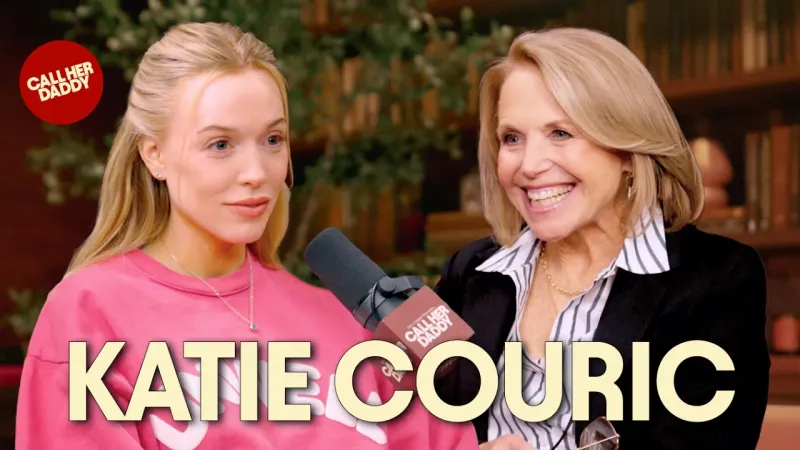
Katie Couric: Sexism, Storytelling & Standing Up to Cancer
Call Her Daddy@callherdaddyKatie Couric: Sexism, Storytelling & Standing Up to Cancer
Alex Cooper interviews Katie Couric about breaking barriers as the first woman to solo anchor the evening news, and the sexism and setbacks she faced in her career. The episode also covers Couric's grief after her first husband's death from cancer and inequities women encounter in healthcare; the opening includes a lighthearted story about a prank by Amy Schumer.

- Views
- 1.4M
- Likes
- 1.7K
- Comments
- 147
- Katie Couric's CareerSexism in JournalismGrief and CancerWomen's Healthcare Inequity
Analysis
Alex Cooper interviews Katie Couric about breaking barriers as the first woman to solo anchor the evening news, and the sexism and setbacks she faced in her career. The episode also covers Couric's grief after her first husband's death from cancer and inequities women encounter in healthcare; the opening includes a lighthearted story about a prank by Amy Schumer.
- InterviewPodcast episode

- Title
- Katie Couric: Sexism, Storytelling & Standing Up to Cancer
What is up, Daddy Gang? It is your founding father, Alex Cooper, with Call Her Daddy. Katie Couric, welcome to Call Her Daddy. >> Thank you so much. I'm happy to be here. >> You are one of the most legendary journalists of all time. You are the first woman to ever solo anchor the evening news. You have literally interviewed everyone from world leaders to Taylor Swift. You have broken barriers for women, all while managing a lot of personal struggles along the way. And so, I feel like we have so much to talk about today, and I'm very, very excited to be here with you. >> Well, thank you for having me. We do have so much to talk about, and I'm going to have to resist Alex asking you a million questions. >> I was literally just going to ask you that cuz I was like, I know you're usually in my seat getting to ask all the questions, getting to be in control. How does it feel when you have to be on the other end of it? >> it actually depends a lot, honestly. No pressure on the interviewer. >> No pressure. Thank you, Katie. >> But but, you know what I love about you is you're always really well prepared, which is so important, and I think it shows. I think first of all, it puts the person at ease. They feel like, "Wow, this person isn't just kind of sitting down. They know something about me. They've done their homework. They have found little interesting things that they are, you know, interested in. And so, I I think when somebody's prepared and interested, it makes it a lot more fun. >> I agree. I think it's like it almost also feels safer cuz you're like, "Oh, you got me. Like you want to be here. I want to be here, and trust me, I got you, Katie." >> Okay, thank you. >> Um I was thinking about it. The last time one of the last times I was in New York interviewing someone was Amy Schumer. >> Mhm. >> And I heard from little birdie that there was like a pretty bold prank that she played on you and your husband. What happened? >> funny. God, I think we were at a dinner. I think it might have been for Glamour magazine. I can't remember. This was God, maybe 10 years ago or something. And I left my phone on the table. My husband was meeting me at this party. He was talking to his his free pass, Keri Russell. >> What about for you? >> because uh friend of his was a is a director and directed Keri in something. Anyway, so my husband's talking to Keri Russell and I'm like, I better go over and say hi to him. I leave my phone on the table. I guess it was unlocked. And uh and Amy texted my husband. I guess maybe my text messages were open and said something like "Anal tonight?" >> No. >> Yeah. >> No. >> And so >> Nope. >> it was very funny. She used it in her stand-up. She talked about it on Jimmy Fallon. But I always said, "Amy, you didn't tell anyone what my husband texted you back." Which was, "Again?" >> No. >> [laughter] >> Wait, and did you immediately know it was a joke or were you like, "What is that?" Okay. It was like so crazy. You're like, "What is happening to me right now?" >> It was really funny and honestly gave her a lot of material for many many routines.
- 01Show greeting and welcome
Establishes the interview setting and identifies who is speaking before the host frames the guest's relevance.
The host greets the show's audience, identifies the host and recurring show, then welcomes the guest. The guest responds appreciatively.
“What is up, Daddy Gang? It is your founding father, Alex Cooper, with Call Her Daddy. Katie Couric, welcome to Call Her Daddy. >> Thank you so much. I'm happy to be here. >>”
- 02Guest credentials and shared agenda
Makes clear why this guest is suited to the conversation and suggests a broad discussion, while the exchange keeps the welcome conversational.
The host lists the guest's professional achievements and breadth of experience, then says there is much to discuss. The guest agrees and jokes about resisting the host's many questions.
“You are one of the most legendary journalists of all time. You are the first woman to ever solo anchor the evening news. You have literally interviewed everyone from world leaders to Taylor Swift. You have broken barriers for women, all while managing a lot of personal struggles along the way. And so, I feel like we have so much to talk about today, and I'm very, very excited to be here with you. >> Well, thank you for having me. We do have so much to talk about, and I'm going to have to resist Alex asking you a million questions. >>”
- 03Interview-role reversal
Moves from the guest's credentials to the interview dynamic itself, inviting a brief personal response before the longer anecdote.
The host jokes that she was about to ask the same question, then explains that she is usually the one asking questions and asks how it feels to be interviewed. The guest says it depends, and the host lightly acknowledges the pressure.
“I was literally just going to ask you that cuz I was like, I know you're usually in my seat getting to ask all the questions, getting to be in control. How does it feel when you have to be on the other end of it? >> it actually depends a lot, honestly. No pressure on the interviewer. >> No pressure. Thank you, Katie. >>”
- 04Prepared interviewing and transition to a story
Affirms the guest's interviewing approach, then uses a specific past event to open the personal anecdote that follows.
The host praises the guest's preparation and explains that it helps interviewees feel at ease and makes the conversation more enjoyable. The guest agrees, saying preparation can make the exchange feel safer, then the host begins recalling a past interview and an intriguing prank.
But but, you know what I love about you is you're always really well prepared, which is so important, and I think it shows. I think first of all, it puts the person at ease. They feel like, "Wow, this person isn't just kind of sitting down. They know something about me. They've done their homework. They have found little interesting things that they are, you know, interested in. And so, I I think when somebody's prepared and interested, it makes it a lot more fun. >> I agree. I think it's like it almost also feels safer cuz you're like, "Oh, you got me. Like you want to be here. I want to be here, and trust me, I got you, Katie." >> Okay, thank you. >> Um I was thinking about it. The last time one of the last times I was in New York interviewing someone was Amy Schumer. >> Mhm. >> And I heard from little birdie that there was like a pretty bold prank that she played on you and your husband. What happened? >>
- 05Prank story and unfinished aftermath
Delivers the personal story introduced by the host's question. The punchline provides a small payoff, while the reaction and subsequent use of the prank keep the anecdote going. The supplied excerpt cuts off before the introduction's transition to its broader discussion can be established.
The guest recounts the setting, the phone left on the table, the prankster texting her husband, and the message. The hosts react and joke about the reply; Couric says the prank became material for performances. The host asks whether Couric immediately knew it was a joke, and the excerpt ends with Couric still describing the reaction and its aftermath.
funny. God, I think we were at a dinner. I think it might have been for Glamour magazine. I can't remember. This was God, maybe 10 years ago or something. And I left my phone on the table. My husband was meeting me at this party. He was talking to his his free pass, Keri Russell. >> What about for you? >> because uh friend of his was a is a director and directed Keri in something. Anyway, so my husband's talking to Keri Russell and I'm like, I better go over and say hi to him. I leave my phone on the table. I guess it was unlocked. And uh and Amy texted my husband. I guess maybe my text messages were open and said something like "Anal tonight?" >> No. >> Yeah. >> No. >> And so >> Nope. >> it was very funny. She used it in her stand-up. She talked about it on Jimmy Fallon. But I always said, "Amy, you didn't tell anyone what my husband texted you back." Which was, "Again?" >> No. >> [laughter] >> Wait, and did you immediately know it was a joke or were you like, "What is that?" Okay. It was like so crazy. You're like, "What is happening to me right now?" >> It was really funny and honestly gave her a lot of material for many many routines.