
$500M of Brand Building Advice in 65 Minutes w/ Greg Lavecchia
Sweat Equity@SweatEquityPodcast$500M of Brand Building Advice in 65 Minutes w/ Greg Lavecchia
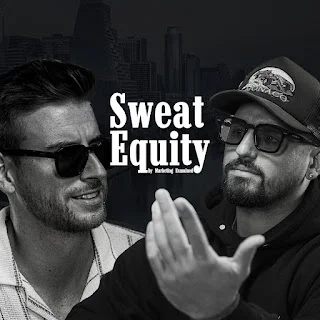
On Sweat Equity, Alex and Brian interview Bloom Nutrition co-founder Greg LaVecchia about building a brand beyond performance ads, developing community, and growing in crowded wellness markets. The episode description also lists discussion of influencer marketing, viral growth, retail expansion, operations, hiring, and personal investing; the opening excerpt focuses on brand building.
- Views
- 98.8K
- Likes
- 2.5K
- Comments
- 73
- Brand building strategyInfluencer marketingWellness brand growthRetail and Team Scaling
Analysis
On Sweat Equity, Alex and Brian interview Bloom Nutrition co-founder Greg LaVecchia about building a brand beyond performance ads, developing community, and growing in crowded wellness markets. The episode description also lists discussion of influencer marketing, viral growth, retail expansion, operations, hiring, and personal investing; the opening excerpt focuses on brand building.
- InterviewPodcast episode

- Title
- $500M of Brand Building Advice in 65 Minutes w/ Greg Lavecchia
“Please do not spend more than $5,000 on your domain or your handle. >> Yeah, I don't give a [ __ ] about your domain. There's no amount that's worth it. >> Greg Leveki is the CEO and co-founder of Bloom Nutrition, one of the fastest growing DTOC brands of all time. But what's insane about Bloom is that they didn't scale on just Meta. They're one of the most innovative influencer marketing companies, pioneering the micro influencer wave, and have now evolved into a dominant retail force. >> Within 24 hours, we did 1.36 million in sales. Oh, I am tripling down in a few things for 2026. I am That's really what put us on the map. That's what really helped us bootstrap Bloom to 180 million with no investors whatsoever. One of the most impressive things Bloom has done is they've consistently gone into saturated categories and every single time they win. All right, we got Greg Levier here, CEO of the fastest growing wellness brand in the US right now. Greg, I just want to ask you one question to start off the episode because you have this piece of content where you talk about the difference between selling a product and building a brand. Yeah. Can you just wrap on that for a little bit? >> All right. So, I come up from the generation of entrepreneurs where it was all performance marketing based, which is very much so for context of what performance marketing is, it's like just using meta ads or Facebook ads shown on Instagram, uh, Facebook, Tik Tok to just get someone to make an acquisition. And then you have all this data around your customer of like how to make sense of those dollars, right? And that was how every brand and still a ton of brands are getting launched and scaled through the last decade of e-commerce business. Mari and I recognized early on because she was growing her platform and therefore her community and Mari's my wife and co-founder of Bloom how we can create something more special, more generational, a longer lifeline, a real culture and community around a product which was more than just an acquisition impulsive purchase done through a performance ad. So when you're building a brand, the difference is you are overd delivering so much value for free to your consumer. They're clicking follow on the Instagram page, whether it's figuratively or literally, you know, joining your community to where you are building a trust with them where every time they either buy your product or listen to some of the value that you're trying to contribute to their life, they know that it's something they can trust time and time over again, right? Right. And so it goes back to like I mean should it even be like a brand on an animal like you think of like a cow like you gave them a brand and then you knew to treat that cow differently because it was like somebody else's cow. And I think about that all the time because if you go to like you go to like the logo one on Bloom can someone's walking through a Target store today and you're seeing all of these logos but if you see this Bloom logo you kind of have a good idea that you're going to get a better for you version or a reimagined version of what a wellness product could be. And I really didn't want to launch a quick cash grab product selling Facebook ad company. I wanted to create or we my wife and I wanted to create a brand that could live through you know shifts in culture and now coming up on over almost a decade.”
- 01Provocative exchange
This cold open puts a concrete, debatable opinion first and establishes disagreement about what is worth paying for.
A speaker warns against spending more than a stated sum on a domain or handle; another speaker pushes back with a dismissive opinion.
“Please do not spend more than $5,000 on your domain or your handle. >> Yeah, I don't give a [ __ ] about your domain. There's no amount that's worth it. >>”
- 02Guest credentials and brand claims
These credentials and attributed results establish the business context and connect the opening dispute to the brand's growth story.
The introduction identifies the guest and co-founder role, characterizes the brand's growth and marketing approach, and includes a rapid-sales claim.
“Greg Leveki is the CEO and co-founder of Bloom Nutrition, one of the fastest growing DTOC brands of all time. But what's insane about Bloom is that they didn't scale on just Meta. They're one of the most innovative influencer marketing companies, pioneering the micro influencer wave, and have now evolved into a dominant retail force. >> Within 24 hours, we did 1.36 million in sales.”
- 03Selected claims preview the conversation
The excerpts add concrete claimed achievements and suggest that the discussion will cover both growth choices and brand strategy.
Brief interview excerpts present future plans, a claim about what put the company on the map, bootstrapping to a stated scale without investors, and success in saturated categories.
“Oh, I am tripling down in a few things for 2026. I am That's really what put us on the map. That's what really helped us bootstrap Bloom to 180 million with no investors whatsoever. One of the most impressive things Bloom has done is they've consistently gone into saturated categories and every single time they win.”
- 04Host frames the central question
The host turns the preceding claims into a clear topic for the conversation and supplies the opening's central question.
The host welcomes the guest, identifies his role, and asks him to explain a distinction between selling a product and building a brand.
“All right, we got Greg Levier here, CEO of the fastest growing wellness brand in the US right now. Greg, I just want to ask you one question to start off the episode because you have this piece of content where you talk about the difference between selling a product and building a brand. Yeah. Can you just wrap on that for a little bit? >>”
- 05Guest begins the answer
This is a brief opening answer that develops the host's distinction. It remains introductory context rather than a sustained main explanation; the excerpt ends while the guest is still elaborating.
The guest gives context about the performance-marketing era, explains how paid ads and customer data supported e-commerce growth, and contrasts that approach with building a community and a more enduring brand.
“All right. So, I come up from the generation of entrepreneurs where it was all performance marketing based, which is very much so for context of what performance marketing is, it's like just using meta ads or Facebook ads shown on Instagram, uh, Facebook, Tik Tok to just get someone to make an acquisition. And then you have all this data around your customer of like how to make sense of those dollars, right? And that was how every brand and still a ton of brands are getting launched and scaled through the last decade of e-commerce business. Mari and I recognized early on because she was growing her platform and therefore her community and Mari's my wife and co-founder of Bloom how we can create something more special, more generational, a longer lifeline, a real culture and community around a product which was more than just an acquisition impulsive purchase done through a performance ad. So when you're building a brand, the difference is you are overd delivering so much value for free to your consumer. They're clicking follow on the Instagram page, whether it's figuratively or literally, you know, joining your community to where you are building a trust with them where every time they either buy your product or listen to some of the value that you're trying to contribute to their life, they know that it's something they can trust time and time over again, right? Right. And so it goes back to like I mean should it even be like a brand on an animal like you think of like a cow like you gave them a brand and then you knew to treat that cow differently because it was like somebody else's cow. And I think about that all the time because if you go to like you go to like the logo one on Bloom can someone's walking through a Target store today and you're seeing all of these logos but if you see this Bloom logo you kind of have a good idea that you're going to get a better for you version or a reimagined version of what a wellness product could be. And I really didn't want to launch a quick cash grab product selling Facebook ad company. I wanted to create or we my wife and I wanted to create a brand that could live through you know shifts in culture and now coming up on over almost a decade.”