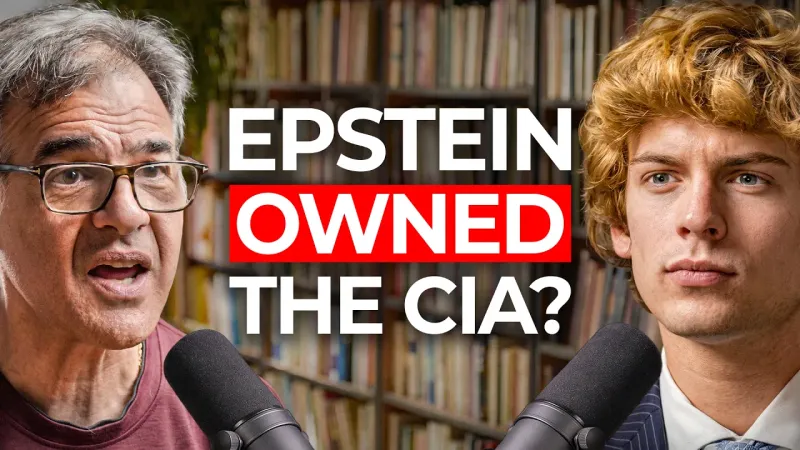
John Kiriakou: "He Sold Us Secrets!" How Jefferey Epstein Ran Mossad, MI6, and The CIA│Jack Neel
Jack Neel@jackneelJohn Kiriakou: "He Sold Us Secrets!" How Jefferey Epstein Ran Mossad, MI6, and The CIA│Jack Neel
Jack Neel interviews former CIA officer John Kiriakou about surveillance experiments, his prosecution and prison sentence after speaking publicly about the CIA’s torture program, and the reach of intelligence agencies. The episode description also lists discussion of Jeffrey Epstein and intelligence links; the opening excerpt does not establish the interview’s conclusions on that topic.

- Views
- 762.3K
- Likes
- 14.1K
- Comments
- 958
- CIA surveillance operationsJohn kiriakou prison caseIntelligence agency powerJeffrey epstein intelligence links
Analysis
Jack Neel interviews former CIA officer John Kiriakou about surveillance experiments, his prosecution and prison sentence after speaking publicly about the CIA’s torture program, and the reach of intelligence agencies. The episode description also lists discussion of Jeffrey Epstein and intelligence links; the opening excerpt does not establish the interview’s conclusions on that topic.
- InterviewPodcast episode
- Title
- John Kiriakou: "He Sold Us Secrets!" How Jefferey Epstein Ran Mossad, MI6, and The CIA│Jack Neel
John, in the 1960s, the CIA spent $20 million surgically implanting microphones inside of live cats. They sewed antennas through their spines and out their tails. The first cat was sent on a mission outside the Russian embassy in Washington DC. >> Mhm. >> What happened next? >> Next, they experimented by putting microphones and cameras on pigeons and tried to train them to land on the window sills of the Soviet embassy in Washington. Those experiments failed. I mean, they were able to get the pigeons and the cats to go over to the Soviet compound, but they couldn't pick anything up that was meaningful. >> Did you know the first cat got hit by a bus? [laughter] >> No. That's just perfect. >> Have you ever thought that an animal was spying on you? >> An animal? No. But I did go to a demonstration in 201 18 in Washington where there seemed to be an inordinate number of dragon flies around the speakers. And then when I got up to the deis the stage, I realized that they were drones. Little teeny tiny drones. I thought that was just scandalous. >> When was this? >> This was 2018. >> Dragonfly drones. They're that small. >> Yeah, they're big enough only to hold a microphone. That's it. But I mean, it's a public speaking event. You can just listen. You don't need to fly a dragonfly drone up to the podium. >> There's no secret taking place. And I wondered if it was like a training exercise. >> That's really fascinating. Have you ever inserted a microphone inside of an animal or used I was very conventional in that respect. I only uh broke into houses to to plant bugs three or four times over the course of my career. And it was always very conventional, you know, in an ashtray under a flower pot, something like that, not in an animal. >> That's fascinating. Uh yeah, I for people who are unfamiliar with your story, so you spent 14 years at the CIA. That's right. Uh you helped capture some of the most dangerous terrorists alive. Then a single interview on TV in 2007, ended your career, your marriage, and sent you to federal prison. What exactly did you say that made you go to prison? >> I said, what did I say that made me go to prison? Well, it depends on your point of view. M >> what I said that started the whole slow motion chain of dominoes falling was that the CIA was torturing its prisoners. That torture was official US government policy and that the policy had been personally approved by the president himself. What they ended up getting me on was something much more innocuous. So, they charged me with five felonies, including three counts of espionage. The espionage charges all came from that interview and a subsequent interview that I did with the New York Times. But what they got me on was in the summer of 20 of 2008, um, a journalist wrote to me and said, "I'm writing a book on the Abu Omar rendition." And Abu Omar was a cleric in Milan, Italy that the CIA kidnapped and sent to Egypt to undergo torture. Can you introduce me to any of these 12 people so I can interview them for my book? I said, I don't know any of these people. And then he wrote me back and said, "What about these people?" And I said, "I don't know these people. Kidnapping was not my thing at the agency.
- 01Unusual opening account
The unusual claim and the experiment's disappointing outcome establish a memorable opening anecdote. The follow-up question carries the story forward, while the failure qualifies what the agency achieved.
The speaker describes an intelligence agency's costly attempt to equip cats for surveillance and send one near an embassy. An interviewer asks what happened next, and the speaker describes failed pigeon experiments and explains that neither animal gathered meaningful information.
“John, in the 1960s, the CIA spent $20 million surgically implanting microphones inside of live cats. They sewed antennas through their spines and out their tails. The first cat was sent on a mission outside the Russian embassy in Washington DC. >> Mhm. >> What happened next? >> Next, they experimented by putting microphones and cameras on pigeons and tried to train them to land on the window sills of the Soviet embassy in Washington. Those experiments failed. I mean, they were able to get the pigeons and the cats to go over to the Soviet compound, but they couldn't pick anything up that was meaningful. >>”
- 02Anecdotal turn and follow-up
The unexpected fate of the cat and the guest's firsthand drone anecdote keep the conversation lively while extending its animal-surveillance theme. The mistaken identification supplies a small reveal within the anecdote.
The interviewer adds that the first cat was hit by a bus, prompting laughter. The conversation then turns to whether an animal has ever spied on the guest; he answers with an experience at a public demonstration, where apparent dragonflies turned out to be tiny drones.
“Did you know the first cat got hit by a bus? [laughter] >> No. That's just perfect. >> Have you ever thought that an animal was spying on you? >> An animal? No. But I did go to a demonstration in 201 18 in Washington where there seemed to be an inordinate number of dragon flies around the speakers. And then when I got up to the deis the stage, I realized that they were drones. Little teeny tiny drones. I thought that was just scandalous. >> When was this? >> This was 2018. >> Dragonfly drones. They're that small. >> Yeah, they're big enough only to hold a microphone. That's it.”
- 03Public-event aside and comic exchange
This exchange wraps up the anecdote with a practical clarification and humor, then uses the contrast between animal surveillance and conventional bug planting to lead naturally toward the guest's work history.
The guest says the event was public and no drone needed to approach the podium. The interviewer suggests a training exercise, then asks whether the guest ever put a microphone in an animal; the guest replies that his own bug-planting work was conventional and describes ordinary hiding places.
“But I mean, it's a public speaking event. You can just listen. You don't need to fly a dragonfly drone up to the podium. >> There's no secret taking place. And I wondered if it was like a training exercise. >> That's really fascinating. Have you ever inserted a microphone inside of an animal or used I was very conventional in that respect. I only uh broke into houses to to plant bugs three or four times over the course of my career. And it was always very conventional, you know, in an ashtray under a flower pot, something like that, not in an animal. >> That's fascinating. Uh yeah, I for people who are unfamiliar with your story, so you spent 14 years at the CIA.”
- 04Credentials and interview premise
The credentials establish relevant experience, while the sharp turn from a significant career to imprisonment raises the stakes of the guest's account. The question opens the central backstory that the excerpt begins to explain.
The guest confirms his years at the CIA. The interviewer cites his role in capturing dangerous terrorists, then says a 2007 television interview ended his career and marriage and sent him to federal prison. The interviewer asks what he said.
“That's right. Uh you helped capture some of the most dangerous terrorists alive. Then a single interview on TV in 2007, ended your career, your marriage, and sent you to federal prison. What exactly did you say that made you go to prison?”
- 05Guest begins explaining the prosecution
The response begins answering why the guest was prosecuted and gives his account of what the charges concerned. The journalist's request starts a concrete story that could explain the case, but the supplied excerpt ends before that story is complete; the introduction boundary is therefore limited by the available source.
The guest repeats the question, says the answer depends on one's point of view, and explains that his public statements concerned CIA torture and government policy. He distinguishes those statements from the felonies and espionage charges brought against him, then starts recounting a journalist's request for help with a book about a rendition case.
>> I said, what did I say that made me go to prison? Well, it depends on your point of view. M >> what I said that started the whole slow motion chain of dominoes falling was that the CIA was torturing its prisoners. That torture was official US government policy and that the policy had been personally approved by the president himself. What they ended up getting me on was something much more innocuous. So, they charged me with five felonies, including three counts of espionage. The espionage charges all came from that interview and a subsequent interview that I did with the New York Times. But what they got me on was in the summer of 20 of 2008, um, a journalist wrote to me and said, "I'm writing a book on the Abu Omar rendition." And Abu Omar was a cleric in Milan, Italy that the CIA kidnapped and sent to Egypt to undergo torture. Can you introduce me to any of these 12 people so I can interview them for my book? I said, I don't know any of these people. And then he wrote me back and said, "What about these people?" And I said, "I don't know these people. Kidnapping was not my thing at the agency.