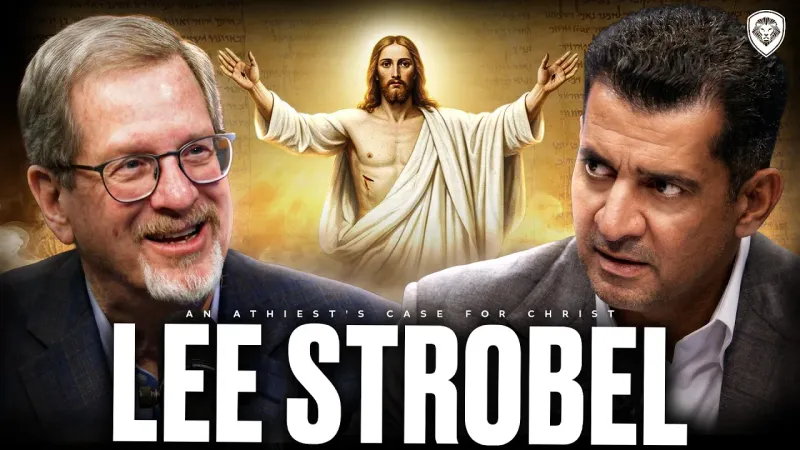
A Case For Jesus Christ - Lee Strobel | PBD #770
PBD Podcast@PBDPodcastA Case For Jesus Christ - Lee Strobel | PBD #770
Lee Strobel discusses the evidence for Jesus’ resurrection and his shift from atheism to Christianity, as Patrick Bet-David shares his own experiences with faith. The episode is also framed around Christianity’s cultural standing, church scandals, and divisions over religion, free speech, and truth.
- Views
- 437.2K
- Likes
- 15.6K
- Comments
- 1.9K
- Jesus' Resurrection EvidenceLee Strobel's Faith JourneyChristianity and Cultural DivisionChurch Scandals and Belief
Analysis
Lee Strobel discusses the evidence for Jesus’ resurrection and his shift from atheism to Christianity, as Patrick Bet-David shares his own experiences with faith. The episode is also framed around Christianity’s cultural standing, church scandals, and divisions over religion, free speech, and truth.
- Interview

- Title
- A Case For Jesus Christ - Lee Strobel | PBD #770
Who killed Jesus Christ? Give me a long weekend and I can disprove the resurrect Dead people don't come back to life and that just doesn't happen. I was an atheist. I lived a very immoral, drunken, profane, narcissistic, self-destructive in many ways kind of life. My wife comes up to me one day and gives me the worst news any atheist husband could get. She said, "I've decided to become a Christian." And honestly, first word through my mind, divorce. And I used my journalism training, my legal training, took me 2 years unequivocally that the evidence for the resurrection of Jesus Christ is so overwhelming that it compels acceptance by proof, which leaves absolutely no room for doubt. Who is benefiting the most from seeing this divide taking place today both theologically, politically, specifically on social media in America? Who benefits the most? He certainly sparked something on these college campuses. He had the courage to go in. He lost his life because he did. I've I've been working with the FBI for the last couple of weeks because someone's trying to kill me because of my the stands I take and there was a credible threat on my life. Did you ever think you were making I feel I'm supposed to get taste sweet victory. I know this life made for me. Adam, what's your point? The future looks bright. My handshake is better than anything I ever signed. Right here. >> [music] >> You are a one-of-one. >> My son's right about that. I don't think I've I've said this before. All right, Lee Strobel, great to have you here. Thank you. Wonderful to be >> We've been looking forward to having you for a long time. I have an interesting story with you. Yeah, but before we get into it, you know, I think it's important for the audience to know for those who don't you've sold nearly 20 million copies of your books, 40 plus books. The big one being Case for Christ and Case for Church. There's a bunch of them. I know you have a new one that came out Seeing the Supernatural, which we'll get into as well. And it's funny because 2 weeks ago I had uh Scott Galloway on. I don't know if you know who he is, Professor Scott Galloway. You know, a very good voice on the liberal side who talks about fatherhood, very successful business guy. And while we're talking, I said, "So, tell me about your relationship with God and faith." I said, "Look, I wish I had faith. I don't." I said, "Well, look, normally when I talk to somebody who is either a super logical thinker and maybe their philosophy or maybe their math or maybe hardcore logic, I'll recommend two books to them and I recommended those two books to them. I said, "Number one, you got to read Mere Christianity by C.S. Lewis, which by the way, Shadowlands phenomenon. I don't know if you've seen it or not, great Anthony Hopkins. I said, "The second book you got to read is Case for Christ by Lee Strobel." Yes. And my story is 20 back in 19 back in 2002, 2003 when I got out of the military, I was an atheist for 25 years of my life. I lived in Iran, so it's kind of tough to be a Christian when you're in Iran, war, parents get a divorce. And then I'm doing Bible study in Pasadena every every other Friday night from 6:00 p.m. to 2:00 in the morning. And your stuff would come up all the time.
- 01Challenge and claimed answer
This opens on a clear dispute and promises a reason to reconsider it. The personal reversal gives the coming account a concrete question: what evidence changed the speaker’s mind?
The speaker challenges the idea that the central event can happen, then says a brief period would be enough to disprove it. The speaker next claims that evidence led to the opposite conclusion.
Who killed Jesus Christ? Give me a long weekend and I can disprove the resurrect Dead people don't come back to life and that just doesn't happen. I was an atheist. I lived a very immoral, drunken, profane, narcissistic, self-destructive in many ways kind of life. My wife comes up to me one day and gives me the worst news any atheist husband could get. She said, "I've decided to become a Christian." And honestly, first word through my mind, divorce. And I used my journalism training, my legal training, took me 2 years unequivocally that the evidence for the resurrection of Jesus Christ is so overwhelming that it compels acceptance by proof, which leaves absolutely no room for doubt.
- 02Broader question and brief reply
The question widens the discussion from a personal change in belief to the stakes of current public divisions. The brief reply provides an initial perspective without resolving the broader question.
The speaker asks who benefits from a present-day divide across theological, political, and social-media contexts, then asks again who benefits most. A reply briefly points to an individual’s effect on college campuses and the cost he paid.
“Who is benefiting the most from seeing this divide taking place today both theologically, politically, specifically on social media in America? Who benefits the most? He certainly sparked something on these college campuses. He had the courage to go in. He lost his life because he did.”
- 03New threat and host exchange
The threat adds a striking personal detail, while the ensuing exchange moves the conversation into its interview setting. These remarks do not yet advance the central case, but remain part of the supplied opening before the host formally identifies the guest.
The speaker repeats a false start, mentions recent work with an authority after a threat, then the conversation shifts through an interrupted question, a short comment about life, and a question to the host. The host answers briefly with optimism and a compliment, followed by a claim about a family member’s opinion.
“I've I've been working with the FBI for the last couple of weeks because someone's trying to kill me because of my the stands I take and there was a credible threat on my life. Did you ever think you were making I feel I'm supposed to get taste sweet victory. I know this life made for me. Adam, what's your point? The future looks bright. My handshake is better than anything I ever signed. Right here. >> [music] >> You are a one-of-one. >> My son's right about that. I don't think I've I've said this before.”
- 04Guest welcome and credentials
The formal welcome establishes the interview and identifies the guest. The host’s credentials and book references position the coming conversation around Strobel’s writing and the story promised next.
The host welcomes Lee Strobel and exchanges pleasantries with him. The host then signals an upcoming story and establishes the guest’s book sales, number of books, and several relevant titles, including a recently released one they plan to discuss.
“All right, Lee Strobel, great to have you here. Thank you. Wonderful to be >> We've been looking forward to having you for a long time. I have an interesting story with you. Yeah, but before we get into it, you know, I think it's important for the audience to know for those who don't you've sold nearly 20 million copies of your books, 40 plus books. The big one being Case for Christ and Case for Church. There's a bunch of them. I know you have a new one that came out Seeing the Supernatural, which we'll get into as well.”
- 05Prior guest and book recommendation
This anecdote explains how the host came to recommend Strobel’s book and connects the guest’s work to a wider conversation about faith and reasoning. It is still introductory context rather than the promised personal story.
The host connects this interview to a recent conversation with a named professor, describes his public perspective and work, and recounts asking him about faith. The host describes recommending two books to logical thinkers and names the books and authors.
And it's funny because 2 weeks ago I had uh Scott Galloway on. I don't know if you know who he is, Professor Scott Galloway. You know, a very good voice on the liberal side who talks about fatherhood, very successful business guy. And while we're talking, I said, "So, tell me about your relationship with God and faith." I said, "Look, I wish I had faith. I don't." I said, "Well, look, normally when I talk to somebody who is either a super logical thinker and maybe their philosophy or maybe their math or maybe hardcore logic, I'll recommend two books to them and I recommended those two books to them. I said, "Number one, you got to read Mere Christianity by C.S. Lewis, which by the way, Shadowlands phenomenon. I don't know if you've seen it or not, great Anthony Hopkins. I said, "The second book you got to read is Case for Christ by Lee Strobel." Yes.
- 06Guest begins his background
This begins the personal history that can explain the change of belief at the opening’s center. The supplied excerpt ends during further background, before the account reaches that change or the main discussion.
The guest starts a personal account by locating it in time, saying he had been an atheist for 25 years, and describing how living in Iran and his parents’ divorce formed part of that background.
“And my story is 20 back in 19 back in 2002, 2003 when I got out of the military, I was an atheist for 25 years of my life. I lived in Iran, so it's kind of tough to be a Christian when you're in Iran, war, parents get a divorce. And then I'm doing Bible study in Pasadena every every other Friday night from 6:00 p.m. to 2:00 in the morning. And your stuff would come up all the time.”