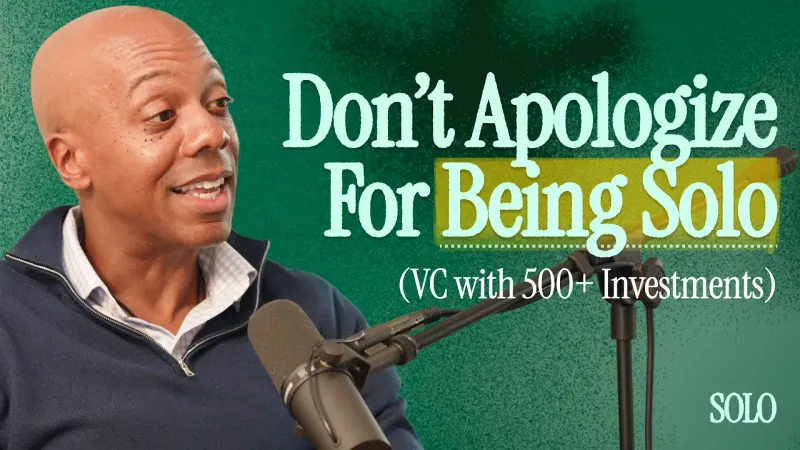
How To Fundraise As A Solo Founder with Charles Hudson (Precursor Ventures)
Solo Founders@solofoundingHow To Fundraise As A Solo Founder with Charles Hudson (Precursor Ventures)
Charles Hudson, founder of Precursor Ventures, discusses the tradeoffs of building a company solo versus with a co-founder. He challenges common assumptions about founding teams, describes co-founder breakups and equity costs, and shares fundraising advice for solo founders. The conversation also considers the potential advantages and challenges of going it alone.

- Views
- 36.6K
- Likes
- 1.2K
- Comments
- 85
- Solo founder fundraisingCo-Founder BreakupsStartup Equity and OwnershipVenture capital
Analysis
Charles Hudson, founder of Precursor Ventures, discusses the tradeoffs of building a company solo versus with a co-founder. He challenges common assumptions about founding teams, describes co-founder breakups and equity costs, and shares fundraising advice for solo founders. The conversation also considers the potential advantages and challenges of going it alone.
- InterviewPodcast episode

- Title
- How To Fundraise As A Solo Founder with Charles Hudson (Precursor Ventures)
I would take a really talented solo founder over a mismatched team. Between 25% and 30% of our portfolio companies lose a co-founder before series A. The reason of the failure is often because of the team not getting along. Solo founder own 90% of the company. It changes the game in terms of the kind of offers you can make to candidates. And because you're the only person in the beginning, you get to try all the jobs. I wouldn't want people to give 40 plus percent of their company to someone else just to try to make their fundraise easier. People always tell me, well, startups are teams for. But what kind of sport? Tennis is a team sport, but if you're playing singles tennis on a tennis team, no one else is going to serve for you. You have to make your own shots. Let's make the case for solo founding. When you're a solo founder, you're sort of like, if there's something in my company that I don't like, you're fully empowered to fix it cuz you either created it or allowed it to happen. And you can fix it. Their perception of how lonely and isolated it would feel is about 1/10 of what they actually experience. There's a big difference between being solo and versus being solo together. I think the general consensus is that you need to have a co-founder to to start a company. >> And we said, well, but those are also the reasons that most of the companies fail or a lot of companies fail. I mean, I feel like there's so many myths about why people need it. Did you guys do like a deep dive on like debunking a bunch of the myths? Yeah, I well, I'm curious what you think some of the myths are. I think people like, oh, well, like if you don't have a co-founder, like it's too much work for one person. I'm like, well, startups are a lot of work. And I'm like, I'm like, look, there's a difference between not having a co-founder and building a startup completely alone. They're not the same thing. And so, we spent a lot of time on that. My biggest fear is always, are you doing this by yourself because you're not capable of playing nice with others? And that's always the thing I try to test. But I found that it's better to do something by yourself than it is with some weird shotgun wedding or mishmash co-founders who are not properly situated. Those teams are going to break up. And, you know, I we've I think last time we checked it was something like between 25% and 30% of our portfolio companies lose a co-founder before series A. Yeah. So, it's a pretty common occurrence for us that we're dealing with these things and sometimes they go smoothly and sometimes they're highly disruptive to the company and I found that oftentimes there's an inverse relationship between um how disruptive it is to the company and like how well matched the people were up front. Mhm. So, it's just it's just some and people say, "Oh, you know, like who's going to be the sounding board?" I'm like, "Well, you can build a community of people who can provide you with push, sounding board, feedback, challenge your ideas." That doesn't have to come from your co-founder. One of my friends was like, you know, we stopped talking about co-founder, we start talking about the founding team. And what really matters is who is that first core set of five people around the company and maybe in an AI environment it's maybe the first two or three people, maybe not five.
- 01State the preference and supporting claim
This puts the solo-founder position up front and gives it context from the speaker’s stated experience, establishing the tension the rest of the opening examines.
The speaker favors a talented solo founder over a mismatched team, then cites a portfolio statistic about co-founder departures before Series A and a reason those teams fail.
“I would take a really talented solo founder over a mismatched team. Between 25% and 30% of our portfolio companies lose a co-founder before series A. The reason of the failure is often because of the team not getting along.”
- 02Lay out solo advantages and the cost of an easier route
These concrete claims develop the case for solo founding through ownership, flexibility, and the cost of seeking an easier fundraise.
The speaker says a solo founder owns 90% of the company, can make different offers to candidates, and tries all the jobs early on; they oppose giving away more than 40 percent simply to make fundraising easier.
“Solo founder own 90% of the company. It changes the game in terms of the kind of offers you can make to candidates. And because you're the only person in the beginning, you get to try all the jobs. I wouldn't want people to give 40 plus percent of their company to someone else just to try to make their fundraise easier.”
- 03Use a team-sport analogy
The analogy sharpens the question of whether working on a team always means needing a co-founder, while leading into an explicit case for solo founding.
The speaker raises the idea that startups are teams, asks what kind of sport, and compares a solo founder to a singles tennis player who must make their own shots.
“People always tell me, well, startups are teams for. But what kind of sport? Tennis is a team sport, but if you're playing singles tennis on a tennis team, no one else is going to serve for you. You have to make your own shots. Let's make the case for solo founding.”
- 04Reframe autonomy and isolation
This addresses a concern about solo founding and reframes independence as agency rather than necessarily being isolated, broadening the case beyond ownership.
The speaker says solo founders can fix problems they created or allowed, then contrasts the anticipated loneliness with the experience and distinguishes being solo from being solo together.
“When you're a solo founder, you're sort of like, if there's something in my company that I don't like, you're fully empowered to fix it cuz you either created it or allowed it to happen. And you can fix it. Their perception of how lonely and isolated it would feel is about 1/10 of what they actually experience. There's a big difference between being solo and versus being solo together.”
- 05Question the co-founder assumption
This brings the central assumption into focus and invites a deeper examination of the reasons people give for needing a co-founder.
The speaker identifies a general consensus that a co-founder is needed, and the other speaker counters that co-founder-related problems can also be reasons companies fail. They raise whether the discussion has examined myths about needing one.
“I think the general consensus is that you need to have a co-founder to to start a company. >> And we said, well, but those are also the reasons that most of the companies fail or a lot of companies fail. I mean, I feel like there's so many myths about why people need it. Did you guys do like a deep dive on like debunking a bunch of the myths?”
- 06Develop the objection and distinguish being solo from being alone
This extended exchange tests the main objection and adds a qualified account of why a bad partnership may be more disruptive than working solo. It continues the opening’s case, but the supplied excerpt ends during the wider discussion rather than at a clear transition to the main episode.
The conversation considers the objection that the work is too much for one person, responds that the endeavor is already demanding, and separates having no co-founder from building entirely alone. The speaker shares a fear they test, states a preference for working solo over a poorly matched partnership, and returns to the portfolio statistic and its possible effects.
“Yeah, I well, I'm curious what you think some of the myths are. I think people like, oh, well, like if you don't have a co-founder, like it's too much work for one person. I'm like, well, startups are a lot of work. And I'm like, I'm like, look, there's a difference between not having a co-founder and building a startup completely alone. They're not the same thing. And so, we spent a lot of time on that. My biggest fear is always, are you doing this by yourself because you're not capable of playing nice with others? And that's always the thing I try to test. But I found that it's better to do something by yourself than it is with some weird shotgun wedding or mishmash co-founders who are not properly situated. Those teams are going to break up. And, you know, I we've I think last time we checked it was something like between 25% and 30% of our portfolio companies lose a co-founder before series A. Yeah. So, it's a pretty common occurrence for us that we're dealing with these things and sometimes they go smoothly and sometimes they're highly disruptive to the company and I found that oftentimes there's an inverse relationship between um how disruptive it is to the company and like how well matched the people were up front. Mhm.”
- 07Offer other sources of support
This supplies a small answer to the concern about support while reinforcing the distinction between solo founding and going without other people’s input.
The speaker responds to the concern about having a sounding board by suggesting community members who can offer feedback and challenge ideas, then says that support does not have to come from a co-founder.
So, it's just it's just some and people say, "Oh, you know, like who's going to be the sounding board?" I'm like, "Well, you can build a community of people who can provide you with push, sounding board, feedback, challenge your ideas." That doesn't have to come from your co-founder.
- 08Broaden the definition of a founding team
This widens the framing from the co-founder question to the people who support an organization, while leaving the introduction boundary uncertain because the supplied opening ends mid-thought.
The speaker recalls a friend shifting the discussion from co-founders to the founding team, then says the first core group around a company matters and suggests that in an AI environment it may be only two or three people. The excerpt cuts off at that point.
“One of my friends was like, you know, we stopped talking about co-founder, we start talking about the founding team. And what really matters is who is that first core set of five people around the company and maybe in an AI environment it's maybe the first two or three people, maybe not five.”