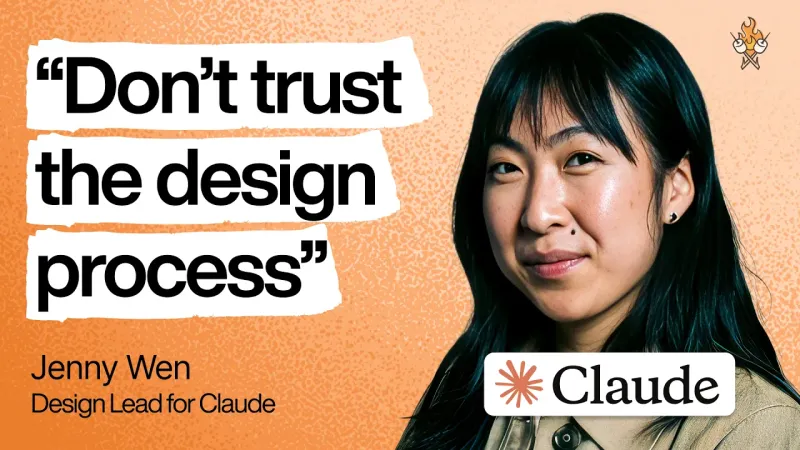
The design process is dead. Here’s what’s replacing it. | Jenny Wen (head of design at Claude)
Lenny's Podcast@LennysPodcastThe design process is dead. Here’s what’s replacing it. | Jenny Wen (head of design at Claude)
Jenny Wen discusses why the traditional design process is changing as AI tools and faster engineering workflows reshape designers’ work. The conversation also covers her role at Anthropic, AI’s potential in design judgment, hiring archetypes, and the future of chatbot interfaces.

- Views
- 346.2K
- Likes
- 7.4K
- Comments
- 416
- AI and Design WorkFuture of Design ProcessDesign Careers and HiringHuman Taste and Judgment
Analysis
Jenny Wen discusses why the traditional design process is changing as AI tools and faster engineering workflows reshape designers’ work. The conversation also covers her role at Anthropic, AI’s potential in design judgment, hiring archetypes, and the future of chatbot interfaces.
- InterviewPodcast episode
- Title
- The design process is dead. Here’s what’s replacing it. | Jenny Wen (head of design at Claude)
“This design process that designers have been taught, we sort of treat it as gospel. That's basically dead. You as a designer actually like do not have the time to make these beautiful mocks anymore. >> A big part of the design role now is helping engineers and teams execute, not just telling them here's the design. >> Few years ago, 60 to 70% of it was mocking and prototyping. But now I feel the mocking up part of it is 30 to 40%. >> You're better off not blocking that, letting them cook. It's not just designers who are feeling like oh yeah we have to keep up with engineers. I think even engineers are like how do we keep up with ourselves? >> How do keep up with all our agents? There are seven agents who are constantly running. >> The result of engineering changing a bunch is that design is sort of forced to change. We used to go off and make this 2 year 5 year 10ear vision even. Now it becomes a vision that's 3 to 6 months out and isn't necessarily creating this beautiful deck. Sometimes just creating a prototype that points people in the right direction. >> Boris on the podcast recently was saying Claude Code is now helping him come up with ideas. We'll get better at taste and judgement and design. We might be holding on to that a little bit too much. >> Where will human brains continue to be valuable? >> At the end of the day, someone has to decide what is actually going to get built and what actually matters. Someone still needs to be accountable for the decision. >> What do you now look for when you're hiring designers? >> There's probably three archetypes of folks that are really interesting to me right now. >> Today's guest is Jenny Wen. Jenny was head of design for Claude, is now leading design for Claude Co-work. Prior to that, she was director of design at Figma, where she led the design teams behind Fig Jam and Slides. She was also designer at Dropbox and Square and Shopify. And what I love about this conversation is that Jenny is living in the future of where design as a profession is heading. And she is here to give us a glimpse into what that looks like and how much things are going to be changing for designers. It is pretty wild and extremely interesting. A huge thank you to no 111 and Emily Lin Hasham for suggesting topics and questions for this conversation. Don't forget to check out lennisproass.com for an incredible set of deals available exclusively to Lenny's newsletter subscribers. Let's get into it after a short word from our wonderful sponsors.”
- 01Challenge the established method
This gives the introduction its central, provocative premise and begins to question whether the familiar process still fits the demands of the work.
The speaker says a process designers were taught and treated as gospel is effectively dead, adding that designers no longer have time to make elaborate mockups.
“This design process that designers have been taught, we sort of treat it as gospel. That's basically dead. You as a designer actually like do not have the time to make these beautiful mocks anymore.”
- 02Name the changing work
This supplies an initial, concrete clue to the alternative: the role includes enabling others to carry the work forward, while leaving the full implications open.
A speaker says a large part of the design role is now helping engineers and teams execute, rather than only handing over a design.
“>> A big part of the design role now is helping engineers and teams execute, not just telling them here's the design.”
- 03Show the shift in emphasis
The figures make the claimed change more concrete, while the practical advice illustrates the move away from controlling every design step.
The speaker contrasts an earlier estimate of 60 to 70% spent mocking and prototyping with a current feeling that mockup work is 30 to 40%, then suggests letting collaborators proceed rather than blocking them.
“>> Few years ago, 60 to 70% of it was mocking and prototyping. But now I feel the mocking up part of it is 30 to 40%. >> You're better off not blocking that, letting them cook.”
- 04Broaden the pressure beyond one role
This widens the premise from a design-specific adjustment to a shared workplace challenge, suggesting the change is affecting the teams designers work with too.
The exchange says designers are not the only ones trying to keep up: engineers are also asking how to keep up with themselves and their agents.
“It's not just designers who are feeling like oh yeah we have to keep up with engineers. I think even engineers are like how do we keep up with ourselves? >> How do keep up with all our agents? There are seven agents who are constantly running.”
- 05Describe the shorter planning horizon
This elaborates on the change in practice and gives viewers a second clue: design may involve nearer-term direction-setting instead of only producing a polished presentation.
The speaker connects engineering changes to changes in design, contrasting long-range visions with a three-to-six-month horizon and prototypes that point people in a direction.
“>> The result of engineering changing a bunch is that design is sort of forced to change. We used to go off and make this 2 year 5 year 10ear vision even. Now it becomes a vision that's 3 to 6 months out and isn't necessarily creating this beautiful deck. Sometimes just creating a prototype that points people in the right direction. >>”
- 06Raise questions about judgment and responsibility
The exchange makes the changing role’s human contribution a live question and offers a partial answer: judgment and accountability still matter. It develops the central topic without claiming those questions are fully settled.
The host mentions an example of Claude Code helping someone generate ideas, wonders whether people hold on too tightly to taste and judgment, then asks where human brains remain valuable. The guest says someone must decide what gets built and be accountable for that decision.
“Boris on the podcast recently was saying Claude Code is now helping him come up with ideas. We'll get better at taste and judgement and design. We might be holding on to that a little bit too much. >> Where will human brains continue to be valuable? >> At the end of the day, someone has to decide what is actually going to get built and what actually matters. Someone still needs to be accountable for the decision.”
- 07Introduce the guest and viewing promise
The credentials establish why Wen is relevant to the discussion, while the host’s stated promise gives viewers a reason to continue: a perspective on the emerging future of design work. The hiring question also previews a practical topic, but the opening does not yet state a specific hiring benefit.
The host asks what to look for when hiring designers, then identifies Jenny Wen and summarizes her current and prior design leadership roles. The host says she is living in the profession’s future and promises a glimpse of what it looks like and how much things are changing for designers.
“>> What do you now look for when you're hiring designers? >> There's probably three archetypes of folks that are really interesting to me right now. >> Today's guest is Jenny Wen. Jenny was head of design for Claude, is now leading design for Claude Co-work. Prior to that, she was director of design at Figma, where she led the design teams behind Fig Jam and Slides. She was also designer at Dropbox and Square and Shopify. And what I love about this conversation is that Jenny is living in the future of where design as a profession is heading. And she is here to give us a glimpse into what that looks like and how much things are going to be changing for designers. It is pretty wild and extremely interesting. A huge thank you to no 111 and Emily Lin Hasham for suggesting topics and questions for this conversation. Don't forget to check out lennisproass.com for an incredible set of deals available exclusively to Lenny's newsletter subscribers. Let's get into it after a short word from our wonderful sponsors.”