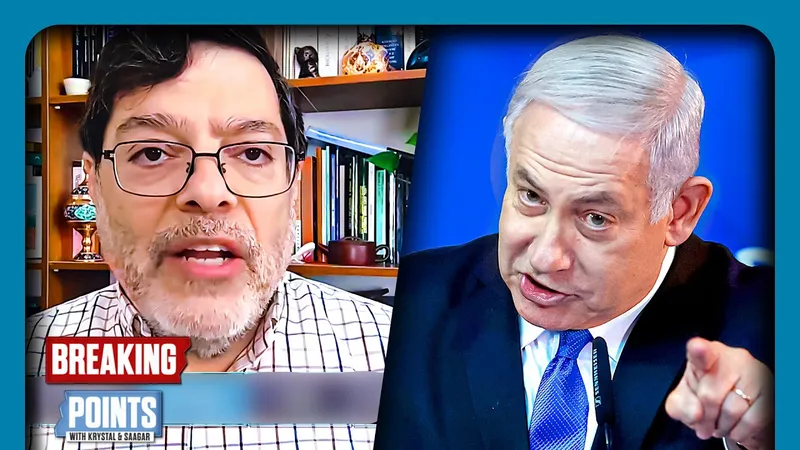
Tehran Prof Marandi: Israel WILL Restart Iran War
Breaking Points@breakingpointsTehran Prof Marandi: Israel WILL Restart Iran War
Krystal and Saagar interview Professor Mohammad Marandi about negotiations between the U.S. and Iran, the Strait of Hormuz blockade, and the ceasefire. Marandi argues that Iran expects another round of war soon and says the blockade and attacks on Lebanon could hasten economic disruption. The excerpt also begins a comparison with the JCPOA negotiations.

- Views
- 936.4K
- Likes
- 28.7K
- Comments
- 4.8K
- Iran war negotiationsStrait of Hormuz BlockadeIranian political perspective
Analysis
Krystal and Saagar interview Professor Mohammad Marandi about negotiations between the U.S. and Iran, the Strait of Hormuz blockade, and the ceasefire. Marandi argues that Iran expects another round of war soon and says the blockade and attacks on Lebanon could hasten economic disruption. The excerpt also begins a comparison with the JCPOA negotiations.
- Interview

- Title
- Tehran Prof Marandi: Israel WILL Restart Iran War
So, for more on the war from the Iranian perspective, we're glad to be joined this morning by Professor Mohammad Marandi. He is a professor at the University of Tehran and actually was part of the delegation in Islamabad recently. So, very grateful to have you this morning, sir. >> see you, sir. Thank you. Thank >> Yeah, of course. So, wanted to get your reaction to some comments from Secretary of War Pete Hegseth this morning. He said in a press conference, "If Iran chooses poorly, then they will have a blockade and bombs dropping on infrastructure, power, and energy." You know, how are you viewing these negotiations? Do you think this is is another US ruse? Do you think they are just trying to prepare for a new escalation, or do you think that they are serious about doing what it takes to achieve some sort of a deal? I think the Iranians from the very beginning believed that the US was not serious. Mhm. And the United States backed down from its initial position of unconditional surrender to the 15-point plan to ultimately accepting Iran's 10-point plan as the framework for discussion. But Iran knew that the United States was was never going to move in that direction, and that Netanyahu and the the Zionist lobby, they would prevent that. But Iran wanted to show the world and its own people that politically the United States uh under Trump was floundering. Mhm. And since the ceasefire, the Iranians have been preparing themselves for the next round of war. And I think the Iranians believe that it could be quite soon. Interesting. So, sir, one of the things that we yeah, we're curious cuz we're trying to decipher all of these moves from here in Washington. We've seen uh the Iranian closure of the Strait of Hormuz. Now, this US blockade of the blockade of the Strait of Hormuz. We also saw yesterday a threat from Iran to close the Red Sea. I'm curious from your view and some of the talks maybe that you observed in Islamabad, what the seriousness of the blockade is having in terms of the thought process inside Tehran. Well, the Iranians when they went to Islamabad, uh the negotiators had full authority uh before leaving, the speaker of parliament who was the head of the delegation spoke extensively with Ayatollah Khamenei, the leader. But, the US side was obviously uh very different. Uh Vance obviously had no authority. He was constantly making phone calls, including to Netanyahu. And later we learned that Netanyahu said that Vance reported to him, which is a strange word to use, and that other officials also report to him, US officials, which is also strange. But, the blockade from the Iranian's perspective is intensifying the pace in which the global economy is moving towards collapse. And the belief here is that uh the United States by intensifying the blockade and the Israeli regime by violating the ceasefire agreement and attacking Lebanon has mhm ha- is pushing forward the collapse even faster than before. So, basically, Netanyahu by blocking the ceasefire and preventing Iran from allowing more ships to pass through the Strait of Hormuz and Vance by failing to have authority to have an agreement uh because of Netanyahu because of both acts of Netanyahu, the belief here is that the global economy will collapse much sooner than expected and that Trump out of desperation will launch an attack pretty soon. Mhm. Um Professor, I was also curious for you to contrast these negotiations, especially in terms of the American technical expertise or lack thereof brought to the table versus you were also involved in the negotiations of the JCPOA under the Obama administration, which you know included a lot of highly technical experts who were negotiating all of these elaborate details.
- 01Perspective and guest credentials
This identifies the perspective and gives a relevant basis for the guest's forthcoming account, while the greetings establish the interview setting.
The host introduces an Iranian perspective on the war, names Professor Mohammad Marandi, and cites his professorship and recent delegation role before exchanging greetings.
“So, for more on the war from the Iranian perspective, we're glad to be joined this morning by Professor Mohammad Marandi. He is a professor at the University of Tehran and actually was part of the delegation in Islamabad recently. So, very grateful to have you this morning, sir. >> see you, sir. Thank you. Thank >> Yeah, of course.”
- 02Negotiations framed as a consequential question
The host makes the central uncertainty explicit; the guest's initial answer begins to resolve it while leaving the broader question of the negotiations' seriousness in play.
The host asks for the guest's reaction to the Secretary of War's quoted threat and presents three possibilities for the negotiations: a ruse, preparation for escalation, or a serious effort to reach a deal. Marandi begins his response by saying Iranians did not believe the US was serious.
So, wanted to get your reaction to some comments from Secretary of War Pete Hegseth this morning. He said in a press conference, "If Iran chooses poorly, then they will have a blockade and bombs dropping on infrastructure, power, and energy." You know, how are you viewing these negotiations? Do you think this is is another US ruse? Do you think they are just trying to prepare for a new escalation, or do you think that they are serious about doing what it takes to achieve some sort of a deal? I think the Iranians from the very beginning believed that the US was not serious. Mhm.
- 03Forecast and negotiating-authority contrast
This develops the opening's central question through Marandi's attributed forecast and his account of differing negotiating authority and the blockade's consequences. The host's final question opens a comparison with earlier negotiations; the supplied excerpt cuts off during that question, before the introduction's transition can be confirmed.
Marandi contrasts the US's initial position with its later acceptance of Iran's proposal as a framework, then argues Iran expected the US not to follow through. He says Iranians were preparing for another war and believed it could come soon. The host adds examples of regional moves and asks what the blockade means for thinking in Tehran; Marandi contrasts the Iranian negotiators' authority with the US side's, then describes the economic consequences he believes will follow and predicts a possible attack by Trump. The host then asks him to compare the negotiations with the JCPOA-era talks and's
“And the United States backed down from its initial position of unconditional surrender to the 15-point plan to ultimately accepting Iran's 10-point plan as the framework for discussion. But Iran knew that the United States was was never going to move in that direction, and that Netanyahu and the the Zionist lobby, they would prevent that. But Iran wanted to show the world and its own people that politically the United States uh under Trump was floundering. Mhm. And since the ceasefire, the Iranians have been preparing themselves for the next round of war. And I think the Iranians believe that it could be quite soon. Interesting. So, sir, one of the things that we yeah, we're curious cuz we're trying to decipher all of these moves from here in Washington. We've seen uh the Iranian closure of the Strait of Hormuz. Now, this US blockade of the blockade of the Strait of Hormuz. We also saw yesterday a threat from Iran to close the Red Sea. I'm curious from your view and some of the talks maybe that you observed in Islamabad, what the seriousness of the blockade is having in terms of the thought process inside Tehran. Well, the Iranians when they went to Islamabad, uh the negotiators had full authority uh before leaving, the speaker of parliament who was the head of the delegation spoke extensively with Ayatollah Khamenei, the leader. But, the US side was obviously uh very different. Uh Vance obviously had no authority. He was constantly making phone calls, including to Netanyahu. And later we learned that Netanyahu said that Vance reported to him, which is a strange word to use, and that other officials also report to him, US officials, which is also strange. But, the blockade from the Iranian's perspective is intensifying the pace in which the global economy is moving towards collapse. And the belief here is that uh the United States by intensifying the blockade and the Israeli regime by violating the ceasefire agreement and attacking Lebanon has mhm ha- is pushing forward the collapse even faster than before. So, basically, Netanyahu by blocking the ceasefire and preventing Iran from allowing more ships to pass through the Strait of Hormuz and Vance by failing to have authority to have an agreement uh because of Netanyahu because of both acts of Netanyahu, the belief here is that the global economy will collapse much sooner than expected and that Trump out of desperation will launch an attack pretty soon. Mhm. Um Professor, I was also curious for you to contrast these negotiations, especially in terms of the American technical expertise or lack thereof brought to the table versus you were also involved in the negotiations of the JCPOA under the Obama administration, which you know included a lot of highly technical experts who were negotiating all of these elaborate details.”