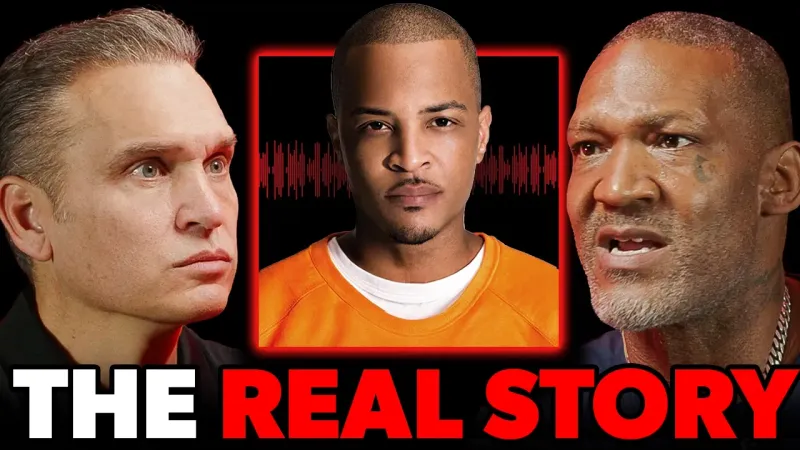
The Untold Story Behind T.I.'s Arrest | Alfamega
Matthew Cox | Inside True Crime@InsideTrueCrimeThe Untold Story Behind T.I.'s Arrest | Alfamega
Alfamega recounts growing up in Atlanta, his early arrests, and his life in the streets. The interview also addresses his relationship with T.I. and the public blame surrounding T.I.'s federal gun case; the excerpt begins with Alfamega describing his childhood and first encounters with police.

- Views
- 760.4K
- Likes
- 11.5K
- Comments
- 3K
- Alfamega's Life StoryT.I.'s ArrestAtlanta street lifeCrime and Prison
Analysis
Alfamega recounts growing up in Atlanta, his early arrests, and his life in the streets. The interview also addresses his relationship with T.I. and the public blame surrounding T.I.'s federal gun case; the excerpt begins with Alfamega describing his childhood and first encounters with police.
- InterviewPodcast episode

- Title
- The Untold Story Behind T.I.'s Arrest | Alfamega
I got with TI. He did a handshake deal. You the king. I'm the muscle. He catches a federal gun case. >> The public perception was that you set him up even though he knows that's not the case. >> But he won't come out and say it to the public. Then I seen him again. I was like, "What's happening?" >> Most people don't really know my story, like the real story of my life. >> Mhm. [clears throat] >> They just know a version that got repeated. I want to thank you for letting me for letting me come on your podcast >> so it won't be edited, >> sugarcoated or nothing like that. >> Right. >> Let's get it out there clearly. I'm from Techwood Projects out of Atlanta, Georgia. The first government projects in the United States. >> Okay. >> The first ones they ever built in the United States. Out of Atlanta. That's the projects I'm from. They in the streets they call me Tick said. >> Mom and dad both around brothers, sisters. I had I grew up with my brother in the household with my mom. My dad was around but he wasn't around. My dad was a pimp. >> Okay. >> And my mom she used to be one of his girls. She was one of his girls but my mom from my understanding he never had her to sell her body. But he made she was dancing. >> Growing up in the projects. I mean are you getting into trouble or you like >> First time I got arrested I was 9 years old. I got arrested for stealing a box of Twinkies. I was still in the box of Twinkies at the store, but I just go to the store and we would we we would go to the store because we were poor. >> So we would go to the store, we would steal candy, donuts, and stuff like that. >> But I was different than my friends because I was like, my mom's going to beat the [ __ ] out of me. I might as well steal the whole box, >> right? >> Like we're not going to go small. We're going to steal a box of down ladies, a box of sneakers or a box of Twinkies. And that's the first time I got arrested. And I was in there for like 28 hours as a juvenile at 9 years old. I was I ain't going to lie to nobody though. I was really I was scared when I first entered that door because I had heard stories that people got raped >> right >> when they in juvenile. And my mom used to always say that you better fight. You better fight. You ever get in trouble, you better fight. >> How long I is this a reoccurring thing? You get arrested multiple times or you >> Yeah, I got arrested at 9 years old. Then I got arrested again at like 10. Me and my little brother, we got arrested. We went and saw this movie called Be Street. You ever heard the movie Be Street back in the days? Some was in New York. They was break dancing and spray paint graffiti. Anyway, we went and saw the movie Be Street. We left there and went and broke into this elementary school. I was 10, my little brother was nine. And we stole the spray painting. We spray painted the Mara train station. And the police came, but they asked us what was going on.
- 01The public account and the disputed perception
This cold-open excerpt puts the arrest-related allegation and the guest's contrary account into immediate tension, establishing the story the conversation will examine.
A speaker describes a deal with T.I. and the federal gun case, followed by the public perception that the speaker set him up and the speaker's claim that T.I. knows otherwise.
“I got with TI. He did a handshake deal. You the king. I'm the muscle. He catches a federal gun case. >> The public perception was that you set him up even though he knows that's not the case.”
- 02The guest's stated version
This exchange extends the unresolved disagreement and broadens the promised account from one public perception to the guest's larger life story.
The guest says the other person will not publicly correct the perception, then says most people know only a repeated version of his life story. The host acknowledges him.
>> But he won't come out and say it to the public. Then I seen him again. I was like, "What's happening?" >> Most people don't really know my story, like the real story of my life. >> Mhm. [clears throat] >>
- 03Promise of an unsugarcoated account
The candor promise gives the coming story a clear frame: the guest says he will present his account without softening it.
The guest thanks the host for having him on the podcast; they exchange remarks about avoiding edits and sugarcoating, before the host invites him to speak clearly.
“They just know a version that got repeated. I want to thank you for letting me for letting me come on your podcast >> so it won't be edited, >> sugarcoated or nothing like that. >> Right. >> Let's get it out there clearly.”
- 04Background and family circumstances
The guest starts supplying the personal history promised earlier. This establishes background before the conversation shifts to his childhood experiences of trouble and arrest.
The guest identifies where he grew up, describes his family circumstances, and says his father was a pimp and his mother was one of his father's girls.
“I'm from Techwood Projects out of Atlanta, Georgia. The first government projects in the United States. >> Okay. >> The first ones they ever built in the United States. Out of Atlanta. That's the projects I'm from. They in the streets they call me Tick said. >> Mom and dad both around brothers, sisters. I had I grew up with my brother in the household with my mom. My dad was around but he wasn't around. My dad was a pimp. >> Okay. >> And my mom she used to be one of his girls. She was one of his girls but my mom from my understanding he never had her to sell her body. But he made she was dancing. >>”
- 05Childhood arrest and its circumstances
This is the first concrete childhood episode in the guest's account. It gives the broad background a specific incident while retaining the guest's explanation of the circumstances.
The host asks whether growing up in the projects meant getting into trouble. The guest recalls being arrested at nine for stealing Twinkies, explains that he and other children stole because they were poor, and describes how his mother’s threatened punishment shaped his attitude.
“Growing up in the projects. I mean are you getting into trouble or you like >> First time I got arrested I was 9 years old. I got arrested for stealing a box of Twinkies. I was still in the box of Twinkies at the store, but I just go to the store and we would we we would go to the store because we were poor. >> So we would go to the store, we would steal candy, donuts, and stuff like that. >> But I was different than my friends because I was like, my mom's going to beat the [ __ ] out of me. I might as well steal the whole box, >> right? >> Like we're not going to go small. We're going to steal a box of down ladies, a box of sneakers or a box of Twinkies. And that's the first time I got arrested. And I was in there for like 28 hours as a juvenile at 9 years old. I was I ain't going to lie to nobody though. I was really I was scared when I first entered that door because I had heard stories that people got raped >> right >> when they in juvenile.”
- 06A mother's advice and a follow-up question
This briefly connects the guest's family background to his early experience of trouble, then opens the next part of his personal account through the host's question about repeated arrests.
The guest recalls his mother's repeated advice to fight if he got into trouble. The host asks whether arrest was recurring, and the guest confirms another arrest at about ten.
“And my mom used to always say that you better fight. You better fight. You ever get in trouble, you better fight. >> How long I is this a reoccurring thing? You get arrested multiple times or you >> Yeah, I got arrested at 9 years old. Then I got arrested again at like 10.”
- 07The next childhood incident
This is a further personal episode, not merely introductory context: the guest moves into a sustained account of a specific incident. It marks the end of the identified introduction, with the supplied excerpt cutting off as the police question the brothers.
The guest says he and his younger brother were arrested after seeing a movie, describes the film's breakdancing and graffiti, and recounts breaking into a school, spray-painting a train station, and the police arriving.
“Me and my little brother, we got arrested. We went and saw this movie called Be Street. You ever heard the movie Be Street back in the days? Some was in New York. They was break dancing and spray paint graffiti. Anyway, we went and saw the movie Be Street. We left there and went and broke into this elementary school. I was 10, my little brother was nine. And we stole the spray painting. We spray painted the Mara train station. And the police came, but they asked us what was going on.”