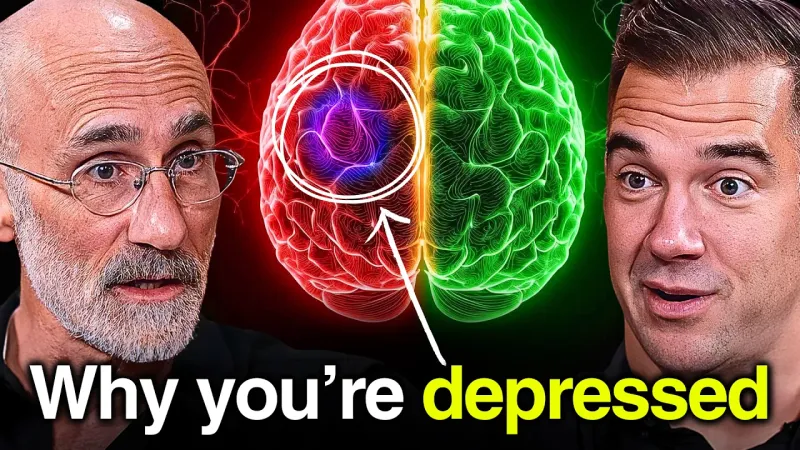
If You Feel Stuck In Life, This Is How To Fix It. | Arthur Brooks
Lewis Howes@lewishowesIf You Feel Stuck In Life, This Is How To Fix It. | Arthur Brooks
Arthur Brooks discusses how he connects the brain’s hemispheres with practical problem-solving and deeper questions about meaning, faith, and love. The episode examines technology’s role in keeping people focused on daily tasks and introduces the broader themes of happiness and purpose; the opening presents these as Brooks’s views.

- Views
- 68K
- Likes
- 1.8K
- Comments
- 93
- Happiness and MeaningBrain hemispheresTechnology and DepressionFaith and PurposeLove and Relationships
Analysis
Arthur Brooks discusses how he connects the brain’s hemispheres with practical problem-solving and deeper questions about meaning, faith, and love. The episode examines technology’s role in keeping people focused on daily tasks and introduces the broader themes of happiness and purpose; the opening presents these as Brooks’s views.
- InterviewPodcast episode

- Title
- If You Feel Stuck In Life, This Is How To Fix It. | Arthur Brooks
Your brain is designed to ask all the big why questions on the right and then to solve how to and what questions on the left. And the reason people are depressed today is because they're avoiding the big right side questions. The whole culture of technology and hustle and grind and online presence is all about staying in the left hemisphere of the brain. That's the reason that people don't know the meaning of their lives. He's a Harvard professor, international keynote speaker, New York Times bestselling author. He spent the past two decades studying and teaching the art and science of happiness to millions of people. Dr. Arthur Brooks in the house. >> Here's what's crazy about when you're living in the wrong side of your brain, because you're living in the matrix, you're living in the simulation of ordinary life. Your great grandfather never came home and said to great grandma, "I had a panic attack behind the mule today." Never. >> [laughter] >> Yeah, it's laughable. How could someone start going to the right side of their brain to find more meaning and purpose in their life rather than stress and chaos? Yeah. So, to begin with, we have two kinds of dilemmas as human beings. We have complicated dilemmas and complex dilemmas in life. Two kinds of problems. Complicated problems are the how-to and what problems that we're dealing with all day long. Like, how do I get from Orange County to Los Angeles, which I was dealing with this morning, right? Or how do I, you know, how do I, you know, think about the next 5 years of the School of Greatness podcast, which we were talking about. Such an interesting complicated problem. How-to and what problems. But those aren't the problems that you care about. Because what are we really talking about? We were talking about your babies and your marriage and your faith. Those are complex problems, which are impossible to solve. They're easy to understand, impossible to solve. You only live with them. And the reason is, believe it or not, these two types of problems are processed in different hemispheres of the brain. This is a theory called hemispheric lateralization, which is a fancy way of saying the right side and the and the left side do different things. The left side does complicated problems. Like, how do I get to LA? How do I build a toaster? The right side says, "Why do I love my wife? Who's God?" What's the meaning of life? >> What's the meaning of life? The mystery and the meaning. And you'll never come to a conclu- And part of the reason is because that's not how your brain is designed. Your brain is designed to ask all the big why questions on the right and then to solve how-to and what questions on the left. And the reason people are depressed today is because they're avoiding the big right side questions. They're not even asking meaning questions, because the whole culture of technology and hustle and grind and you know, online presence is all about staying in the left hemisphere of your brain. That's the reason that people don't know the meaning of their lives. That's this whole book. How do you find the meaning of your life? It's go to the right side of your brain. How do you do that? That's the challenge. How could someone start going to the right side of their brain to find more meaning and purpose in their life rather than stress and chaos? Yeah. So, to begin with, most people don't realize that that's the problem, that they're using their brains in the wrong way.
- 01Explain the proposed distinction
Put the proposed explanation at the front of the opening so viewers can judge its relevance. The distinction also sets up the tension between practical activity and questions of meaning.
The speaker describes the brain as asking big “why” questions on one side and solving practical questions on the other, then connects depression to avoiding the larger questions.
“Your brain is designed to ask all the big why questions on the right and then to solve how to and what questions on the left. And the reason people are depressed today is because they're avoiding the big right side questions. The whole culture of technology and hustle and grind and online presence is all about staying in the left hemisphere of the brain. That's the reason that people don't know the meaning of their lives.”
- 02Establish the guest’s credentials
Give viewers a stated reason to hear the guest’s account before he develops the idea. This credentials-based introduction marks a shift from the host’s opening claim to the guest’s discussion.
A host introduces the guest through his academic, speaking, publishing, and teaching credentials.
“He's a Harvard professor, international keynote speaker, New York Times bestselling author. He spent the past two decades studying and teaching the art and science of happiness to millions of people. Dr. Arthur Brooks in the house.”
- 03Guest frames the contrast with a personal comparison
Extend the contrast beyond the opening claim by setting modern life against an earlier generation’s experience. The anecdotal comparison makes the guest’s framing more concrete without resolving the central question.
The guest characterizes life focused on the wrong side of the brain as a simulation of ordinary life, compares it with an ancestor’s different everyday circumstances, and adds a humorous aside about panic attacks.
>> Here's what's crazy about when you're living in the wrong side of your brain, because you're living in the matrix, you're living in the simulation of ordinary life. Your great grandfather never came home and said to great grandma, "I had a panic attack behind the mule today." Never. >> [laughter]
- 04Ask how to find meaning
State the practical question that carries the opening forward, then begin the guest’s explanation. The distinction between complicated and complex problems develops the framework without yet reaching the sustained explanation that follows.
The host asks how someone might turn toward the purpose-focused side rather than stress and chaos; the guest agrees and begins distinguishing two kinds of problems.
“>> Yeah, it's laughable. How could someone start going to the right side of their brain to find more meaning and purpose in their life rather than stress and chaos? Yeah. So, to begin with, we have two kinds of dilemmas as human beings. We have complicated dilemmas and complex dilemmas in life. Two kinds of problems. Complicated problems are the how-to and what problems that we're dealing with all day long. Like, how do I get from Orange County to Los Angeles, which I was dealing with this morning, right? Or how do I, you know, how do I, you know, think about the next 5 years of the School of Greatness podcast, which we were talking about. Such an interesting complicated problem. How-to and what problems.”
- 05Distinguish practical questions from deeper concerns
Clarify the stakes of the distinction: everyday problems differ from difficult questions people live with. This is a small framing answer, while leaving open how the proposed approach helps people find meaning.
The guest says practical problems are not the concerns the conversation is really about, names family, marriage, and faith, and characterizes those complex problems as easy to understand but impossible to solve.
“But those aren't the problems that you care about. Because what are we really talking about? We were talking about your babies and your marriage and your faith. Those are complex problems, which are impossible to solve. They're easy to understand, impossible to solve. You only live with them.”
- 06Name the theory and return to the challenge
Supply a name for the framework and restate the opening challenge as the guest begins to explain it. The excerpt ends as he starts that explanation, so it does not yet deliver the promised way to find meaning or a complete answer.
The guest attributes the distinction to different brain hemispheres, names hemispheric lateralization, briefly restates what each side does, and raises the question of how to find more meaning and purpose. He says most people do not realize that using their brains in the wrong way is the problem.
And the reason is, believe it or not, these two types of problems are processed in different hemispheres of the brain. This is a theory called hemispheric lateralization, which is a fancy way of saying the right side and the and the left side do different things. The left side does complicated problems. Like, how do I get to LA? How do I build a toaster? The right side says, "Why do I love my wife? Who's God?" What's the meaning of life? >> What's the meaning of life? The mystery and the meaning. And you'll never come to a conclu- And part of the reason is because that's not how your brain is designed. Your brain is designed to ask all the big why questions on the right and then to solve how-to and what questions on the left. And the reason people are depressed today is because they're avoiding the big right side questions. They're not even asking meaning questions, because the whole culture of technology and hustle and grind and you know, online presence is all about staying in the left hemisphere of your brain. That's the reason that people don't know the meaning of their lives. That's this whole book. How do you find the meaning of your life? It's go to the right side of your brain. How do you do that? That's the challenge. How could someone start going to the right side of their brain to find more meaning and purpose in their life rather than stress and chaos? Yeah. So, to begin with, most people don't realize that that's the problem, that they're using their brains in the wrong way.