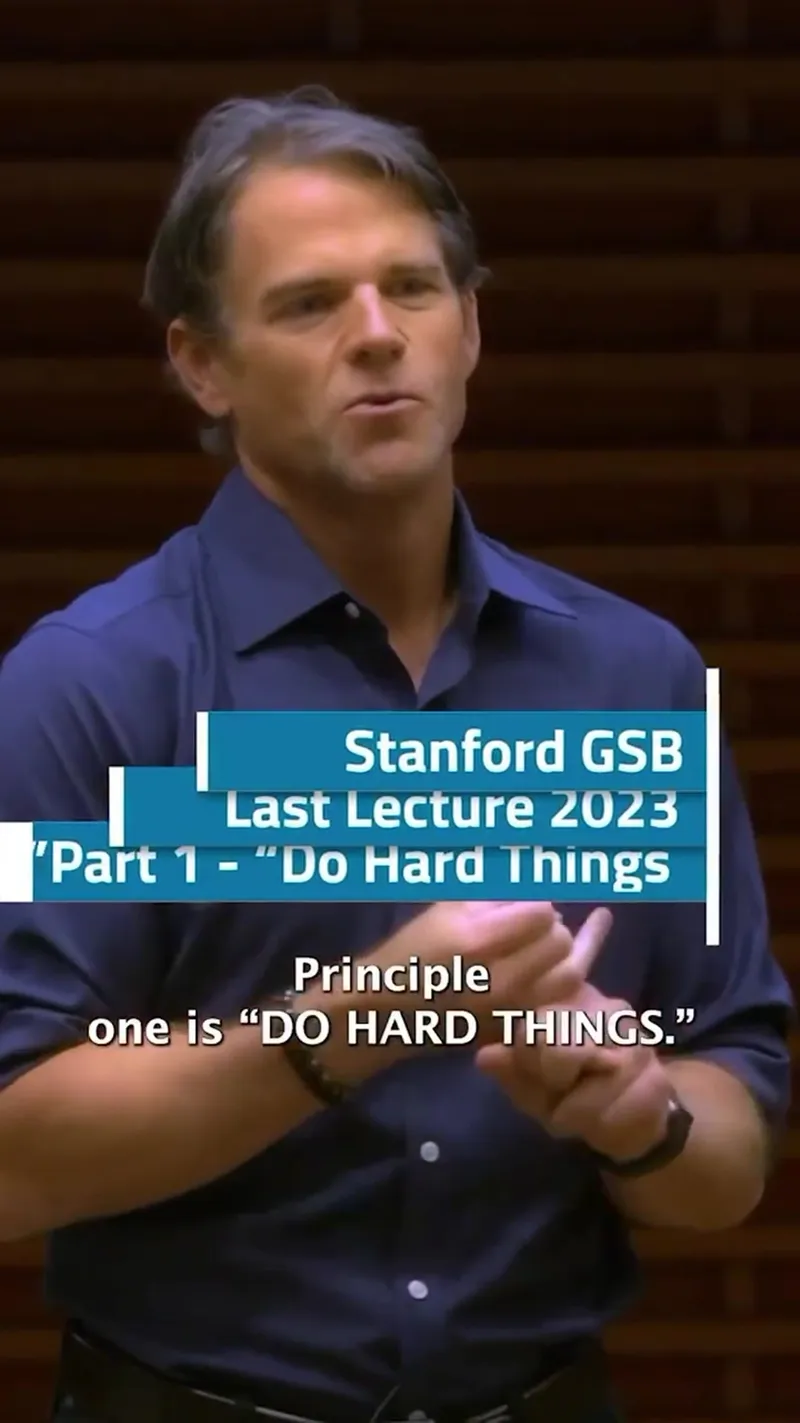
A speaker at Stanford GSB explains why meaningful growth requires doing difficult things that often make life feel worse before it gets better. He highlights how overcoming the initial fear of change is the only way to move from a plateau of comfort to a higher level of success.
The 'Worse First' Principle: Why Real Growth Requires Doing Hard Things
A speaker argues that progress often begins with discomfort, such as lower pay while learning a new career or struggling to build a habit. He uses a life-progress chart to explain how facing difficult situations can make fear less daunting.
- Likes
- 37.9K
- Comments
- 148
- Personal growth through challengeDiscomfort before progressFear of change
Analysis
A speaker argues that progress often begins with discomfort, such as lower pay while learning a new career or struggling to build a habit. He uses a life-progress chart to explain how facing difficult situations can make fear less daunting.
- Talking headLectureExplainer
- Spoken
- Original
“Principle one is do hard things.”
- On-screen text
- Original
Principle one is “DO HARD THINGS.”
- Visual
- Text-led compositionA centered, waist-up presenter faces the camera against a dark, tiered background. The prominent white headline sits across the lower torso; brief white graphic bars appear near the center in the supplied frames.
- The speaker’s captions track his points, while a simple rising-and-falling chart illustrates his explanation that progress can involve early setbacks.
“Principle one is do hard things. We have this thought that life is supposed to be easy and that comfort is where we're going to gain happiness. You can have a life of ease, and that will give you a quick hit of dopamine. But make no mistake, that is not the path. It is exactly the opposite. This chart right here shows our lives, and this is what happens. We get kind of complacent, you know, or we. Or we get. We get comfortable. And if we want to move forward and get to the next peak. The magic is to understand that your life is almost always going to get worse first. If you want to change careers and you want to learn something new, you're going to go down the learning curve. Your salary is probably going to go down. You're going to not be good at your job, you want to start a new habit, you want to take a cold shower, you want to meditate, you want to start exercising. It's going to get worse first, and you're going to follow this pattern. But you need to realize that the thing that's keeping you there is the first move is always going to be worse. Eventually what's going to happen is these downward curves are going to get a lot shallower, because you know what the biggest part of that curve is? It's just fear. So the more you put yourself in situations where you do hard things, the shallower and shallower, slower those divots are going to get, because you're going to remove that fear. Everything that you want in this life is on the other side of worse first.”
- 01State the principle and challenge comfort
Establishes the central tension between immediate comfort and meaningful progress, setting up the alternative principle.
Introduces a guiding principle, questions the assumption that ease and comfort bring lasting happiness, and contrasts a quick reward with the claim that it is not the path forward.
“Principle one is do hard things. We have this thought that life is supposed to be easy and that comfort is where we're going to gain happiness. You can have a life of ease, and that will give you a quick hit of dopamine. But make no mistake, that is not the path. It is exactly the opposite.”
- 02Use a curve to introduce the hard-first pattern
Develops the contrast into a concrete progression model and states the core principle that the examples will substantiate.
Points to a chart as a model of progress, describes becoming comfortable or complacent, then presents getting worse before improving as the key to moving forward.
“This chart right here shows our lives, and this is what happens. We get kind of complacent, you know, or we. Or we get. We get comfortable. And if we want to move forward and get to the next peak. The magic is to understand that your life is almost always going to get worse first.”
- 03Show the principle across examples
Makes the principle tangible across different kinds of change, supporting the claim with both practical and personal examples.
Lists career change and learning as examples of an initial drop, then adds habits and challenging activities before restating that things get worse first and the pattern repeats.
“If you want to change careers and you want to learn something new, you're going to go down the learning curve. Your salary is probably going to go down. You're going to not be good at your job, you want to start a new habit, you want to take a cold shower, you want to meditate, you want to start exercising. It's going to get worse first, and you're going to follow this pattern.”
- 04Explain how fear makes the curve shallower
Answers why the initial difficulty changes with repetition, completing the explanation and preparing the final motivational payoff.
Reinforces that the first move is worse, then explains that the downward curve eventually becomes shallower because fear is a major part of the difficulty; repeated exposure to hard things removes that fear.
“But you need to realize that the thing that's keeping you there is the first move is always going to be worse. Eventually what's going to happen is these downward curves are going to get a lot shallower, because you know what the biggest part of that curve is? It's just fear. So the more you put yourself in situations where you do hard things, the shallower and shallower, slower those divots are going to get, because you're going to remove that fear.”
- 05Close with the desired outcome beyond the setback
Resolves the motivational arc with a memorable restatement of the hard-first principle.
Ends with a concise summary placing everything the audience wants on the other side of the difficult beginning.
“Everything that you want in this life is on the other side of worse first.”