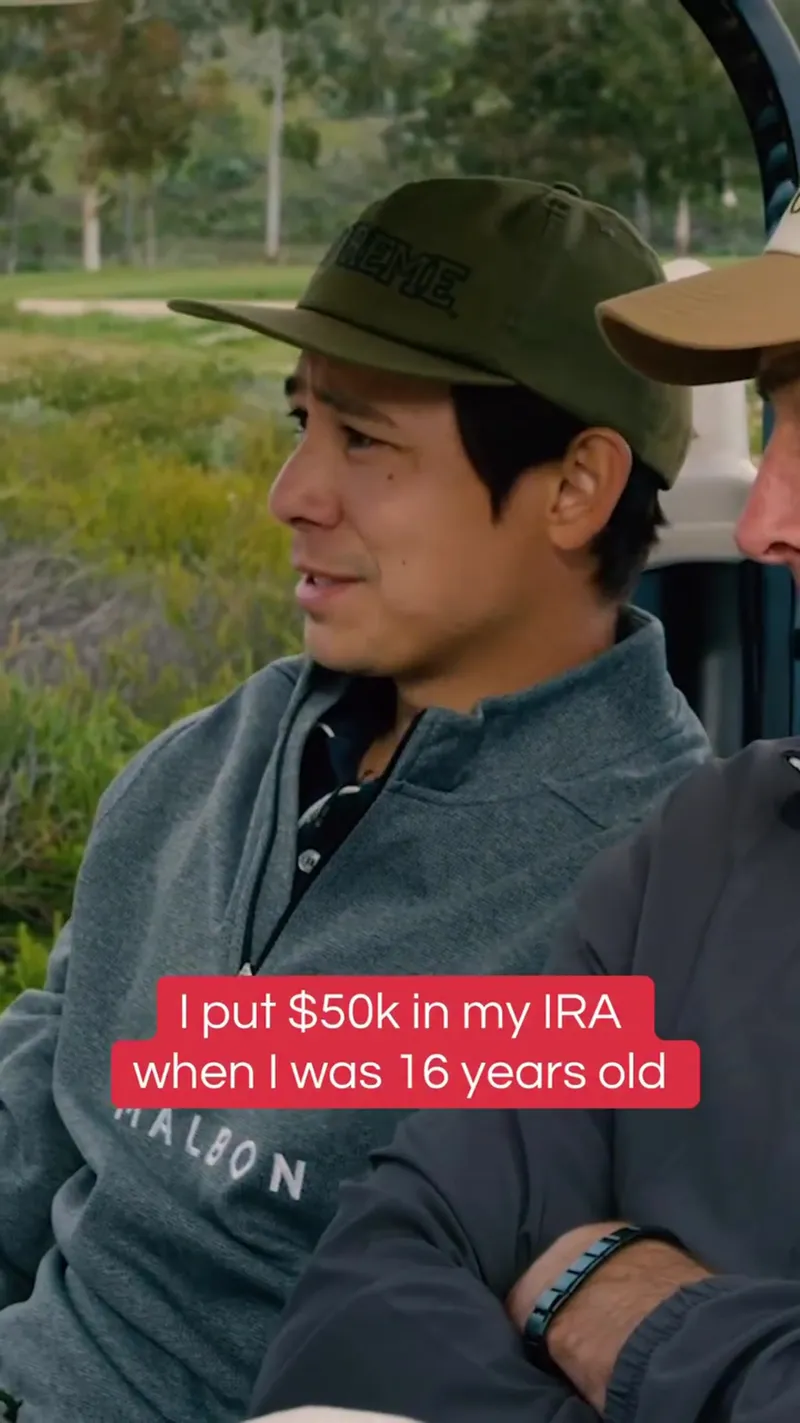
Professional skater Sean Malto shares how he started maxing out his retirement fund with $50,000 annually starting at just 16 years old. He discusses the importance of saving early in a sports career and the challenges of resisting expensive lifestyle upgrades as you get older.
How Pro Skater Sean Malto Built Wealth Starting at 16
A guest explains how early advice from his aunt led him to save and invest from age 16, including maxing out a SEP. The conversation also touches on spending pressures as skating slows down.
- Likes
- 7.6K
- Comments
- 215
- Athlete retirement savingsSEP retirement contributionsLifestyle inflation
Analysis
A guest explains how early advice from his aunt led him to save and invest from age 16, including maxing out a SEP. The conversation also touches on spending pressures as skating slows down.
- InterviewTalking head
- Spoken
- Original
“My aunt was a business consultant for McDonald's.”
- On-screen text
- Original
“I put $50k in my IRA when I was 16 years old”
- Visual
- Text-led compositionA seated person is shown in a close interview-style shot, with another person partly visible at the edge. A prominent two-line red headline sits across the lower part of the frame.
- The samples show the guest speaking with another man while captions highlight his claim about investing $50,000 at age 16 and selected words from the conversation.
“My aunt was a business consultant for McDonald's. And so at a young age, she was like, you need to set up retirement programs. She was like, you're not going to make money forever. So she instilled that in me at a young age. So I never lived, like, outside of my means. I always just tried to save as much as I could. So retirement plans were, like, something you totally were familiar with when you were young. I maxed my sep, which simplified employee pension plan. Right? Yeah. I maxed my SEP out when I was 16. Dang. I've put 50 grand in there every year since I was 16. That's so awesome. Yeah, that's so awesome. And it was just. I was just like, oh, this is what I should do. One, two. Because I didn't need any money. I was 16. All I was doing was skating Burger King. And did you feel, like, the pressure to start spending more as you got older, or were you always able to maintain this threshold of income here and then living off this? You know, what's funny is I've never really felt the pressure of spending money until actually the last two or three years. It gets harder in your 30s. I'm like, I just. You know, then you, like, you want to buy a car, you want to buy a house, you want to, like, go on vacations? I don't know. I think skating just slows down a little bit, and then you have more time to do things.”
- 01Formative advice becomes a lasting principle
Establishes the origin of the speaker’s approach and the principle that guides the later example.
The speaker describes a relative’s professional background, the advice they gave about future income, and how it shaped a habit of saving within their means.
“My aunt was a business consultant for McDonald's. And so at a young age, she was like, you need to set up retirement programs. She was like, you're not going to make money forever. So she instilled that in me at a young age. So I never lived, like, outside of my means. I always just tried to save as much as I could. So retirement plans were, like, something you totally were familiar with when you were young.”
- 02Specific early example and affirmation
Makes the earlier principle concrete through an example, then supplies its practical context: the speaker had few immediate expenses.
The speaker names a particular plan and contribution history; brief responses affirm the amount and age, followed by an explanation that the money was not needed then.
“I maxed my sep, which simplified employee pension plan. Right? Yeah. I maxed my SEP out when I was 16. Dang. I've put 50 grand in there every year since I was 16. That's so awesome. Yeah, that's so awesome. And it was just. I was just like, oh, this is what I should do. One, two. Because I didn't need any money. I was 16. All I was doing was skating Burger King.”
- 03Question about changing spending pressure
Introduces the next issue for the account to address: whether financial habits changed as circumstances and income evolved.
The other speaker asks whether the pressure to spend increased with age or whether the earlier spending threshold stayed consistent.
“And did you feel, like, the pressure to start spending more as you got older, or were you always able to maintain this threshold of income here and then living off this?”
- 04Qualified answer and later-life explanation
Answers the question with a qualification rather than a simple yes-or-no: pressure arose later, and the speaker connects that shift to age and changing activity levels.
The speaker says the pressure was not felt until recently, notes that it gets harder in one’s thirties, lists desired purchases and experiences, then offers a tentative explanation tied to skating slowing down and freeing time.
“You know, what's funny is I've never really felt the pressure of spending money until actually the last two or three years. It gets harder in your 30s. I'm like, I just. You know, then you, like, you want to buy a car, you want to buy a house, you want to, like, go on vacations? I don't know. I think skating just slows down a little bit, and then you have more time to do things.”