System Design Cheat Sheet You can learn all this and more on my app Devmaxx. Comment “dev” for the link! #coding #programming #systemdesign #csmajors
System Design Cheat Sheet
A presenter outlines common system design patterns for scaling reads and writes, real-time data, and long-running jobs. He also mentions reliability tools, CQRS, and promotes the DevMaxx app for daily practice.
- Views
- 531K
- Likes
- 16K
- Comments
- 1K
- System design patternsRead and write scalingDistributed system reliabilitySystem design interview practice
Analysis
A presenter outlines common system design patterns for scaling reads and writes, real-time data, and long-running jobs. He also mentions reliability tools, CQRS, and promotes the DevMaxx app for daily practice.
- Talking headVoiceoverListicleExplainerProduct showcase
- Spoken
- Original
“Something I wish I knew when I started learning system design is that most systems follow the same exact patterns.”
- On-screen text
- Original
“System design”
- Visual
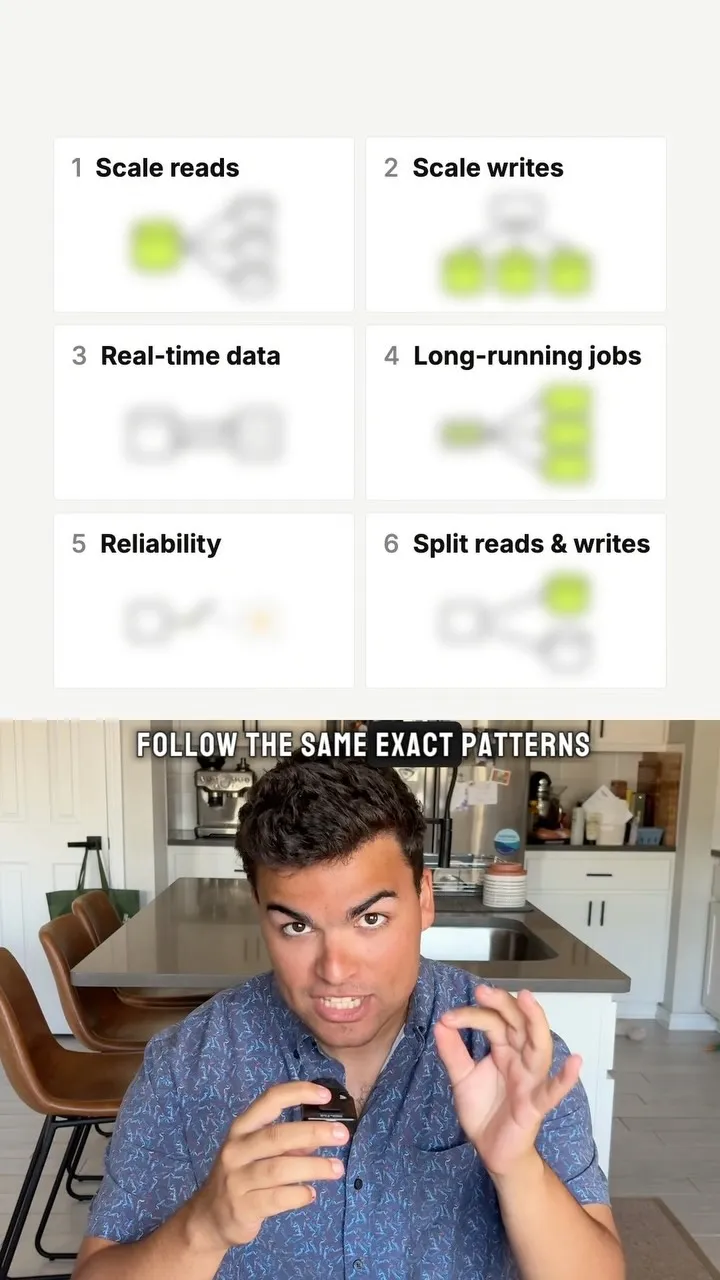
- Diagram-led compositionA simple line diagram across the upper portion shows a client browser, server and database connected from left to right; a green accent marks activity. A presenter appears in a lower panel.
- The diagrams pair system components and scaling patterns with the presenter’s explanations. A later app stats screen supports his mention of daily practice.
“Something I wish I knew when I started learning system design is that most systems follow the same exact patterns. If you want to scale reads, you can reach for caching, read replicas or database indexing. If you want to scale writes, you can reach for batching, sharding, or asynchronous writes. If you need real time data, think websockets, server sent events, or long polling. For long running processes, you have message queues, worker pools, and workflow engines for failures and reliability. You want retries with backup item potency, circuit breakers and self healing. And if you need to separate reads and writes, you can apply a CQRS pattern. If you want to learn this stuff and practice every single day, you can do it on my app. DevMax hiring for both interns and full time roles is picking up right now, so it's the perfect time to get sharp on these skills. Comment Dev for the link.”
- 01Introduce the reusable pattern
Establishes a useful organizing principle that makes the following need-and-solution examples feel like a practical cheat sheet.
Frames the topic as a set of recurring patterns and presents this as an insight the speaker wished they had known earlier.
“Something I wish I knew when I started learning system design is that most systems follow the same exact patterns.”
- 02Match needs to options
Develops the opening claim with a compact sequence of actionable examples, giving viewers a quick reference across distinct problem categories.
Runs through several common needs, each followed by relevant approaches: scaling reads, scaling writes, real-time data, long-running processes, reliability, and separating reads from writes.
“If you want to scale reads, you can reach for caching, read replicas or database indexing. If you want to scale writes, you can reach for batching, sharding, or asynchronous writes. If you need real time data, think websockets, server sent events, or long polling. For long running processes, you have message queues, worker pools, and workflow engines for failures and reliability. You want retries with backup item potency, circuit breakers and self healing. And if you need to separate reads and writes, you can apply a CQRS pattern.”
- 03Promote a learning resource
Turns the informational list into a specific promotional call to action, supported by the stated opportunity to pursue relevant roles.
Invites viewers to learn and practice the material through the speaker's app, then adds a hiring-related reason to build the skills now and asks viewers to comment for the link.
“If you want to learn this stuff and practice every single day, you can do it on my app. DevMax hiring for both interns and full time roles is picking up right now, so it's the perfect time to get sharp on these skills. Comment Dev for the link.”