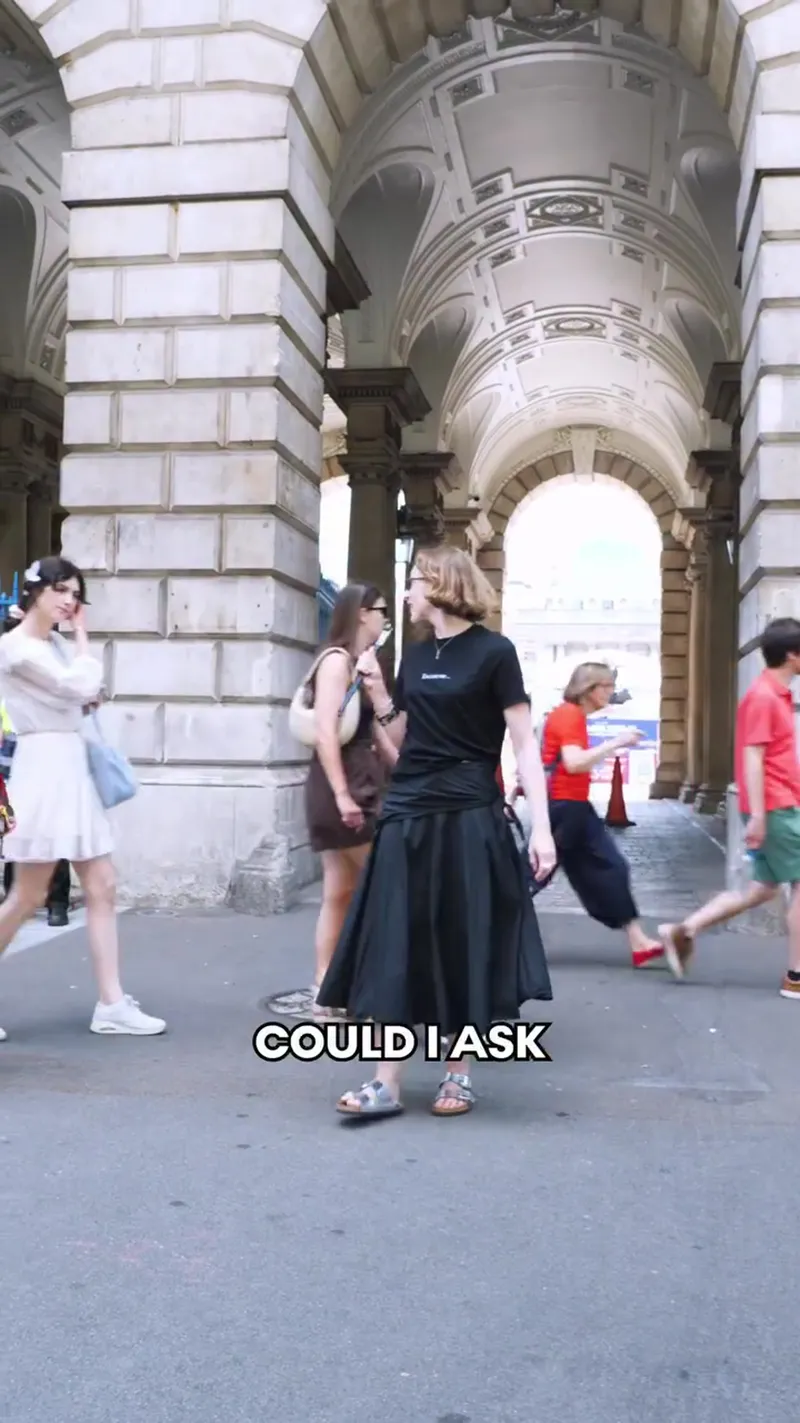
A street interviewer asks a daughter and mother which famous artwork they would choose to own if they could pick anything. The daughter gives a poignant response about Ukrainian seascapes that remind her of the home she can no longer visit.
Art, Home, and Memories: A Poignant Street Interview
A street interviewer asks a young woman what artwork she would want to own. She chooses a painting by Ukrainian artist Aivazovsky, explaining that it shows places from home she may not be able to visit again; her mother answers through translation.
- Likes
- 37.8K
- Comments
- 443
- Favorite artworkUkrainian seascape paintingsHomesickness and displacement
Analysis
A street interviewer asks a young woman what artwork she would want to own. She chooses a painting by Ukrainian artist Aivazovsky, explaining that it shows places from home she may not be able to visit again; her mother answers through translation.
- Street interviewInterview
- Spoken
- Original
“Excuse me. Hi. Could I ask you both a question about art?”
- On-screen text
- Original
“EXCUSE ME.”
- Visual
- Street-interview framingA full-body street interviewer stands centrally beneath a prominent stone arch, addressing passersby moving through the frame. A bold white caption with a dark outline appears near the lower center.
- The sampled street scenes show the interviewer speaking with the young woman and her mother, while bold captions echo parts of the dialogue. The images support the interview setting but do not show the artwork being discussed.
“Excuse me. Hi. Could I ask you both a question about art? Okay. My mom doesn't really speak English, but I can answer. Yeah. Okay. The question is if you could own any work of art in the world, what would it be and why? Any work of art? Any work of art. There is a Ukrainian painter called Aivasovsky and he paints like oceans mostly. I really like his work because he used to paint lots of parts where I'm from and it's something that I will probably never see again in my life because I can't really go back home right now. So if I could own it, own anything, I would like one of his paintings. That's an amazing answer. Thank you. What would your mum pick? I'm just gonna translate. She said that she can't steal other people's work. Good answer. Thank you so much. Have a nice day. Than.”
- 01Approach and ask permission
Establishes the interview’s topic and accommodates the language situation before the main question.
The interviewer greets two people, asks whether they can pose an art question, and one person notes that their mother does not speak much English but offers to answer.
“Excuse me. Hi. Could I ask you both a question about art? Okay. My mom doesn't really speak English, but I can answer. Yeah.”
- 02Pose the hypothetical
Sets up a specific choice and asks for its reason, which the respondent then answers.
The interviewer asks what artwork the respondent would own if they could choose any in the world.
“Okay. The question is if you could own any work of art in the world, what would it be and why?”
- 03Answer with personal context
Resolves the hypothetical with a choice whose significance comes from the respondent’s connection to home and inability to return; the interviewer’s response acknowledges that explanation before shifting to the other person.
The respondent clarifies the question, names a Ukrainian painter known for ocean scenes, and explains that the painter’s work depicts places from home they may never see again because they cannot return now. They say they would choose one of his paintings. The interviewer praises the answer and thanks them.
“Any work of art? Any work of art. There is a Ukrainian painter called Aivasovsky and he paints like oceans mostly. I really like his work because he used to paint lots of parts where I'm from and it's something that I will probably never see again in my life because I can't really go back home right now. So if I could own it, own anything, I would like one of his paintings. That's an amazing answer. Thank you.”
- 04Invite the other person’s answer and close
Fulfills the opening mention of the mother by including her answer, then ends the interaction with thanks and a polite farewell.
The interviewer asks what the respondent’s mother would pick. The respondent says they will translate, relays her answer that she cannot steal other people’s work, and the interviewer responds positively and says goodbye.
“What would your mum pick? I'm just gonna translate. She said that she can't steal other people's work. Good answer. Thank you so much. Have a nice day. Than.”