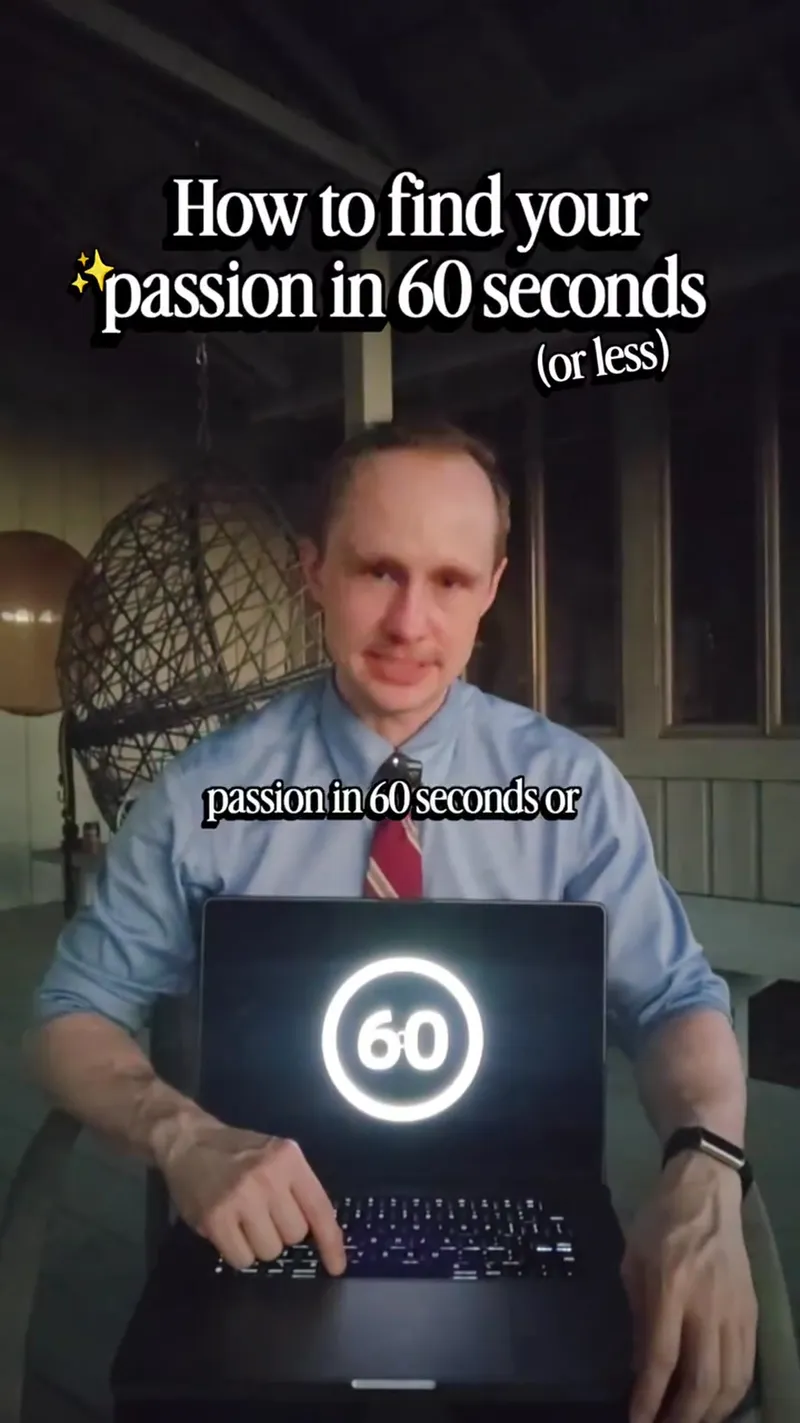
This video provides a four-step framework for discovering your true passions by identifying what you hate versus what you enjoy. It emphasizes the importance of a 'digital detox' to hear your inner voice and explains how your interests can evolve through effort and practice.
How to Find Your Passion in 60 Seconds
A presenter shares four steps for identifying passions: list what you dislike, notice what you enjoy, make space for reflection, and consider whether disliked tasks may become worthwhile. He uses journaling and meditation as ways to support self-reflection.
- Likes
- 56.1K
- Comments
- 623
- Finding personal passionsSelf-reflection practicesEvolving interests
Analysis
A presenter shares four steps for identifying passions: list what you dislike, notice what you enjoy, make space for reflection, and consider whether disliked tasks may become worthwhile. He uses journaling and meditation as ways to support self-reflection.
- Talking headTutorialListicle
- Spoken
- Original
“Here's how to find your passion in 60 seconds or less.”
- On-screen text
- Original
“How to find your passion in 60 seconds (or less)”
- Visual
- Text-led composition reinforced by a visual time cueA centered presenter sits behind an open laptop; a bright circled “60” stands out on its screen beneath a large headline.
- The presenter speaks directly to camera while captions track his words. The laptop countdown visually reinforces the 60-second hook.
“Here's how to find your passion in 60 seconds or less. Let's go. Boom. 1. Think about things you hate. Bet you didn't see that coming, huh? Neither did I. Write them down, because we're going to come back to them in a second. 2. Now focus on things you actually enjoy. This is a lot harder than it might seem, and it's the most important step of this whole process. The easiest way to do this is to already have a meditation and journaling practice going in the background, but also to really ask yourself. If you woke up on a Sunday with zero access to any form of media, be that tv, video games, your phone, or even novels, what would you do? Maybe try doing this once a week for the first six hours of every Sunday. The most important part is to be without your phone, because cutting out the noise of your phone and the distractions of life will help you hear the signal of your passions, which tend to be kind of like whispers. 3. Realize your tastes will evolve over time, and more importantly, your passions and tastes will evolve with effort. This is why journaling and meditation are so important. 4. Now think again about the things you hate. Are any of them present in the things you like? For example, let's say you want to be a physicist because you like math, but you also have to write academic papers, and you hate writing. Ask yourself, could I eventually begin to like writing? You may be surprised that you can like things you previously disliked when they are in the service of your passion. Hope this is as helpful to you as it has been for me and the people that I've worked with. Send this to a friend who you think would benefit from his message and follow for more. Would love to see you.”
- 01Unexpected first clue
Introduces a counterintuitive starting point and explicitly plants a list to revisit, giving the later advice a callback to resolve.
Opens with a quick promise, then presents an unexpected first step: list things you dislike and keep that list for later.
“Here's how to find your passion in 60 seconds or less. Let's go. Boom. 1. Think about things you hate. Bet you didn't see that coming, huh? Neither did I. Write them down, because we're going to come back to them in a second.”
- 02Find genuine interests
Develops the central discovery method with a reflective question and concrete practice, while explaining why quiet and attention help; it also sets up the next point that preferences change.
Turns to enjoyable activities, stresses their importance, offers reflection and a recurring media-free practice, and explains how reducing distractions can reveal interests.
“2. Now focus on things you actually enjoy. This is a lot harder than it might seem, and it's the most important step of this whole process. The easiest way to do this is to already have a meditation and journaling practice going in the background, but also to really ask yourself. If you woke up on a Sunday with zero access to any form of media, be that tv, video games, your phone, or even novels, what would you do? Maybe try doing this once a week for the first six hours of every Sunday. The most important part is to be without your phone, because cutting out the noise of your phone and the distractions of life will help you hear the signal of your passions, which tend to be kind of like whispers.”
- 03Allow preferences to change
Qualifies the search: current preferences need not be permanent, and deliberate effort may change them. This principle prepares the return to the original dislike list.
Advises that tastes and passions evolve over time and with effort, then reinforces the need for reflective practices.
“3. Realize your tastes will evolve over time, and more importantly, your passions and tastes will evolve with effort. This is why journaling and meditation are so important.”
- 04Revisit dislikes and test them
Resolves the earlier promise to revisit dislikes and turns the evolving-preferences point into a practical test, ending the advice with a hopeful possibility.
Returns to the dislike list, asks whether those elements appear in preferred pursuits, demonstrates with an example, and suggests a disliked task may become enjoyable when it serves a passion.
“4. Now think again about the things you hate. Are any of them present in the things you like? For example, let's say you want to be a physicist because you like math, but you also have to write academic papers, and you hate writing. Ask yourself, could I eventually begin to like writing? You may be surprised that you can like things you previously disliked when they are in the service of your passion.”
- 05Endorse and invite sharing
Concludes the advice with personal support, then gives clear sharing and follow requests before a friendly sign-off.
Offers a personal endorsement, asks viewers to share the message with a friend who might benefit, invites a follow, and closes warmly.
“Hope this is as helpful to you as it has been for me and the people that I've worked with. Send this to a friend who you think would benefit from his message and follow for more. Would love to see you.”