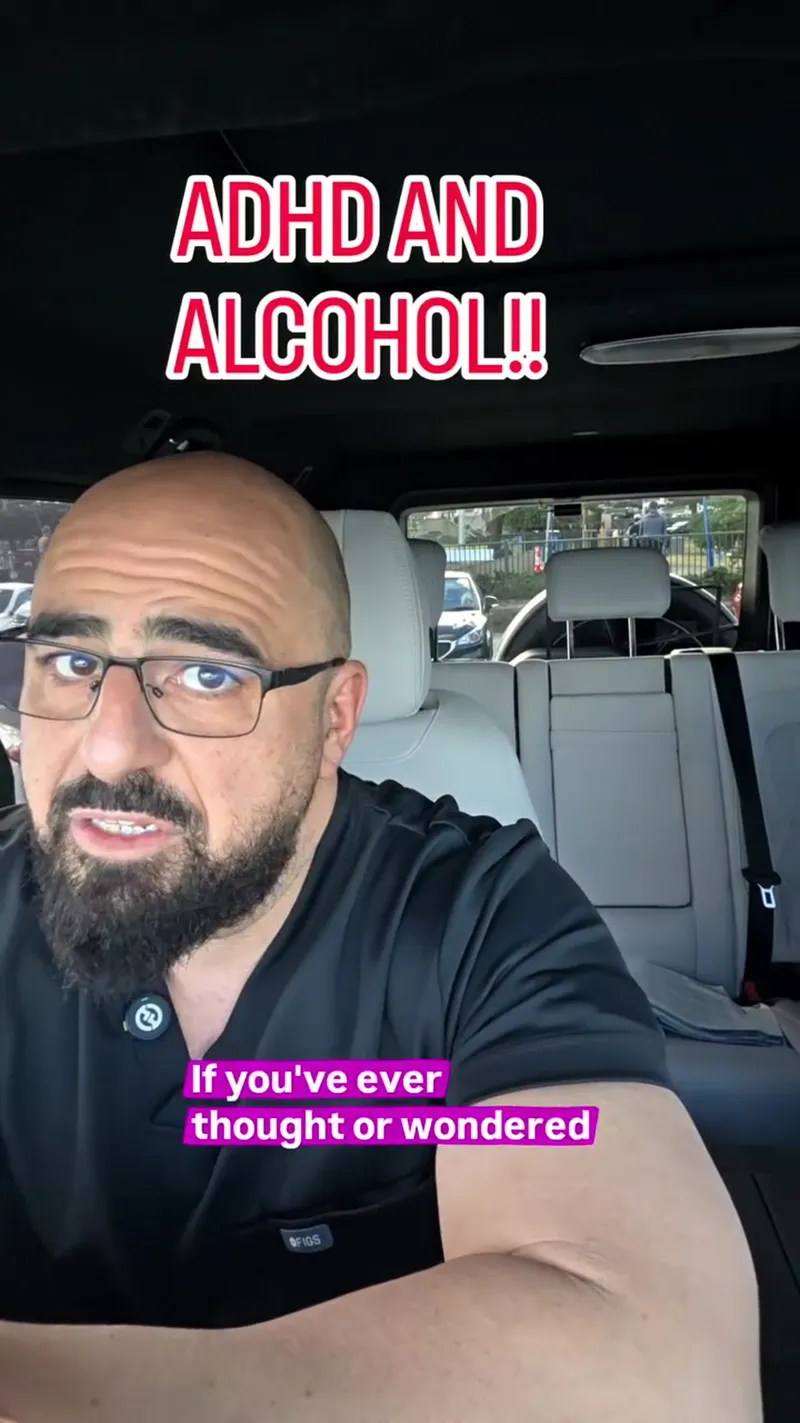
This video explains the neurological reasons why people with ADHD experience alcohol differently, focusing on dopamine deficiency and reward seeking. It warns against the cycle of self-medication and the severe 'hangxiety' caused by a dysregulated nervous system.
Why ADHD and Alcohol Are a Dangerous Mix
A speaker explains how ADHD may relate to alcohol’s rewarding effects, hangxiety, and emotional dysregulation. He shares a personal account of panic after drinking and frames alcohol feeling like medicine as a warning sign.
- Likes
- 15.4K
- Comments
- 688
- ADHD and alcohol useDopamine and rewardHangxiety and panicEmotional dysregulation
Analysis
A speaker explains how ADHD may relate to alcohol’s rewarding effects, hangxiety, and emotional dysregulation. He shares a personal account of panic after drinking and frames alcohol feeling like medicine as a warning sign.
- Talking headExplainerMonologue
- Spoken
- Original
“If you've ever thought or wondered that you might have ADHD and you drink alcohol, this might be the most important thing you ever hear.”
- On-screen text
- Original
“ADHD AND ALCOHOL!!”
- Visual
- Text-led compositionA large, high-contrast two-line headline sits above a centered speaker in a close, front-facing view inside a car. The headline is visually prominent; the speaker framing supports the topic rather than demonstrating it.
- The man speaks directly to camera while captions highlight his words; the opening headline emphasizes ADHD and alcohol, and later captions mark the discussion of hangxiety and the cycle.
“If you've ever thought or wondered that you might have ADHD and you drink alcohol, this might be the most important thing you ever hear. Like this. Share this and follow me for more on the neuroscience of adhd. And stay to the end, because what I'm about to tell you will finally explain why alcohol hits you differently than everyone else in the room. People with ADHD are far more statistically likely to have a complicated relationship with alcohol. And it's not weakness, it's not a character flawless. It's just neuroscience. Your brain is dopamine deficient. Not broken, not lazy deficient. The reward system that drives pleasure, satisfaction is chronically underactive. Then you have a drink and suddenly everything your brain has been desperately searching for arrives all at once. Calm, focus, ease. That is not you enjoying a drink. That is your brain finally feeling what other people's brains feel all the time. And this is where it gets dangerous. Your brain is extraordinary at remembering where it found that reward. And it will bring you back time and time again. Not because you are weak, but because your dopamine system is doing exactly what it was designed to to do. And then there's the thing called hangxiety the morning after. The dread that arrives before you even open your eyes. The racing heart and the panic that you cannot name. The sense that something is terribly wrong even when nothing is. People with ADHD are already more vulnerable to anxiety. Alcohol disrupts the nervous system and a nervous system that is already dysregulated does not need much to tip it over the edge. Patients have full blown panic attacks the morning after a night of drinking. Not because they are weak, but because their nervous system is not built to absorb that and the nervous system becomes dysregulated. Emotional dysregulation follows. And it is one of the hardest symptoms of ADHD to manage. And every drink makes it harder, every hangover sets you back further, and it becomes a cycle that is almost impossible to see clearly when you are stuck inside of it. And I'm not telling you not to drink. I'm just telling you what nobody has ever told you before. And if you have ADHD and alcohol feels like medicine, that feeling is the warning, not the permission. So save this and share this with someone who needed to finally understand why alcohol hits them the way it does. And if this helped you type, I see you in the comments and follow me for more real conversations that nobody else is having.”
- 01Audience hook and promised explanation
Identifies the intended audience and opens a specific question—why their experience differs—which the later explanation is meant to answer.
Addresses people who may share a condition and experience with a substance, calls the coming information important, asks for engagement, and promises an explanation of their distinct response.
“If you've ever thought or wondered that you might have ADHD and you drink alcohol, this might be the most important thing you ever hear. Like this. Share this and follow me for more on the neuroscience of adhd. And stay to the end, because what I'm about to tell you will finally explain why alcohol hits you differently than everyone else in the room.”
- 02Normalize and explain the initial response
Begins answering the promised question while reducing blame; the relief or benefit is reframed as a consequence of the described mechanism.
States that the audience is more likely to have a complicated relationship with the subject, rejects a moral failing explanation, describes an underlying mechanism, and connects it to an immediately felt reward.
“People with ADHD are far more statistically likely to have a complicated relationship with alcohol. And it's not weakness, it's not a character flawless. It's just neuroscience. Your brain is dopamine deficient. Not broken, not lazy deficient. The reward system that drives pleasure, satisfaction is chronically underactive. Then you have a drink and suddenly everything your brain has been desperately searching for arrives all at once. Calm, focus, ease. That is not you enjoying a drink. That is your brain finally feeling what other people's brains feel all the time.”
- 03Explain repeated seeking and next-day anxiety
Extends the mechanism into a consequential pattern and adds a second, contrasting effect; the new risk deepens the initial explanation.
Warns that the rewarding experience can lead the brain to seek it again, then introduces next-day anxiety, describes its symptoms, and explains why the audience may be especially vulnerable.
“And this is where it gets dangerous. Your brain is extraordinary at remembering where it found that reward. And it will bring you back time and time again. Not because you are weak, but because your dopamine system is doing exactly what it was designed to to do. And then there's the thing called hangxiety the morning after. The dread that arrives before you even open your eyes. The racing heart and the panic that you cannot name. The sense that something is terribly wrong even when nothing is. People with ADHD are already more vulnerable to anxiety. Alcohol disrupts the nervous system and a nervous system that is already dysregulated does not need much to tip it over the edge. Patients have full blown panic attacks the morning after a night of drinking. Not because they are weak, but because their nervous system is not built to absorb that and the nervous system becomes dysregulated.”
- 04Show the cycle and qualify the advice
Completes the consequence chain and limits how the warning should be interpreted before delivering the central takeaway.
Connects emotional dysregulation to a worsening cycle, acknowledges how hard it is to see from within, and clarifies that the message is explanatory rather than a command.
“Emotional dysregulation follows. And it is one of the hardest symptoms of ADHD to manage. And every drink makes it harder, every hangover sets you back further, and it becomes a cycle that is almost impossible to see clearly when you are stuck inside of it. And I'm not telling you not to drink. I'm just telling you what nobody has ever told you before.”
- 05Deliver the warning and close with sharing prompts
Resolves the opening question with a compact cautionary distinction, then closes by encouraging the message to reach others who may need it.
Turns the audience's positive-seeming response into a warning rather than permission, asks viewers to share the explanation, and invites comments and follows.
“And if you have ADHD and alcohol feels like medicine, that feeling is the warning, not the permission. So save this and share this with someone who needed to finally understand why alcohol hits them the way it does. And if this helped you type, I see you in the comments and follow me for more real conversations that nobody else is having.”