A London-based content creator shares a detailed breakdown of her £84,000 monthly income for June. She discusses various revenue streams like brand deals and affiliates while being honest about her business costs and actual personal take-home pay.
June Income Reveal: How Much a Full-Time Creator Actually Makes
A full-time creator in London breaks down her £84,158 June revenue from brand deals, affiliates, subscriptions, products, platform ads and interest. She also discusses business costs, taxes and how her personal take-home pay differs from the total.
- Likes
- 8K
- Comments
- 454
- Creator income breakdownBrand deal earningsAffiliate marketing incomeCreator business expensesPersonal income and taxes
Analysis
A full-time creator in London breaks down her £84,158 June revenue from brand deals, affiliates, subscriptions, products, platform ads and interest. She also discusses business costs, taxes and how her personal take-home pay differs from the total.
- Talking headListicleExplainer
- Spoken
- Original
“This is what I made in June as a full time content creator living in London.”
- On-screen text
- Original
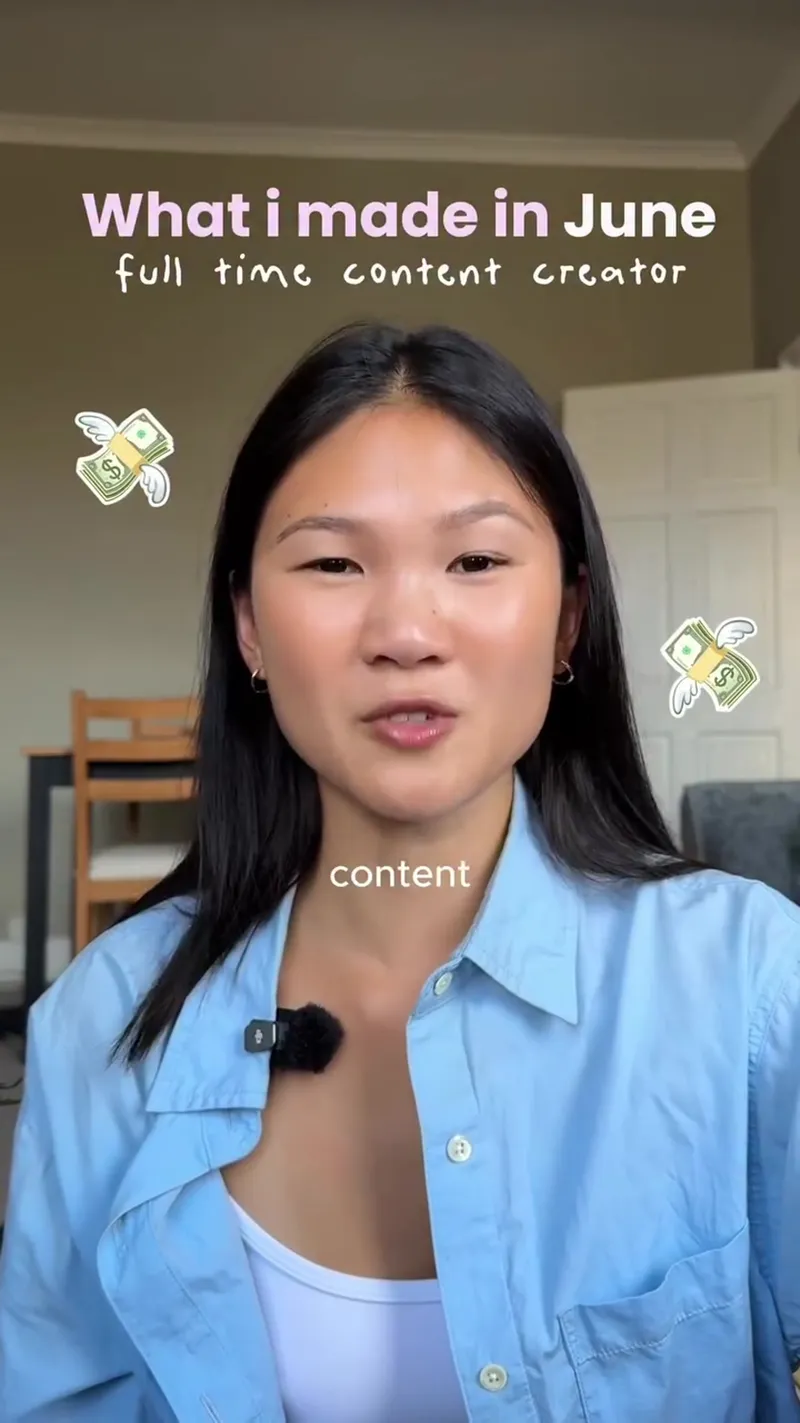
“What i made in June full time content creator”
- Visual
- Text-led compositionA centered, chest-up speaker faces the camera in a room. A prominent headline sits above her, with small flying-money graphics beside her.
- The presenter speaks directly to camera throughout the sampled frames. The opening headline and flying-money graphics reinforce the spoken topic of June earnings; later samples show subtitles matching her speech.
“This is what I made in June as a full time content creator living in London. As you guys know, I was on the fence about continuing to make these videos because they are controversial. However, the core audience I have here, the people that really enjoy these videos, said that they don't want me to ever stop making these. Just to warn you, if you don't like to talk about money transparently or seeing large amounts of money makes you feel uncomfortable, then obviously you're not obligated to watch this. Starting off with brand deals, I made £78,720. This is what I get paid from my agency directly. They take their commission off which is 20% and then this is what lands in my account. Moving on to affiliate marketing which is where I recommend brands or products and I take a commission. A few transactions here, but I made £3,300 from one vendor, £27 and 36 pence from another vendor, and then £53 and 98 pence from another vendor bringing the total I made from affiliate income to £3,381.34. I feel like I've fallen off with my affiliates a little bit because I had a lot of really good months where I was making multiple five figures. I'm honestly not complaining because 3, 3,000 pounds is still an amazing amount to make. I honestly don't know what it is. I think it was just being in Cannes and maybe not making as much organic content about the platforms I use. That does go to show that you can't really rely on affiliates as a stable, reliable source of income because it can fluctuate. Next up, for subscriptions with substack, I made £454.43. For digital products I made £485.45. And then from ad revenue that I made inside the apps I I got paid £665.16 from Google or YouTube. I cross post all of my short form on there and I've been trying to put out one long form video a week and I also cross post that to Spotify. For Spotify I made £177.82. And then for TikTok, this was my lowest earning month from TikTok. I honestly don't know why, but I got paid £142 and 14 pence. Finishing off with interest that I made inside my account, this was £132.10. I definitely have way too much cash sitting there, but I am working with a financial planner to see what I can do with this, maybe increasing my pension contributions or increasing viable expenses. So overall this came to £84,158.44. I take an income of £50,000 a year, which is a mix of salary and dividends. So my end take home pay is around £3,200. I've been posting my income transparently from content creation since I was getting paid £200 from a brand deal. And obviously now it's increased, it gets a lot more attention. But if you have stuck around here for longer, you would know that this hasn't just happened overnight. I had roughly 8,000 pounds in costs, whether it's staff or subscriptions, and I also have to pay corporation tax, vat, and there's a lot of other costs associated with the business. So just remember this is not the final amount that I take home. But if you enjoy content like this, and you like talking about money transparently, then follow for more.”
- 01Frame the report and set expectations
Establishes what the breakdown covers, acknowledges the sensitivity around money, and gives viewers a clear expectation before the figures begin.
Introduces the reporting period and personal context, explains why the creator continues sharing the figures despite controversy, and warns viewers who may be uncomfortable with transparent money talk.
“This is what I made in June as a full time content creator living in London. As you guys know, I was on the fence about continuing to make these videos because they are controversial. However, the core audience I have here, the people that really enjoy these videos, said that they don't want me to ever stop making these. Just to warn you, if you don't like to talk about money transparently or seeing large amounts of money makes you feel uncomfortable, then obviously you're not obligated to watch this.”
- 02Lead with the largest category and explain the payout
Begins the accounting with a major income stream and distinguishes the reported payment from the amount retained after commission.
Reports brand-deal income, clarifies that the amount is paid after the agency's commission, and identifies the amount deposited.
“Starting off with brand deals, I made £78,720. This is what I get paid from my agency directly. They take their commission off which is 20% and then this is what lands in my account.”
- 03Break down affiliate income and qualify its variability
Shows how individual transactions add up while qualifying the apparent success: past stronger months are not a stable guarantee, and the creator is uncertain about the cause of this month's dip.
Defines affiliate marketing, lists several vendor payments and their total, then reflects on the lower month, offers possible explanations, and notes that this income can fluctuate.
“Moving on to affiliate marketing which is where I recommend brands or products and I take a commission. A few transactions here, but I made £3,300 from one vendor, £27 and 36 pence from another vendor, and then £53 and 98 pence from another vendor bringing the total I made from affiliate income to £3,381.34. I feel like I've fallen off with my affiliates a little bit because I had a lot of really good months where I was making multiple five figures. I'm honestly not complaining because 3, 3,000 pounds is still an amazing amount to make. I honestly don't know what it is. I think it was just being in Cannes and maybe not making as much organic content about the platforms I use. That does go to show that you can't really rely on affiliates as a stable, reliable source of income because it can fluctuate.”
- 04List the remaining income streams
Continues the accounting across several distinct sources, building toward an overall total while providing context for platform earnings.
Reports earnings from subscriptions, digital products, and platform ad revenue, adding brief context about the creator's publishing and cross-posting routine.
“Next up, for subscriptions with substack, I made £454.43. For digital products I made £485.45. And then from ad revenue that I made inside the apps I I got paid £665.16 from Google or YouTube. I cross post all of my short form on there and I've been trying to put out one long form video a week and I also cross post that to Spotify. For Spotify I made £177.82. And then for TikTok, this was my lowest earning month from TikTok. I honestly don't know why, but I got paid £142 and 14 pence.”
- 05Finish the categories and give the total
Closes the category tally, then makes the important distinction between the overall business figure and the creator's personal income.
Adds account interest, mentions plans to discuss excess cash with a financial planner, totals the reported income, and clarifies the creator's annual personal income and approximate monthly take-home pay.
“Finishing off with interest that I made inside my account, this was £132.10. I definitely have way too much cash sitting there, but I am working with a financial planner to see what I can do with this, maybe increasing my pension contributions or increasing viable expenses. So overall this came to £84,158.44. I take an income of £50,000 a year, which is a mix of salary and dividends. So my end take home pay is around £3,200.”
- 06Add growth context, costs, and a final caveat
Prevents the headline total from being mistaken for net personal earnings, adds context about the work and expenses behind it, and closes with a relevant follow invitation.
Places the current income in a longer timeline, notes business costs and taxes, emphasizes that the reported figure is not personal take-home pay, and invites interested viewers to follow.
“I've been posting my income transparently from content creation since I was getting paid £200 from a brand deal. And obviously now it's increased, it gets a lot more attention. But if you have stuck around here for longer, you would know that this hasn't just happened overnight. I had roughly 8,000 pounds in costs, whether it's staff or subscriptions, and I also have to pay corporation tax, vat, and there's a lot of other costs associated with the business. So just remember this is not the final amount that I take home. But if you enjoy content like this, and you like talking about money transparently, then follow for more.”