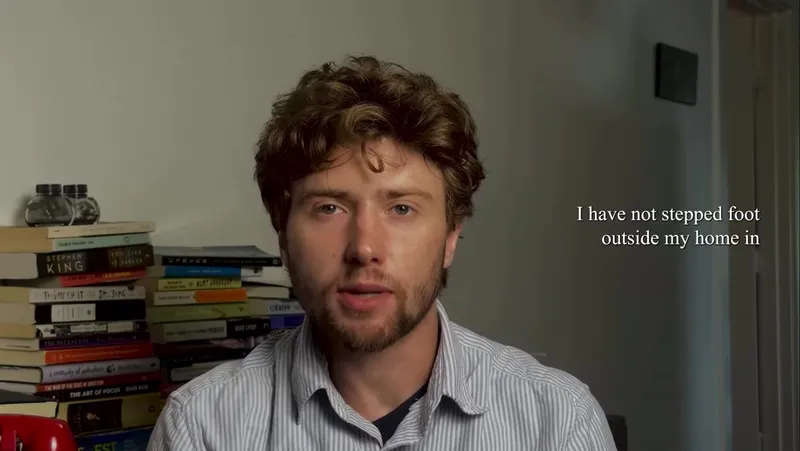
A man describes his life after choosing not to leave his home for over six years. He explains how he maintains his physical and mental health through a strict routine while avoiding the stresses of the outside world.
Interior Life: I Haven't Left My House in 6 Years
A fictional narrator insists he is thriving after staying inside his home for over six years. He describes his isolation, routine, and relief at avoiding social situations, while the excerpt ends as he begins listing his daily habits.
- Views
- 1.5M
- Likes
- 59K
- Comments
- 1.3K
- Social isolationHome confinementDaily routineAnxiety around socializingFictional narrator
Analysis
A fictional narrator insists he is thriving after staying inside his home for over six years. He describes his isolation, routine, and relief at avoiding social situations, while the excerpt ends as he begins listing his daily habits.
- Talking headMonologue
- Spoken
- Original
“I have not stepped foot outside my home in six years, three months and 17 days.”
- On-screen text
- Original
“I have not stepped foot outside my home in”
- Visual
- Text-led compositionA centered, chest-up speaker faces the camera in a room; a stack of books sits to the left and open wall space to the right carries the headline.
- The speaker addresses the camera while on-screen captions repeat selected lines from the monologue. The ordinary room and book stacks provide a plain visual contrast to his extreme claims.
“I have not stepped foot outside my home in six years, three months and 17 days. Nothing's wrong with me. Look at me. I'm a normal guy. I am not plagued by strange and bizarre ailments. Just the opposite, actually. I'm in the best shape of my life. Physical, mental, spiritual. I've read more books than you can name, probably, and retained every word of them. It takes more than intelligence to act intelligently. That's page 224 of Crime and Punishment. Dostoevsky, who all the kids are quoting these days, has. Have you read even one sentence of his work? Can you spell bureaucracy without looking it up? Quotidian. I haven't seen another human face in 55,000 hours. Long enough to watch every episode of I Love Lucy Back to back, 733 times. I'm not recommending it. It gets old. I am not like you or anyone you've ever met. The feng shui of my apartment is harmonious. I do not hoard. I keep only the things I need. A working telephone, a $40 fountain pen, the Yellow Pages. My trains of thought are swift, straight and run on time. The waters of my streams of consciousness flow crystalline clear. I can perform athletic. You'd have to see to believe. I can hold my body upside down by my hands. I can balance on one foot for two and a half minutes straight if I keep my eyes fixed to one spot on the floor or wall. What I'm trying to get across to you is I've never been happier. You might not believe me, but I don't care. Look at my eyes. Listen to my voice. Hear that chipper vocal tenor. Notice the ruddy complexion in my face. Pretty vital, right? I wouldn't expect you to understand. You don't know the joy of never again having to look anyone in the eye. Of never again having to be seen by anyone out in the world in your worst pajamas on a bad hair day. I'll never again wait in line for anything. Never again be forced to glance downward to avoid small talk with strangers in coffee shops, waiting rooms, banks. Never again will I sit and stew in gridlock traffic or trip over my words ordering at restaurants, or suffer the pounding heart, damp palmed dread of every day failing to say even hello to my beautiful co worker Ethel on our way into the office. Now I work from home already. I can see you're thinking to yourself, what a horrid way to live. I'd lose my marbles if that were me. I'd rather be in prison. Prisoners get yard time. But you don't understand. Prison is a state of mind and you shouldn't speak of things you don't understand. It's poor form, bad habit. Why don't you shut your mouth and try to listen for once? Open your mind to new ways of living. Before you get all judgy. Save your comments till the end of the presentation. The inside of my apartment smells overwhelmingly of minced meat and a patina of patchouli incense. Working hard to cover it up, your brain learns to block things out. I like it in here. I I have everything I need. A working telephone, refrigerator, toilet. I have plants, the yellow Pages. A walk in closet. How many people on earth can say they have a walk in closet? Less than 1% of the global population, if you look at the numbers. More important than anything else, I have routine. Routine is essential. Not just for me, for everyone, but especially for me. Here's a list of things I do every day. I wake up at 7 sharp. I don't set an alarm anymore. My body knows when it's time. My eyes flash open as wide as they go and I gasp so hard my lungs fill to bursting.”
- 01Premise and self-portrait
Introduces the unusual situation and the narrator’s confident, increasingly over-specific defense, establishing the central tension without resolving it.
The narrator gives a precise duration for staying indoors, insists nothing is wrong, and supports that claim with assertions of exceptional health, intelligence, and reading ability.
“I have not stepped foot outside my home in six years, three months and 17 days. Nothing's wrong with me. Look at me. I'm a normal guy. I am not plagued by strange and bizarre ailments. Just the opposite, actually. I'm in the best shape of my life. Physical, mental, spiritual. I've read more books than you can name, probably, and retained every word of them. It takes more than intelligence to act intelligently. That's page 224 of Crime and Punishment. Dostoevsky, who all the kids are quoting these days, has. Have you read even one sentence of his work? Can you spell bureaucracy without looking it up? Quotidian.”
- 02Isolation and personal exceptionalism
Expands the premise with concrete, comic specifics while further distinguishing the narrator’s self-image from ordinary expectations.
The narrator quantifies not seeing another person, jokes about repeated television viewing, then insists they are unlike anyone else and describes their orderly home and athletic abilities.
“I haven't seen another human face in 55,000 hours. Long enough to watch every episode of I Love Lucy Back to back, 733 times. I'm not recommending it. It gets old. I am not like you or anyone you've ever met. The feng shui of my apartment is harmonious. I do not hoard. I keep only the things I need. A working telephone, a $40 fountain pen, the Yellow Pages. My trains of thought are swift, straight and run on time. The waters of my streams of consciousness flow crystalline clear. I can perform athletic. You'd have to see to believe. I can hold my body upside down by my hands. I can balance on one foot for two and a half minutes straight if I keep my eyes fixed to one spot on the floor or wall.”
- 03Claim of happiness and its benefits
Answers the implied concern that isolation must be miserable by turning its inconveniences into a series of claimed advantages.
The narrator says they have never been happier, anticipates disbelief, points to apparent signs of vitality, and lists the reliefs of avoiding social exposure and everyday public interactions.
“What I'm trying to get across to you is I've never been happier. You might not believe me, but I don't care. Look at my eyes. Listen to my voice. Hear that chipper vocal tenor. Notice the ruddy complexion in my face. Pretty vital, right? I wouldn't expect you to understand. You don't know the joy of never again having to look anyone in the eye. Of never again having to be seen by anyone out in the world in your worst pajamas on a bad hair day. I'll never again wait in line for anything. Never again be forced to glance downward to avoid small talk with strangers in coffee shops, waiting rooms, banks. Never again will I sit and stew in gridlock traffic or trip over my words ordering at restaurants, or suffer the pounding heart, damp palmed dread of every day failing to say even hello to my beautiful co worker Ethel on our way into the office.”
- 04Answering the imagined objection
Directly addresses the likely objection and reframes the narrator’s situation as a perspective outsiders cannot understand; the request to wait for the presentation’s end leaves the case open.
The narrator anticipates that the listener finds this way of life dreadful, counters with a prison comparison, rejects the listener’s judgment, and asks them to listen before commenting.
“Now I work from home already. I can see you're thinking to yourself, what a horrid way to live. I'd lose my marbles if that were me. I'd rather be in prison. Prisoners get yard time. But you don't understand. Prison is a state of mind and you shouldn't speak of things you don't understand. It's poor form, bad habit. Why don't you shut your mouth and try to listen for once? Open your mind to new ways of living. Before you get all judgy. Save your comments till the end of the presentation.”
- 05Home comforts and routine begins
Moves from argument to lived-in details that support the narrator’s preferred environment. The daily schedule begins, but the excerpt cuts off during the wake-up description.
The narrator describes the apartment’s smell and how they have adapted to it, lists household comforts, declares routine essential, and begins a precise account of waking up.
“The inside of my apartment smells overwhelmingly of minced meat and a patina of patchouli incense. Working hard to cover it up, your brain learns to block things out. I like it in here. I I have everything I need. A working telephone, refrigerator, toilet. I have plants, the yellow Pages. A walk in closet. How many people on earth can say they have a walk in closet? Less than 1% of the global population, if you look at the numbers. More important than anything else, I have routine. Routine is essential. Not just for me, for everyone, but especially for me. Here's a list of things I do every day. I wake up at 7 sharp. I don't set an alarm anymore. My body knows when it's time. My eyes flash open as wide as they go and I gasp so hard my lungs fill to bursting.”