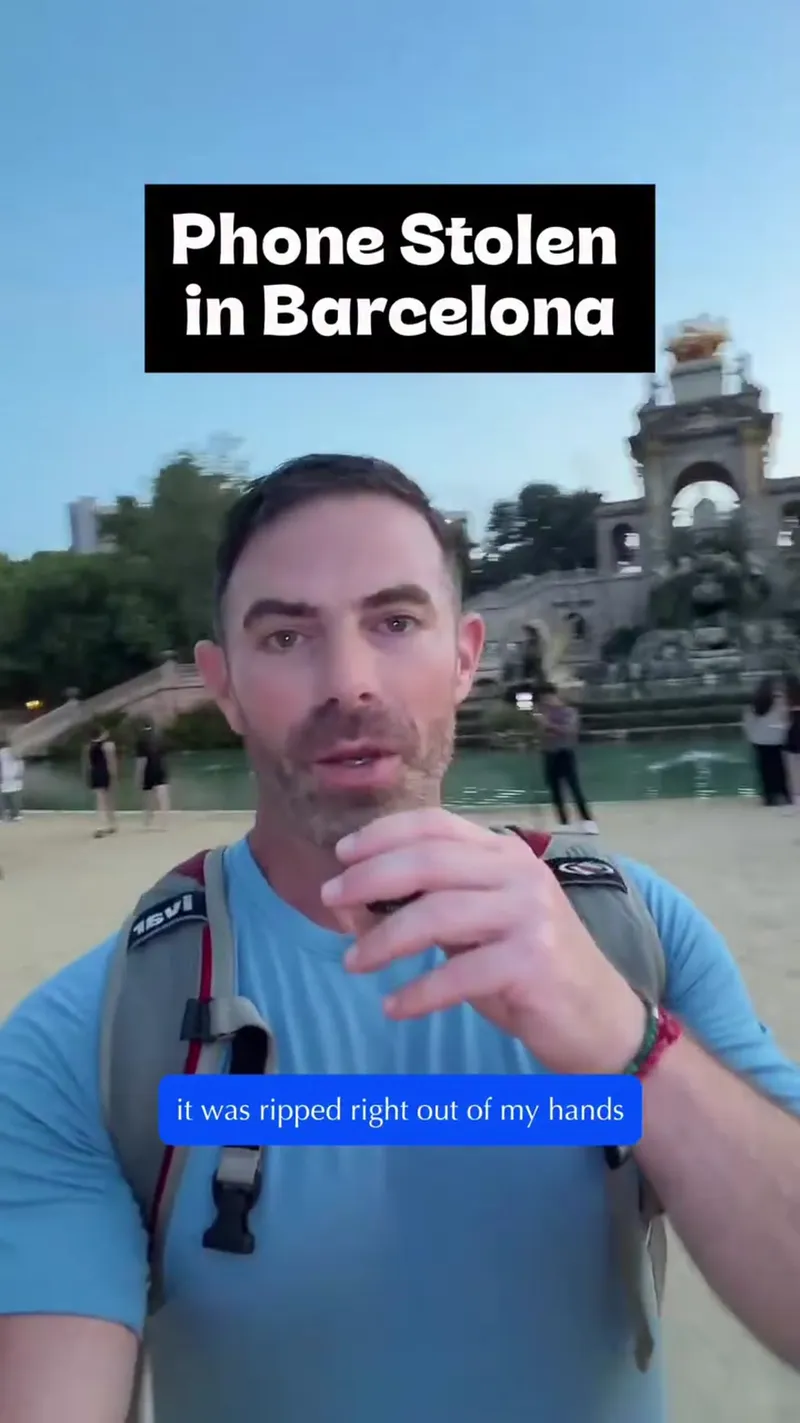
A travel creator shares his personal story of getting his phone stolen in Barcelona to warn others. He provides five practical tips from locals on how to hold your phone and use security gear to avoid being targeted by thieves in major cities.
5 Essential Tips to Prevent Phone Theft in Europe
The creator recounts having his phone snatched by a cyclist in Barcelona and shares five ways to reduce the risk while traveling. Tips include changing how you hold your phone, keeping it off cafe tables, using a tether, and carrying a backup phone.
- Views
- 569.8K
- Likes
- 12.6K
- Comments
- 461
- Phone theft preventionBarcelona travel safetyPhone security accessories
Analysis
The creator recounts having his phone snatched by a cyclist in Barcelona and shares five ways to reduce the risk while traveling. Tips include changing how you hold your phone, keeping it off cafe tables, using a tether, and carrying a backup phone.
- Talking headListicleTutorialVlog
- Spoken
- Original
“I had my phone stolen in Barcelona. It was ripped right out of my hands while I was using it by a biker I never even saw coming.”
- On-screen text
- Original
“Phone Stolen in Barcelona”
- Visual
- Text-led composition with contextual settingA centered, chest-up speaker addresses the camera with a prominent black headline box above him; a recognizable outdoor landmark is visible behind him. The visuals establish the storyteller and place but do not show the theft.
- The creator speaks directly to camera in Barcelona; the sampled plaza, cafe and street scenes place his account and safety tips in travel settings.
“I had my phone stolen in Barcelona. It was ripped right out of my hands while I was using it by a biker I never even saw coming. I was prepared for the pickpockets. I was not prepared for random rogue bike thieves. This is exactly what the locals told me to do so you don't get your phone stolen on your next trip to Europe. The first is as simple as how you hold it. Most people just hold their phones like this. The trick is to put your finger on the top. This is going to prevent those bike thieves from grabbing it out of your hands, which is exactly what happened to me. When you're sitting at a cafe, never have your phone anywhere on the table. This is basically the bat signal for crimes of convenience. Put it literally anywhere else. You're also going to want to get a phone tether. It anchors between your phone and your case. You wrap it around your wrist, tighten the strap, and now your phone's connected to your hand at all times. When you're walking on the street, never have your phone in the hand that's on the same side as the traffic. This is another golden opportunity for anyone on wheels to grab it straight out of your hands. Last one is a pro tip if you can travel with a second phone. I don't trade in my old phones anymore, so I'm always prepared for when I go to Europe. Because even with all of these precautions, it could still happen to you. Travel smarter, not harder, and follow travel Daddy Dave.”
- 01Personal incident and advice promise
The specific loss grounds the warning in experience. The unexpected method widens the risk, and the promise of advice sets up the ordered tips.
The narrator describes a phone being snatched, contrasts the expected risk with the unexpected one, then introduces local advice intended to prevent a repeat.
“I had my phone stolen in Barcelona. It was ripped right out of my hands while I was using it by a biker I never even saw coming. I was prepared for the pickpockets. I was not prepared for random rogue bike thieves. This is exactly what the locals told me to do so you don't get your phone stolen on your next trip to Europe.”
- 02Hand placement precaution
Begins the promised advice with a simple physical action, then connects its benefit back to the opening incident.
The first tip recommends a particular way to hold the item and explains how it thwarts the theft described earlier.
“The first is as simple as how you hold it. Most people just hold their phones like this. The trick is to put your finger on the top. This is going to prevent those bike thieves from grabbing it out of your hands, which is exactly what happened to me.”
- 03Avoid an exposed setting
Adds a distinct situational precaution to the handling advice, with a memorable analogy that clarifies why the setting is risky.
The next tip warns against leaving the phone on a cafe table, calls it an inviting target, and recommends placing it elsewhere.
“When you're sitting at a cafe, never have your phone anywhere on the table. This is basically the bat signal for crimes of convenience. Put it literally anywhere else.”
- 04Secure the item and mind its position
Turns the advice into two concrete precautions: physically securing the item and positioning it away from an easy approach. The explanation makes the tether recommendation usable rather than just naming a product.
The narrator recommends a tether, explains how it attaches and is worn, then cautions against carrying the phone on the traffic-facing side while walking.
“You're also going to want to get a phone tether. It anchors between your phone and your case. You wrap it around your wrist, tighten the strap, and now your phone's connected to your hand at all times. When you're walking on the street, never have your phone in the hand that's on the same side as the traffic. This is another golden opportunity for anyone on wheels to grab it straight out of your hands.”
- 05Backup option, limitation, and sign-off
Completes the advice list with a backup option, qualifies the tips by acknowledging they cannot eliminate the risk, and ends with a compact travel-safety takeaway and sign-off.
The final tip suggests traveling with a second phone and explains the narrator's reason for having one. The narrator then notes the risk can persist despite precautions and closes with a brief slogan and follow prompt.
“Last one is a pro tip if you can travel with a second phone. I don't trade in my old phones anymore, so I'm always prepared for when I go to Europe. Because even with all of these precautions, it could still happen to you. Travel smarter, not harder, and follow travel Daddy Dave.”