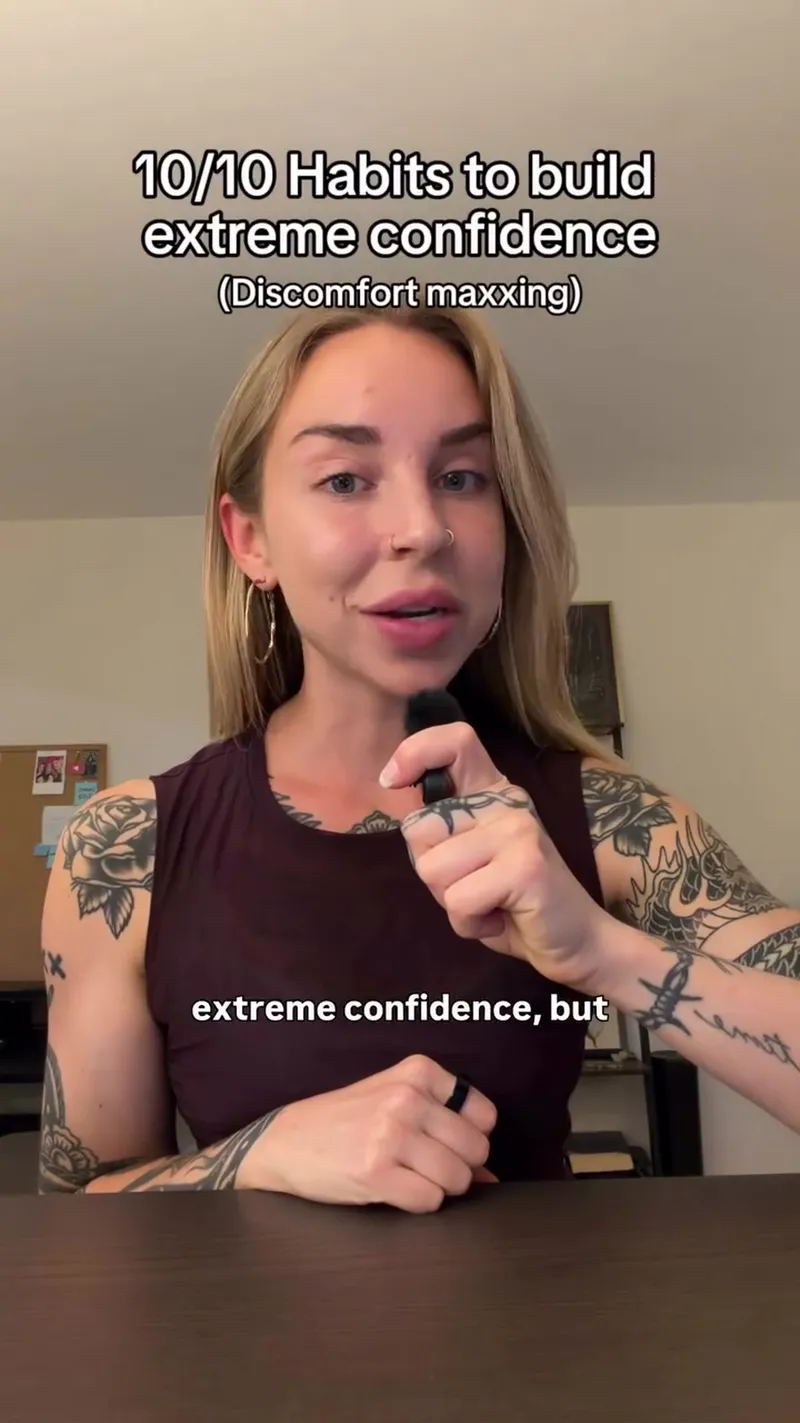
The video presents a list of 10 habits designed to build extreme confidence by intentionally seeking out uncomfortable social and professional situations. These tasks range from flirting in real life to practicing reverse positive visualization to build mental resilience.
10 Habits to Build Extreme Confidence Through Discomfort
A woman shares confidence-building habits that involve doing uncomfortable things, from applying for out-of-reach jobs to attending social events alone. She frames the suggestions as a list that grows more difficult.
- Likes
- 51.4K
- Comments
- 848
- Confidence-building habitsDiscomfort toleranceSocial confidenceSelf improvement
Analysis
A woman shares confidence-building habits that involve doing uncomfortable things, from applying for out-of-reach jobs to attending social events alone. She frames the suggestions as a list that grows more difficult.
- Talking headListicle
- Spoken
- Original
“10 out of 10 habits that build extreme confidence, but they get progressively more difficult.”
- On-screen text
- Original
“10/10 Habits to build extreme confidence (Discomfort maxxing)”
- Visual
- Text-led compositionA centered, medium close-up of the speaker facing the camera and holding a microphone, with a large headline above and a subtitle lower over the speaker.
- The presenter speaks directly to camera while on-screen captions echo the spoken list and a persistent headline identifies its confidence-building theme.
“10 out of 10 habits that build extreme confidence, but they get progressively more difficult. Apply to jobs you are completely unqualified for, and detach from the outcome. Do one thing per week that you're really bad at, and if you want to get spicy, do it in public. Flirt with someone in real life and a real location. You're a woman. Flirt with him first. Send the first text. Film a video of yourself working out, and watch it back with no judgment. Intentionally surround yourself with people who are way smarter than you. Allow yourself to be intimidated. Reverse positive visualization. Imagine the worst case scenario, the worst outcome possible, and sit and tolerate your distress for 10 minutes. Wear an outfit that is completely out of your comfort zone to a social event. Go to a social event by yourself and introduce yourself to one person. Record yourself speaking every day on camera and watch it back.”
- 01Introduce the escalating list and first challenge
Establishes the goal and the progression that organizes the list, then begins with a concrete challenge and a qualification about how to approach it.
Promises a set of habits for building a stated outcome, notes that they become harder, then offers an initial challenge involving an ambitious application and detachment from the result.
“10 out of 10 habits that build extreme confidence, but they get progressively more difficult. Apply to jobs you are completely unqualified for, and detach from the outcome.”
- 02Practice imperfect performance and initiation
Develops the confidence-building theme through imperfect practice and initiating contact; the public-facing variation adds a more exposed version before the next distinct challenge.
Suggests doing a poorly mastered activity regularly, optionally in public, then gives two direct social-initiative challenges.
“Do one thing per week that you're really bad at, and if you want to get spicy, do it in public. Flirt with someone in real life and a real location. You're a woman. Flirt with him first. Send the first text.”
- 03Face self-consciousness and comparison
Extends the list from social initiative to tolerating self-consciousness and comparison, with each challenge framed as a direct action.
Recommends recording and reviewing oneself without judgment, then spending time with people who are substantially more capable and allowing intimidation.
“Film a video of yourself working out, and watch it back with no judgment. Intentionally surround yourself with people who are way smarter than you. Allow yourself to be intimidated.”
- 04Tolerate imagined worst-case distress
Adds a more internally focused challenge, explaining the named technique through its steps and specifying how long to practice it.
Introduces reverse positive visualization: imagine the worst possible outcome and sit with the resulting distress for a set duration.
“Reverse positive visualization. Imagine the worst case scenario, the worst outcome possible, and sit and tolerate your distress for 10 minutes.”
- 05Take increasingly visible social challenges
Continues the action list with two concrete public challenges, moving from visible self-expression to solo attendance and initiating a conversation.
Suggests wearing an outfit outside one’s comfort zone to a social event, then attending another event alone and introducing oneself to one person.
“Wear an outfit that is completely out of your comfort zone to a social event. Go to a social event by yourself and introduce yourself to one person.”
- 06Close with repeated camera practice
Adds a final repeatable practice to the list; it closes with a concrete action rather than a separate summary or resolved question.
Ends with a daily routine of recording oneself speaking on camera and watching the recording back.
“Record yourself speaking every day on camera and watch it back.”