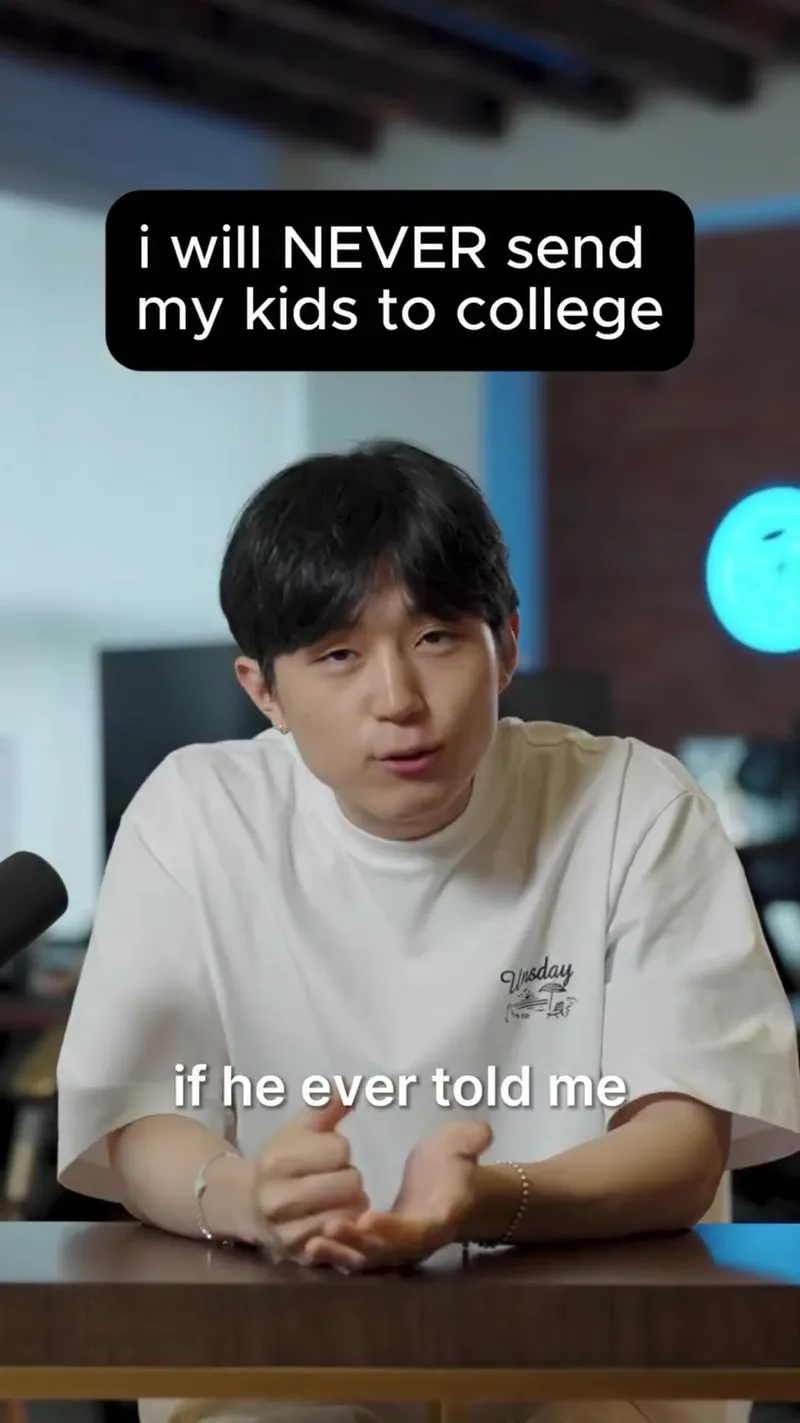
A satirical skit where a founder argues that college is a financial liability that forces people into a safe but boring 'underclass' life. When interrupted by an HR representative, he sarcastically flips his advice, telling kids to avoid all risks and settle for stable corporate consulting jobs.
Why College is a Liability: The Founder vs. HR
A speaker argues that college is an expensive path to a modest salary, then stages a workplace exchange about his sons dropping out. The ending sarcastically promotes staying in school and choosing a safe career, undercutting the opening claim.
- Likes
- 28.3K
- Comments
- 279
- College costsCollege dropout debateCareer risk and security
Analysis
A speaker argues that college is an expensive path to a modest salary, then stages a workplace exchange about his sons dropping out. The ending sarcastically promotes staying in school and choosing a safe career, undercutting the opening claim.
- Talking headSkitHot take
- Spoken
- Original
“Here's why I would beat my son if he ever told me he wanted to go to college.”
- On-screen text
- Original
“i will NEVER send my kids to college”
- Visual
- Text-led compositionA centered presenter faces the camera across a table, with the prominent headline above him and speech captions below. The shot supports the claim rather than demonstrating an action.
- The captions track the speaker’s words, while the opening headline reinforces the anti-college hook. Later samples show him addressing someone off-camera before returning to the direct-to-camera setup.
“Here's why I would beat my son if he ever told me he wanted to go to college. First of all, I mean, it's like you're spending $400,000 of my money for what? A chance to make 90k a year in McKinney? No, no. Shut this down. This is a huge liability problem. HR perspective. I have two sons in college, and I do not want them dropping out. You don't understand, Michelle. They have to drop out or they're gonna be part of the permanent underclass. Do you want me to talk to your mother? Do you want me to tell her how you're behaving at work again? You don't even have to call my mom. That's ridiculous. Michelle, it's getting a little bit out of hand. You don't have to talk to my mom. So always remember, kids, no matter what opportunities, no matter what happens, you have to stay in school. Because you know what's better than a chance at making a million dollars? The guaranteed path at making a few hundred K? Because, really, that's all you ever really want in life. Never take any risks. And always go for the safe route. And remember, if you're in school, if you're in college right now, there might really be a place for you as a consultant at McKinsey. So go give that a try, too.”
- 01Provocative hypothetical and cost-benefit objection
Establishes the premise and the speaker's exaggerated stance; the concrete cost-versus-return argument sets up a counterpoint.
Introduces a hypothetical disagreement, then makes a sarcastic financial objection and dismisses the expected payoff.
“Here's why I would beat my son if he ever told me he wanted to go to college. First of all, I mean, it's like you're spending $400,000 of my money for what? A chance to make 90k a year in McKinney? No, no.”
- 02Counterargument grounded in personal stakes
Counters the first speaker's confident dismissal with a personal stake, escalating the disagreement and inviting a response.
A second voice abruptly shuts down the proposal, frames it as a liability, and cites concern about their children leaving college.
“Shut this down. This is a huge liability problem. HR perspective. I have two sons in college, and I do not want them dropping out.”
- 03Insistent rebuttal and threat
Raises the stakes beyond the original decision and gives the opposing voice a reason to push back.
The first voice rejects the concern, asserts that the choice is necessary to avoid a bleak outcome, then makes a pointed threat involving the other person's family and workplace behavior.
“You don't understand, Michelle. They have to drop out or they're gonna be part of the permanent underclass. Do you want me to talk to your mother? Do you want me to tell her how you're behaving at work again?”
- 04Dismissive response and appeal to moderation
Provides the direct response to the threat and marks the exchange as excessive before the closing monologue.
The other voice calls the threat ridiculous, asks that their family not be involved, and says the argument is getting out of hand.
“You don't even have to call my mom. That's ridiculous. Michelle, it's getting a little bit out of hand. You don't have to talk to my mom.”
- 05Contradictory advice and ironic endorsement
Resolves the exchange with an ironic payoff: the cautionary advice clashes with the earlier risk-reward argument and ends in a specific invitation to pursue the supposedly safer opportunity.
The first voice turns to a broad lesson advocating the safe choice, compares speculative and guaranteed outcomes, then promotes risk avoidance before unexpectedly recommending a prestigious career path.
“So always remember, kids, no matter what opportunities, no matter what happens, you have to stay in school. Because you know what's better than a chance at making a million dollars? The guaranteed path at making a few hundred K? Because, really, that's all you ever really want in life. Never take any risks. And always go for the safe route. And remember, if you're in school, if you're in college right now, there might really be a place for you as a consultant at McKinsey. So go give that a try, too.”