A lawyer evaluates several real-world scenarios to determine if they are worth pursuing in court. He uses a 0-10 scale to explain how factors like injury severity, emotional distress, and financial value dictate the strength of a legal claim.
Is It Worth Suing? Rating 8 Legal Scenarios from 0 to 10
A lawyer rates everyday mishaps on a 0–10 scale for whether suing may be worthwhile, including daycare pickup errors, damaged property, and injuries. He notes that harm, evidence, severity, and the potential defendant’s ability to pay can affect a claim.
- Likes
- 18.3K
- Comments
- 82
- When to suePersonal injury claimsProperty damage lawsuitsNegligence and liability
Analysis
A lawyer rates everyday mishaps on a 0–10 scale for whether suing may be worthwhile, including daycare pickup errors, damaged property, and injuries. He notes that harm, evidence, severity, and the potential defendant’s ability to pay can affect a claim.
- Talking headListicleHot take
- Spoken
- Original
“A daycare releases your child to someone not on the pickup list.”
- On-screen text
- Original
“IS IT WORTH SUING? (0-10)”
- Visual
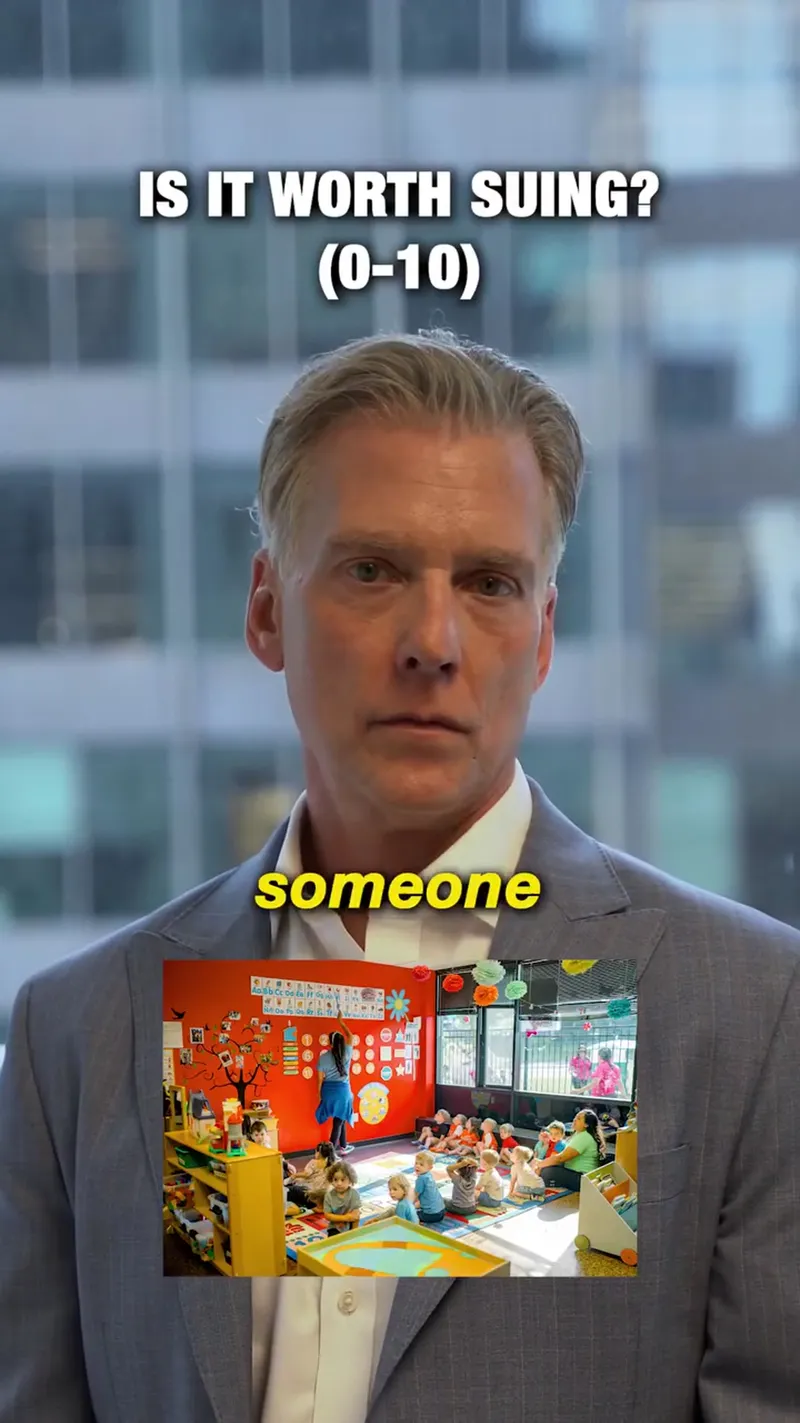
- Text-led composition with contextual imageA centered, direct-to-camera presenter is framed against a blurred office-like background, with a large question at the top and a daycare inset below; the inset supplies context rather than a visible demonstration.
- The presenter’s yellow captions follow his speech, while small illustrative images match the scenarios he discusses, such as a daycare, a fire, and a trainer.
“A daycare releases your child to someone not on the pickup list. That is a 10. An immense amount of emotional distress. And again, assuming that person has deep enough pockets to go after, you certainly would have a lawsuit be very viable. A restaurant serves food that's clearly undercooked one because there's. There's no damage, there's no injury. What you're entitled to is your money back. A wedding guest knocks over your expensive cake before the photos. Cakes nowadays are extremely expensive, so you have a right to sue for sure. Is it worth suing? Yeah, probably. Maybe put it at a 5. A friend borrows your designer bag and returns it damaged about a 4. A neighbor sets off fireworks that start a fire on your property. That would be at a 10, but again, only if there was severe damage. I mean, if it's just a minor fire on your lawn, then it's not gonna be worth suing for. A child at school breaks your child's glasses during recess. You wouldn't have any luck suing the child. So I put that at a 1. A hairdresser dyes your hair the wrong color right before an event. No law firm's gonna take the case because the value's just not there. So I would put it at about a 2o. A personal trainer pushes you past your limits and you get hurt. In that case, it's at about a 1. Because as much as a personal trainer, you're relying on his advice and such, it's still your decision whether you're going to push yourself or not. Ultimately, it comes down to you. A theme park ride stops suddenly and causes injury. That's going to be a 10 again, depending on the severity of the injury. But if you have injury that's sufficient enough that requires surgery or missing work, then you have no problem at all walking that into court. Follow for more legal insights.”
- 01High-stakes opening example
Opens the assessment format with a consequential case and establishes that the rating depends partly on whether the responsible party can pay.
Present a serious hypothetical, give it a high rating, and explain its likely viability with a key condition.
“A daycare releases your child to someone not on the pickup list. That is a 10. An immense amount of emotional distress. And again, assuming that person has deep enough pockets to go after, you certainly would have a lawsuit be very viable.”
- 02Low-damage case and remedy
Qualifies the opening's high rating by showing that a clear mistake may still support only a modest remedy when there is no injury or damage.
Describe a service or product problem, then distinguish dissatisfaction from compensable harm and identify a limited remedy.
“A restaurant serves food that's clearly undercooked one because there's. There's no damage, there's no injury. What you're entitled to is your money back.”
- 03Expensive loss, then practical rating
Adds a contrast between having grounds to sue and whether pursuing the case is worthwhile.
Introduce a costly loss, affirm that a claim may be possible, then answer whether suing is worthwhile with a lower rating.
“A wedding guest knocks over your expensive cake before the photos. Cakes nowadays are extremely expensive, so you have a right to sue for sure. Is it worth suing? Yeah, probably. Maybe put it at a 5.”
- 04Quick ratings with damage threshold
Builds the case-by-case comparison while making the severity of harm a condition of pursuing a claim.
Rate a damaged borrowed item, then a more serious property incident; qualify the high rating by requiring severe damage and contrast it with a minor version.
“A friend borrows your designer bag and returns it damaged about a 4. A neighbor sets off fireworks that start a fire on your property. That would be at a 10, but again, only if there was severe damage. I mean, if it's just a minor fire on your lawn, then it's not gonna be worth suing for.”
- 05Low-value claims
Extends the ratings across different kinds of harm and highlights practical limits: whom one can pursue and whether the amount at stake is worthwhile.
Give a low rating to damage caused by a child, then rate a service mistake and explain that the claim's value may not justify a law firm's involvement.
“A child at school breaks your child's glasses during recess. You wouldn't have any luck suing the child. So I put that at a 1. A hairdresser dyes your hair the wrong color right before an event. No law firm's gonna take the case because the value's just not there. So I would put it at about a 2o.”
- 06Personal responsibility qualification
Complicates the rating by explaining why a resulting injury may not establish another party's responsibility.
Rate an injury scenario, then explain that relying on advice does not remove the individual's responsibility for their own decision.
“A personal trainer pushes you past your limits and you get hurt. In that case, it's at about a 1. Because as much as a personal trainer, you're relying on his advice and such, it's still your decision whether you're going to push yourself or not. Ultimately, it comes down to you.”
- 07Serious injury and closing call to action
Pays off the sequence with a stronger case when serious injury is involved, reinforces the importance of severity, and closes with a follow request.
Rate an injury-causing incident highly, condition the rating on severity, specify examples of substantial harm, and invite viewers to follow for more insights.
“A theme park ride stops suddenly and causes injury. That's going to be a 10 again, depending on the severity of the injury. But if you have injury that's sufficient enough that requires surgery or missing work, then you have no problem at all walking that into court. Follow for more legal insights.”