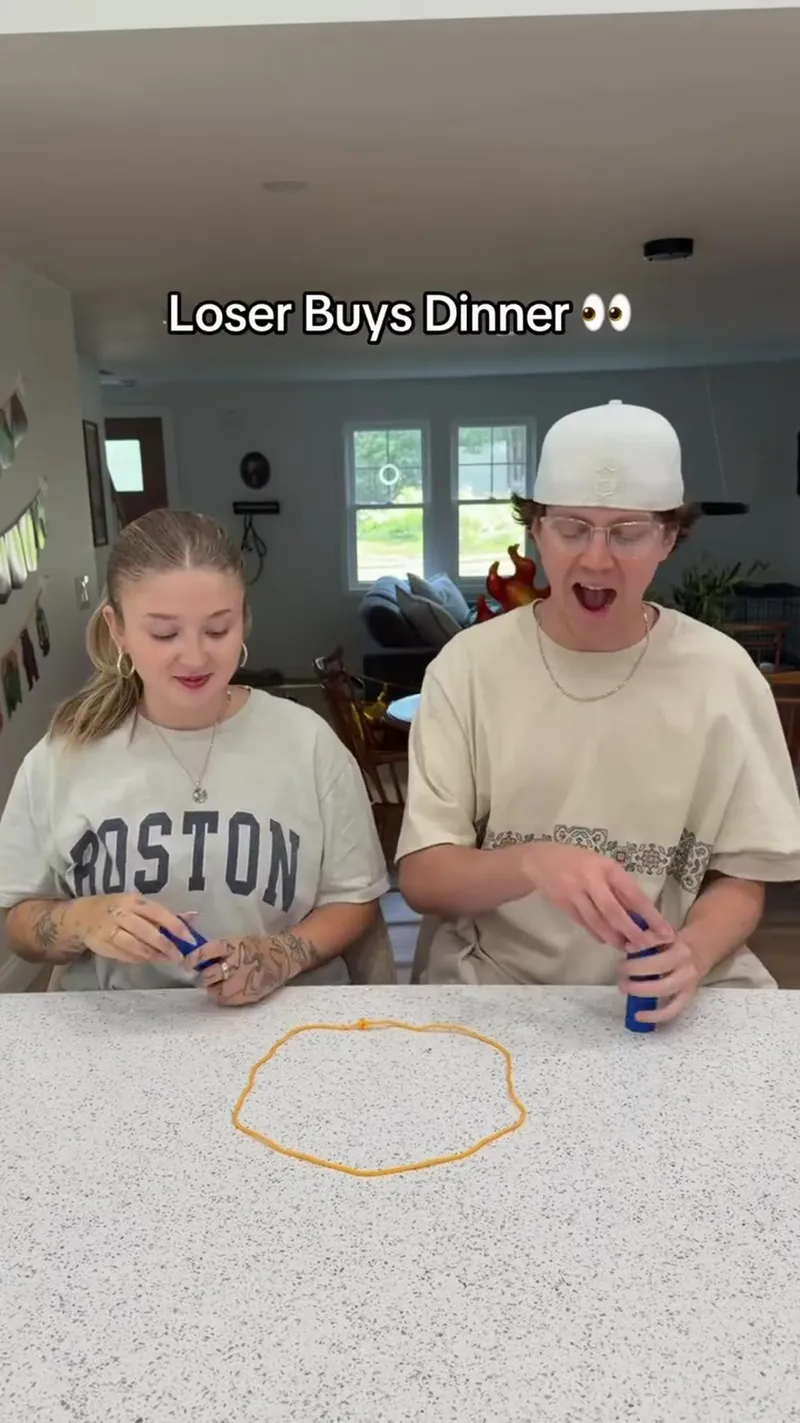
A couple plays a high-stakes game of Kluster where they take turns placing magnets inside a rope circle. The loser is responsible for buying dinner, leading to intense concentration and loud, funny reactions when the magnets snap together.
Loser Buys Dinner: The Ultimate Magnet Game Challenge
Two people play a tabletop game, taking turns moving blue pieces within a ring. The loser is meant to buy dinner, and their reactions show the game becoming frustrating and unpredictable.
- Views
- 7.4M
- Likes
- 551.1K
- Comments
- 720
- Tabletop game challengeLoser buys dinner
Analysis
Two people play a tabletop game, taking turns moving blue pieces within a ring. The loser is meant to buy dinner, and their reactions show the game becoming frustrating and unpredictable.
- CompetitionSkit
- On-screen text
- Original
“Loser Buys Dinner 👀”
- Visual
- Text-led contest setup supported by a visible tabletop activity.A vertical, medium-wide view places two participants side by side behind a tabletop game, with the game pieces visible in the foreground and a prominent headline above them.
- The sampled visuals show the two players taking turns placing blue pieces inside the ring, matching the transcript’s play-by-play and reactions.
“1 3. Oh. I don't know why I'm counting. I'm sorry. I'm new to this game. I've never played before. We make the same thing every time. Then you do that, and then I get sad because where do I go? There. Oh. Then I go there. Right. But then I go. It did touch. But that's okay. I sound like a seagull. Oh, my goodness. Oh, no. Try again. What the heck was that? Oh, no. Why are you putting them so close? Oh, there. Squeeze. You have nothing to do with this. Hello. Hello. What was that? What was that? What was that? Nice awesome fun game this is. I'm already going to loot. I sneak. Whoa. That one. Better than expected. Oh, yeah. Sayonara, pal. Sayonara. What? No, no. They're all looking at you. Stay. It's not a dog. Hello? What the hell was that? How many do you have left? I don't tell him. Hello? All that space. Are you kidding me? No. One more. I hate this game.”
- 01Unfamiliar start and early confusion
Establishes inexperience and the immediate problem, then offers a small attempt at orientation without resolving the confusion.
The speaker says they do not know why they are counting, apologizes for being new, and describes a repeated action that leaves them unsure where to go. A brief suggestion is followed, then the speaker realizes it caused contact but brushes that off.
“1 3. Oh. I don't know why I'm counting. I'm sorry. I'm new to this game. I've never played before. We make the same thing every time. Then you do that, and then I get sad because where do I go? There. Oh. Then I go there. Right. But then I go. It did touch. But that's okay.”
- 02Comedic mishaps and renewed attempts
Turns the initial uncertainty into a string of reactions and attempts, with each odd result prompting another response.
The speaker makes a comic self-comparison, reacts to something strange, urges another try, complains about close placement, and gives a short directive before saying someone else has no role in this.
“I sound like a seagull. Oh, my goodness. Oh, no. Try again. What the heck was that? Oh, no. Why are you putting them so close? Oh, there. Squeeze. You have nothing to do with this.”
- 03Surprise, brief praise, then reversal
Provides a brief payoff of enjoyment and apparent progress, then complicates it with the warning and correction.
After repeated greetings and questions about an unexpected event, the speaker praises the activity, describes starting a new action, and reacts positively to a result. The mood shifts when someone warns that others are watching, followed by a short instruction and correction.
“Hello. Hello. What was that? What was that? What was that? Nice awesome fun game this is. I'm already going to loot. I sneak. Whoa. That one. Better than expected. Oh, yeah. Sayonara, pal. Sayonara. What? No, no. They're all looking at you. Stay. It's not a dog.”
- 04Unresolved surprise and exasperated close
Returns to confusion after the brief positive stretch and closes with a clear expression of frustration.
The speaker asks what happened and how many remain, tells someone not to reveal it, remarks on the available space, questions the situation, then acknowledges one more and ends by saying they hate the activity.
“Hello? What the hell was that? How many do you have left? I don't tell him. Hello? All that space. Are you kidding me? No. One more. I hate this game.”