Italian Supermarket Pasta Section is INSANE
Italian Supermarket Pasta Section is INSANE
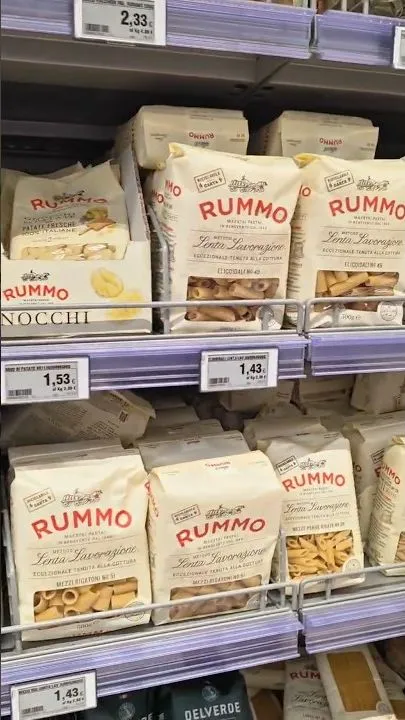
The presenter walks through a Coop supermarket pasta aisle in Italy, comparing budget options with more expensive bronze-cut and slow-dried pastas. He recommends brands for everyday meals and premium choices.
- Views
- 633.5K
- Likes
- 18.3K
- Comments
- 2.4K
- Italian supermarket pastaPasta price and qualityBronze-cut pasta
Analysis
The presenter walks through a Coop supermarket pasta aisle in Italy, comparing budget options with more expensive bronze-cut and slow-dried pastas. He recommends brands for everyday meals and premium choices.
- DemoTutorialComparisonProduct showcase
- Spoken
- Original
“I'm in Italy, and this is an Italian supermarket. This is the pasta aisle. Look how big it is. Huge, okay?”
“I'm in Italy, and this is an Italian supermarket. This is the pasta aisle. Look how big it is. Huge, okay? So, it starts from the cheaper version, okay? So, this is the shop called Coop, and here they have got their own label. It's cheap. It's not bronze cut. Even Italians are on a budget, okay? But, if you keep moving, you got the dyed bronze cut, which is a little bit more expensive, but good quality. Then, you got even a bit more expensive, even a better quality, right? Um and this is all uh private label that this shop has. Um then, you got the Barilla section, okay? And it's very popular in Italy. Barilla is extremely popular in Italy and around the world. Then, over here, you got Voiello, which is definitely uh A tier. Voiello is very good, but difficult to find. Uh De Cecco, which also makes even a Christmas collection at the moment. See, De Cecco even made a Christmas collection. Look how big the De Cecco aisle is, okay? Pretty big. It's competing with Barilla. Over here, we got bronze dye Barilla. Very good. De Cecco limited edition. And then, over here, we got Monograno, which is actually my favorite choice for, you know, this category. This is very good and good price. Del Verde. Very good. Rummo. Amazing. Very good pasta. And then, here, we're moving to the top top of the range. We got Cocco, okay? Pastificio Cocco. Definitely the best pasta in the world. Of course, the price change because here we have a slow dry pasta, 48 hours slow dry low temperatures, top quality semolina is used. So, it's a completely different product, okay? So, we're going from a commercial So, here we go from a commercial everyday product, €1.40, versus a beautiful special product 2 euro 70. These these products is definitely [clears throat] a life changing experience. I mean the pulp in this box. But if you need to save a little bit of money and eat pasta everyday, you definitely go for the Rummo, La Molisana or Barilla red or De Cecco range. Very easy to choose. I try to avoid the cheapest pastas just because it's you know it's you don't know where the flower is from, we don't know the way they dry it what temperatures. So I would say Molisana red Barilla good for everyday Rummo or if you want best Cocco Rustichella, Mancini and those type of brands. I hope this help.”
- 01Introduce the place and range
Orients the viewer and sets up a price-to-quality progression.
Establish the location, point out the scale of the selection, and begin at the cheaper end.
“I'm in Italy, and this is an Italian supermarket. This is the pasta aisle. Look how big it is. Huge, okay? So, it starts from the cheaper version,”
- 02Explain entry-level and midrange choices
Builds the comparison ladder by pairing price with quality and explains why viewers might choose each level.
Identify the store’s own-label budget option, qualify it as a budget choice, then move to a costlier quality tier and another step up.
“okay? So, this is the shop called Coop, and here they have got their own label. It's cheap. It's not bronze cut. Even Italians are on a budget, okay? But, if you keep moving, you got the dyed bronze cut, which is a little bit more expensive, but good quality. Then, you got even a bit more expensive, even a better quality, right? Um and this is all uh private label that this shop has.”
- 03Cover familiar and specialty brands
Broadens the tour beyond the store’s own label and adds popularity, availability, and seasonal variety as comparison points.
Move from a popular mainstream brand to a highly rated but harder-to-find option, then introduce another brand and its seasonal collection.
“Um then, you got the Barilla section, okay? And it's very popular in Italy. Barilla is extremely popular in Italy and around the world. Then, over here, you got Voiello, which is definitely uh A tier. Voiello is very good, but difficult to find. Uh De Cecco, which also makes even a Christmas collection at the moment.”
- 04Show the range and compare premium variants
Makes the breadth of the selection concrete and continues the tier-by-tier comparison with specific variants.
Reiterate the seasonal collection, emphasize the aisle’s size and competition, then point out higher-grade and limited-edition variants.
“See, De Cecco even made a Christmas collection. Look how big the De Cecco aisle is, okay? Pretty big. It's competing with Barilla. Over here, we got bronze dye Barilla. Very good. De Cecco limited edition.”
- 05Name preferred mid-to-high choices
Adds a personal preference and compact evaluations before the tour reaches the top of the range.
Continue through several brands, identify a personal favorite in the category, and give brief quality or value judgments.
“And then, over here, we got Monograno, which is actually my favorite choice for, you know, this category. This is very good and good price. Del Verde. Very good. Rummo. Amazing. Very good pasta.”
- 06Present the top tier and explain its premium
Pays off the quality ladder by explaining how the premium product differs from an everyday commercial option and why it costs more.
Mark the move to the highest range, praise a featured option, and justify its higher price with production details and a direct comparison.
“And then, here, we're moving to the top top of the range. We got Cocco, okay? Pastificio Cocco. Definitely the best pasta in the world. Of course, the price change because here we have a slow dry pasta, 48 hours slow dry low temperatures, top quality semolina is used. So, it's a completely different product, okay?”
- 07Compare price points and give practical recommendations
Turns the tour into usable buying guidance: viewers get budget-conscious picks, a reason to avoid the very cheapest option, and separate everyday and top-quality recommendations.
Contrast everyday and premium examples by price, characterize the premium experience, then recommend affordable everyday options and explain a quality caution about the cheapest choices.
“So, we're going from a commercial So, here we go from a commercial everyday product, €1.40, versus a beautiful special product 2 euro 70. These these products is definitely [clears throat] a life changing experience. I mean the pulp in this box. But if you need to save a little bit of money and eat pasta everyday, you definitely go for the Rummo, La Molisana or Barilla red or De Cecco range. Very easy to choose. I try to avoid the cheapest pastas just because it's you know it's you don't know where the flower is from, we don't know the way they dry it what temperatures. So I would say Molisana red Barilla good for everyday Rummo or if you want best Cocco Rustichella, Mancini and those type of brands. I hope this help.”