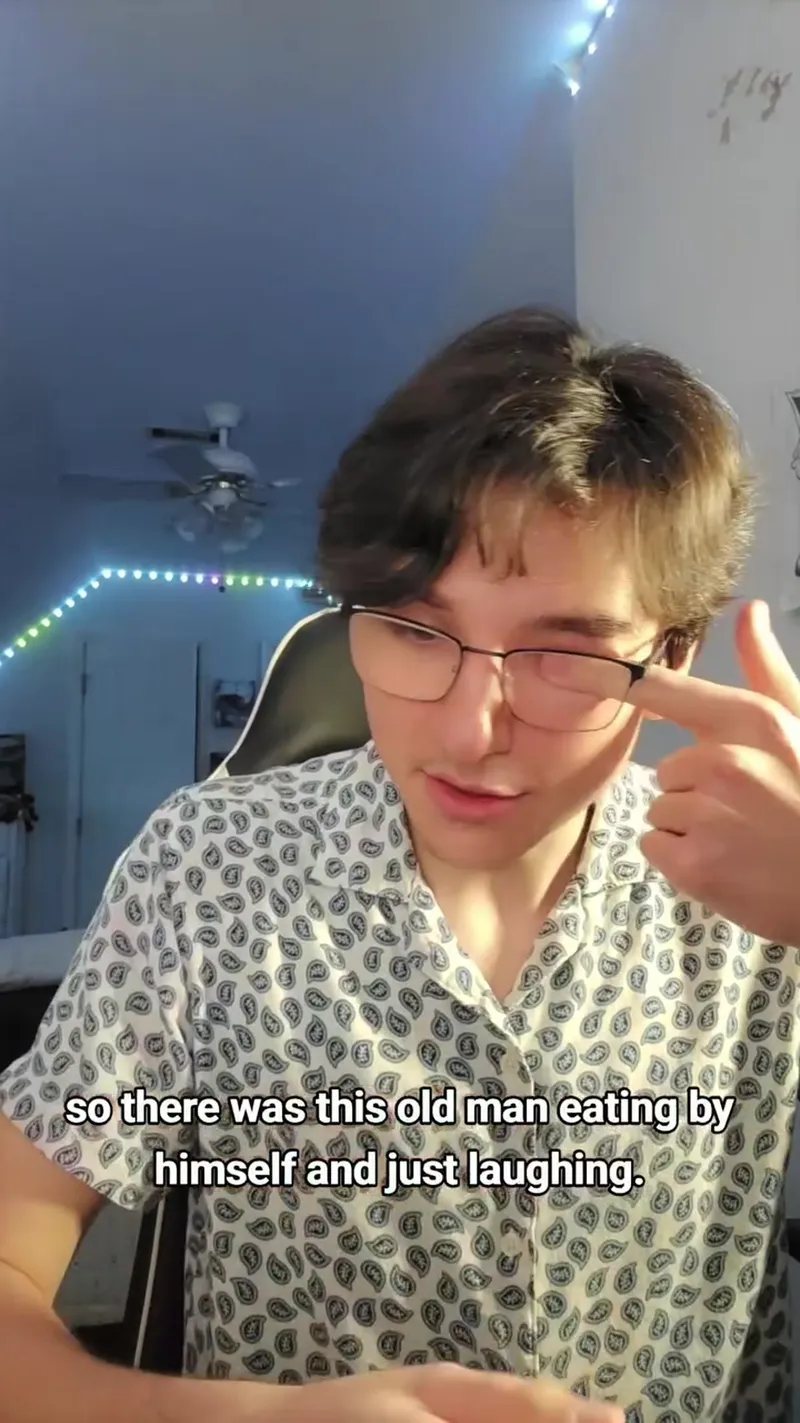
A creator shares a touching story about meeting an elderly man who was dining alone and reminiscing about his late wife. The video concludes with an original poem written to honor the couple's lifelong devotion and the enduring power of memory.
A Poem for Richard and Melanie: A Story of Eternal Love
The speaker recounts meeting an older widower and hearing about his love for his late wife. He shares a poem he wrote for them, then closes with a message about caring for yourself and others.
- Views
- 1.3M
- Likes
- 261.5K
- Comments
- 2.1K
- Lasting love and griefPoem for a late wifeChance encounter story
Analysis
The speaker recounts meeting an older widower and hearing about his love for his late wife. He shares a poem he wrote for them, then closes with a message about caring for yourself and others.
- Talking headStory arcPerformance
- Spoken
- Original
“So there was this old man eating by himself and just laughing.”
- On-screen text
- Original
“so there was this old man eating by himself and just laughing.”
- Visual
- Text-led direct-to-camera compositionA centered speaker faces the camera in a medium close-up; prominent two-line subtitles sit across the lower portion of the frame.
- The visible speaker tells the story and recites the poem to camera; subtitles display the spoken words.
“So there was this old man eating by himself and just laughing. And so I went over there and I indulged myself. And I said, hey, sir, you waiting on someone? And he said, yes, my beautiful wife. I said, ah, tell me about her. He said, the greatest pride yet, the only regret is that he could never find a diamond as beautiful as her. And I said, can I use that for my poetry? And he said, yeah, no, I wrote poetry back in the day, all the time. And I asked him these subtle questions just because, you know, I get anxious about my own relationships. I said, did y' all ever fight? He said, of course, yeah, once. About who would pass away first. And I said, how did y' all dispute it? He said, rock, paper, scissors, like all good relationships. But then he said, in all seriousness. She said, oh, I'll be going first. And then he said, only time can answer that. And then she said, well, I'm always right. And I said, well, she sounds like the loveliest type of sweet. When will your wife be joining us? And he said, oh, well, she's always here. And then it hit me. And then he said, yeah, she always needs needed to be correct. But I loved her because she always was. I said, is not being with her scary? He's like, it's the feeling of being naive. Like a child believing in Santa, that I'd see her for another tomorrow. But many tomorrows later, I'm still that naive. And then he gave me this little snippet of a poem that he wrote to his wife a little bit before she passed away. And he asked if I could complete it. So this poem is called Richard and Melanie Yarden. He asked if I could write something for him and his wife. I said, I can only imagine what it's like being in your shoes. And he said, that's all one needs to be the greatest artist and a better person. So I wrote this. Losing a love is like having a melody to a song. You can't remember the lyrics to a memory. Others seemed to be foggy on While you could remember the names of the birds that were whistling the shapes of the clouds and the sounds of her lips separating to show a fiery quartz sprouted smile oh, trust all the while Others seem to just remember you While I'm living for the both of us if I cannot find my way into the afterlife and the ghost of me can no longer survive by your side to hell with who I was to others or what has been for in her mind I would have found my heaven if only she can remember me and I only live on in her memory. Aries. Then I will be in my heaven. Having said that, this was probably the most beautiful one I could come up with. Eat, drink, as well as take your meds. I love you. I love you more. Make sure to love yourself. Make sure to love others. And make sure to love your melodies. Bye.”
- 01Chance encounter and opening question
Introduces the encounter and the absent partner, then gives the listener an invitation to learn more about the relationship.
The narrator notices someone alone, approaches, and asks whether they are waiting for anyone. The person says they are waiting for a beloved partner and offers a poetic description.
“So there was this old man eating by himself and just laughing. And so I went over there and I indulged myself. And I said, hey, sir, you waiting on someone? And he said, yes, my beautiful wife. I said, ah, tell me about her. He said, the greatest pride yet, the only regret is that he could never find a diamond as beautiful as her.”
- 02Permission, personal context, and relationship anecdote
Develops the narrator’s reason for asking intimate questions and balances humor about the couple’s dynamic with the seriousness of their affection.
The narrator asks to use the story in poetry, learns the person also wrote poetry, and explains their own relationship anxiety. Questions about conflict prompt a playful but poignant account of what the couple argued over and how the partner answered.
“And I said, can I use that for my poetry? And he said, yeah, no, I wrote poetry back in the day, all the time. And I asked him these subtle questions just because, you know, I get anxious about my own relationships. I said, did y' all ever fight? He said, of course, yeah, once. About who would pass away first. And I said, how did y' all dispute it? He said, rock, paper, scissors, like all good relationships. But then he said, in all seriousness. She said, oh, I'll be going first. And then he said, only time can answer that. And then she said, well, I'm always right.”
- 03Absence revealed and love remembered
Resolves the question of why the partner has not joined them and deepens the story from charming recollection into grief, enduring attachment, and a request that sets up the poem.
The narrator praises the partner and asks when they will arrive. The person says they are always there, clarifying that the partner has died. They recall her habits, describe the hope of another tomorrow, and share a short poem he wrote before her death, asking the narrator to complete it.
“And I said, well, she sounds like the loveliest type of sweet. When will your wife be joining us? And he said, oh, well, she's always here. And then it hit me. And then he said, yeah, she always needs needed to be correct. But I loved her because she always was. I said, is not being with her scary? He's like, it's the feeling of being naive. Like a child believing in Santa, that I'd see her for another tomorrow. But many tomorrows later, I'm still that naive. And then he gave me this little snippet of a poem that he wrote to his wife a little bit before she passed away. And he asked if I could complete it.”
- 04Create and share the tribute
Pays off the request by presenting the completed work; the poem’s images and recurring contrast between what others remember and what the narrator remembers carry the emotional center.
The narrator names the poem, explains the commission, and shares a long poetic tribute about memory, love, and imagined reunion after death.
“So this poem is called Richard and Melanie Yarden. He asked if I could write something for him and his wife. I said, I can only imagine what it's like being in your shoes. And he said, that's all one needs to be the greatest artist and a better person. So I wrote this. Losing a love is like having a melody to a song. You can't remember the lyrics to a memory. Others seemed to be foggy on While you could remember the names of the birds that were whistling the shapes of the clouds and the sounds of her lips separating to show a fiery quartz sprouted smile oh, trust all the while Others seem to just remember you While I'm living for the both of us if I cannot find my way into the afterlife and the ghost of me can no longer survive by your side to hell with who I was to others or what has been for in her mind I would have found my heaven if only she can remember me and I only live on in her memory. Aries. Then I will be in my heaven.”
- 05Reflection and affectionate sign-off
Closes the story with humility, care, and a direct farewell after the poem’s emotional payoff.
The narrator calls the poem perhaps their most beautiful effort, gives practical reminders, exchanges affectionate words, encourages love for oneself, others, and creative work, then says goodbye.
“Having said that, this was probably the most beautiful one I could come up with. Eat, drink, as well as take your meds. I love you. I love you more. Make sure to love yourself. Make sure to love others. And make sure to love your melodies. Bye.”