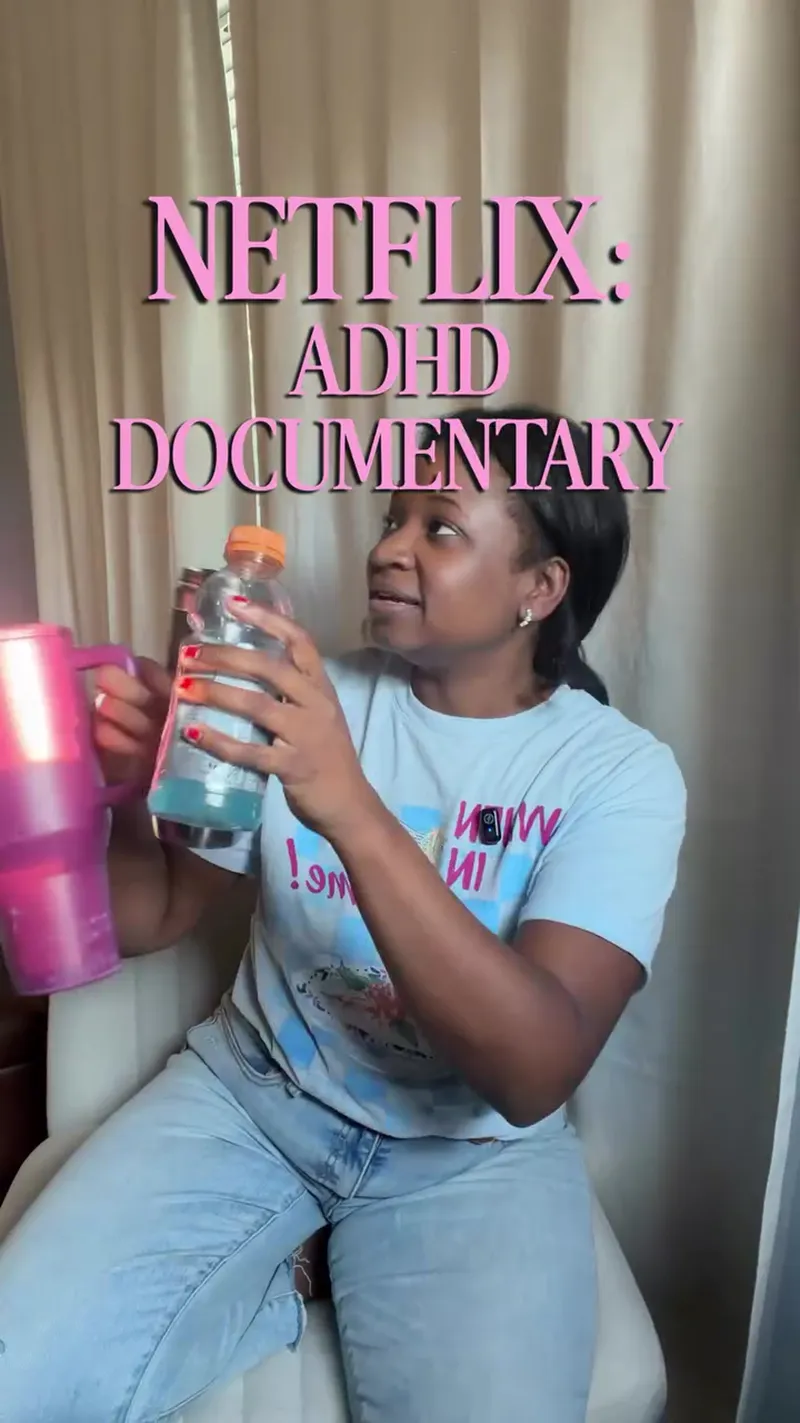
The creator uses a mock Netflix documentary format to humorously explain the daily realities of living with ADHD. She discusses themes of chronic lateness, the constant cycle of building and abandoning productivity systems, and the true nature of the disorder beyond simple focus issues.
The Realities of Living with ADHD: A Mock Netflix Interview
A comedic mock interview presents everyday experiences of living with ADHD, including lateness, forgotten alarms, changing routines, and abandoned systems. The speaker jokes about managing a household and her attention in a style framed as an ADHD documentary.
- Likes
- 24.9K
- Comments
- 800
- ADHD everyday experiencesHousehold coping systemsAttention and routines
Analysis
A comedic mock interview presents everyday experiences of living with ADHD, including lateness, forgotten alarms, changing routines, and abandoned systems. The speaker jokes about managing a household and her attention in a style framed as an ADHD documentary.
- SkitInterviewMonologue
- Spoken
- Original
“Sorry. Running late.”
- On-screen text
- Original
“NETFLIX: ADHD DOCUMENTARY”
- Visual
- Text-led compositionA seated presenter is shown in front of curtains, holding several everyday items; a large pink headline sits across the upper center of the vertical frame.
- The speaker acts out the mock interview on camera, while subtitles follow her lines. The opening pink “Netflix: ADHD Documentary” headline frames the scene as a playful documentary parody.
“Sorry. Running late. Because. Because I'm me. It is today, right? I had an alarm, but I didn't name it, so I forgot what it was for and I'm looking. That's gonna be hard. There's my emotional safety corner. Do you mind if I. I mean, I can select this if you want me to not answer any questions. What's it like living with adhd? Great, as long as nothing goes wrong, but also if nothing stays the same. I have amazing systems. I also abandon them every three to six business days. Sometimes they're so great, I forget they exist. Routine absolutely does help. Until it becomes routine. I'm sorry, what? Can you repeat that while I'm holding this and looking that way so I can understand what you said? Oh, my household. I don't run a household. I run a regulation lab disguised as a household. What do I do for work? I build incredibly complex systems and standards for other people to follow because my own brain won't accept factory settings. I love hobbies. I have so many. Sometimes I forget how many hobbies I have. But that's okay, because when I remember, it's new. Dope is my hobby. Dopamine. Dopamine is my hobby. The natural kind, Dopamine. What's the biggest misconception about adhd? That it's a focused disorder. When really it's a. How did I even end up in this interview disorder? How did I get here? Did I sign myself up for this? Did somebody nominate me? Oh, God. Did somebody nominate me? Who did that? Who would have nominated me? They think I'm weird. Yeah. I'm gonna need to end this so I can go spiral for about three business days. About that. Do you mind if we. Everything's fine. Yeah, it's great.”
- 01Mishap before the interview
Establishes the self-deprecating, easily derailed voice before the stated interview question; the permission request sets up the interview exchange.
The speaker apologizes for being late, explains an unnamed alarm was forgotten, then points out a hard-to-manage situation and asks permission not to answer questions.
“Sorry. Running late. Because. Because I'm me. It is today, right? I had an alarm, but I didn't name it, so I forgot what it was for and I'm looking. That's gonna be hard. There's my emotional safety corner. Do you mind if I. I mean, I can select this if you want me to not answer any questions.”
- 02Answering what the condition is like
Responds to the central question with recognizable contradictions and a concise example, establishing the comic pattern used in later answers.
The speaker answers the interview question with a conditional joke, describes systems that eventually lapse, and illustrates how routine can stop helping once it becomes routine.
“What's it like living with adhd? Great, as long as nothing goes wrong, but also if nothing stays the same. I have amazing systems. I also abandon them every three to six business days. Sometimes they're so great, I forget they exist. Routine absolutely does help. Until it becomes routine.”
- 03Everyday interruption and central metaphor
Gives a concrete example of divided attention, then delivers the passage’s defining metaphor as a compact summary.
The speaker asks for a question to be repeated while distracted by objects and surroundings, then restates the household as a regulation lab in disguise.
“I'm sorry, what? Can you repeat that while I'm holding this and looking that way so I can understand what you said? Oh, my household. I don't run a household. I run a regulation lab disguised as a household.”
- 04Work and hobbies
Extends the answer through two distinct personal examples; the hobby sequence resolves its own forgetfulness with a playful reframing.
The speaker contrasts building elaborate systems for others with difficulty accepting standard settings, then describes numerous forgotten hobbies as newly interesting when remembered.
“What do I do for work? I build incredibly complex systems and standards for other people to follow because my own brain won't accept factory settings. I love hobbies. I have so many. Sometimes I forget how many hobbies I have. But that's okay, because when I remember, it's new. Dope is my hobby. Dopamine. Dopamine is my hobby. The natural kind, Dopamine.”
- 05Misconception and interview spiral
Moves from an attempted informational answer into an escalating comic chain of questions; the intention to end the interview sets up the closing exchange.
Asked about a misconception, the speaker begins an answer, questions how they ended up in the interview, spirals through possible explanations, and decides to end it to go worry.
“What's the biggest misconception about adhd? That it's a focused disorder. When really it's a. How did I even end up in this interview disorder? How did I get here? Did I sign myself up for this? Did somebody nominate me? Oh, God. Did somebody nominate me? Who did that? Who would have nominated me? They think I'm weird. Yeah. I'm gonna need to end this so I can go spiral for about three business days.”
- 06Abrupt wrap-up
Closes the interview with a deliberately quick reassurance, echoing the earlier effort to disengage rather than resolving the comic worry in detail.
After a brief trailing transition, the speaker asks whether they can leave, then says everything is fine and that it is great.
“About that. Do you mind if we. Everything's fine. Yeah, it's great.”