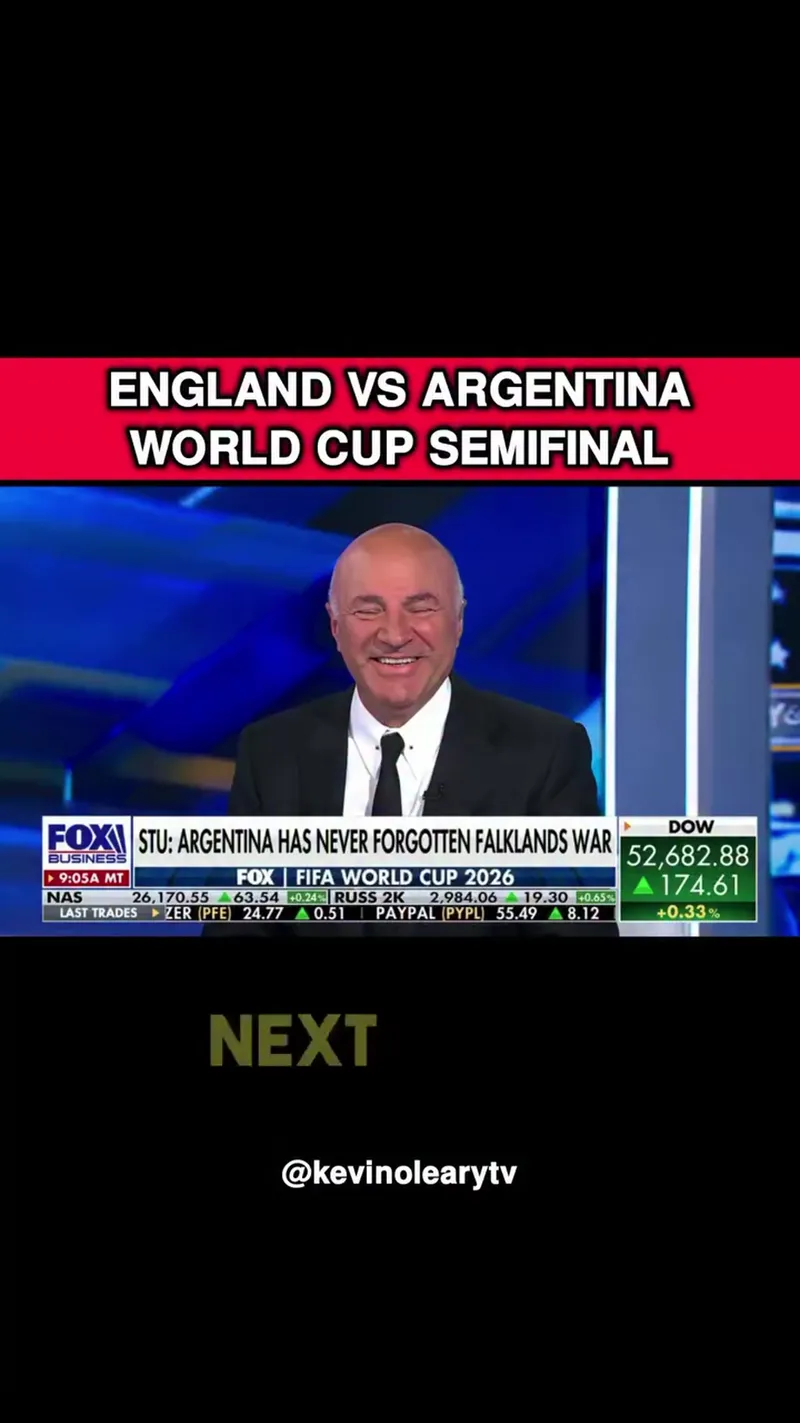
Business personalities Kevin O'Leary and Stuart Varney engage in a spirited debate over the England vs. Argentina World Cup semifinal. O'Leary confidently predicts a 2-1 victory for Argentina, while Varney pushes for a dominant 3-0 win for England.
Kevin O’Leary’s Bold World Cup Prediction: England vs. Argentina
In a Fox Business studio exchange, Kevin O’Leary predicts England will lose to Argentina in a World Cup semifinal, even naming a 2–1 score. The speakers debate the forecast and England’s chances.
- Likes
- 205.1K
- Comments
- 6.1K
- England vs ArgentinaWorld Cup semifinal predictionSoccer match score
Analysis
In a Fox Business studio exchange, Kevin O’Leary predicts England will lose to Argentina in a World Cup semifinal, even naming a 2–1 score. The speakers debate the forecast and England’s chances.
- InterviewHot takeCommentary
- Spoken
- Original
“Kevin o' Leary is sitting right next to me and I want to know you're going to watch.”
- On-screen text
- Original
“ENGLAND VS ARGENTINA WORLD CUP SEMIFINAL”
- Visual
- Text-led composition with interview footageA cropped TV-news interview fills a horizontal strip beneath a bold red match headline. The footage switches between two seated speakers, with a large name label below that changes to identify them.
- The sampled TV footage shows the two speakers and a split-screen crowd scene, while added captions emphasize their names and spoken lines. A red headline identifies the England–Argentina semifinal.
“Kevin o' Leary is sitting right next to me and I want to know you're going to watch. Of course. And I had to break your heart. Stuart. England's not going to make it. Really? Nope. Not going to make it. They're going to lose. Time for a commercial break. You're off the show. They're going to get. Look how close they got. I mean look how close they got. They're going to lose. Not in a shootout. Old fashioned two to one. You heard it here first. Why the momentum. Momentum right now, one thing I will say, the predictive markets have got all the soccer outcomes wrong. It's impossible to predict. But I listen, I love grand old England for soccer. Ain't going to happen. You're a Canadian, aren't you? I'm also Irish. Yes, yes. I'm an Irish citizen. You would think I don't fall in soccer. But. But I also want to be right. And I want you to think of me later today around 6 o'. Clock. Okay? You say Argentina to England 1. I say England 3. Argentina. You are so aggressive. But I would never put any money. You know how hard that is to get three goals against Argentina? That ain't easy. That's going to be very hard. The goal is fantastic. We'll see what happens. You look in smug right now. We'll see what happens. We will. We will.”
- 01Set up and reject the forecast
Establishes a clear, provocative forecast and an immediate conversational challenge to develop.
A person is asked about an upcoming event; the speaker predicts a disappointing outcome, briefly draws a reaction, then doubles down.
“Kevin o' Leary is sitting right next to me and I want to know you're going to watch. Of course. And I had to break your heart. Stuart. England's not going to make it. Really? Nope. Not going to make it. They're going to lose.”
- 02Interrupt and reinforce the prediction
The interruption creates a comic pivot, while the near-miss context sets up another reversal or qualification.
A brief interruption leads back into the forecast, which is repeated after acknowledging how close the team came.
“Time for a commercial break. You're off the show. They're going to get. Look how close they got. I mean look how close they got. They're going to lose.”
- 03Give the score prediction and its basis
Adds specificity and rationale to the forecast, while admitting uncertainty keeps it from sounding like a guaranteed result.
The speaker makes a specific score prediction, claims prediction is difficult, and explains their allegiance before restating their view.
“Not in a shootout. Old fashioned two to one. You heard it here first. Why the momentum. Momentum right now, one thing I will say, the predictive markets have got all the soccer outcomes wrong. It's impossible to predict. But I listen, I love grand old England for soccer. Ain't going to happen.”
- 04Explain the personal stake and set up a score comparison
Turns the forecast into a friendly personal contest and introduces the competing scores that the next beat evaluates.
The speaker's connection to a side is discussed, then they say they want to be right and want the other person to remember the prediction before contrasting score calls.
“You're a Canadian, aren't you? I'm also Irish. Yes, yes. I'm an Irish citizen. You would think I don't fall in soccer. But. But I also want to be right. And I want you to think of me later today around 6 o'. Clock. Okay? You say Argentina to England 1. I say England 3. Argentina.”
- 05Qualify the bold prediction and leave the result open
Balances the confident forecast with a practical caveat, then closes without resolving which prediction is correct.
The more aggressive score is challenged as difficult to achieve; the speakers acknowledge uncertainty and end by agreeing to see what happens.
“You are so aggressive. But I would never put any money. You know how hard that is to get three goals against Argentina? That ain't easy. That's going to be very hard. The goal is fantastic. We'll see what happens. You look in smug right now. We'll see what happens. We will. We will.”