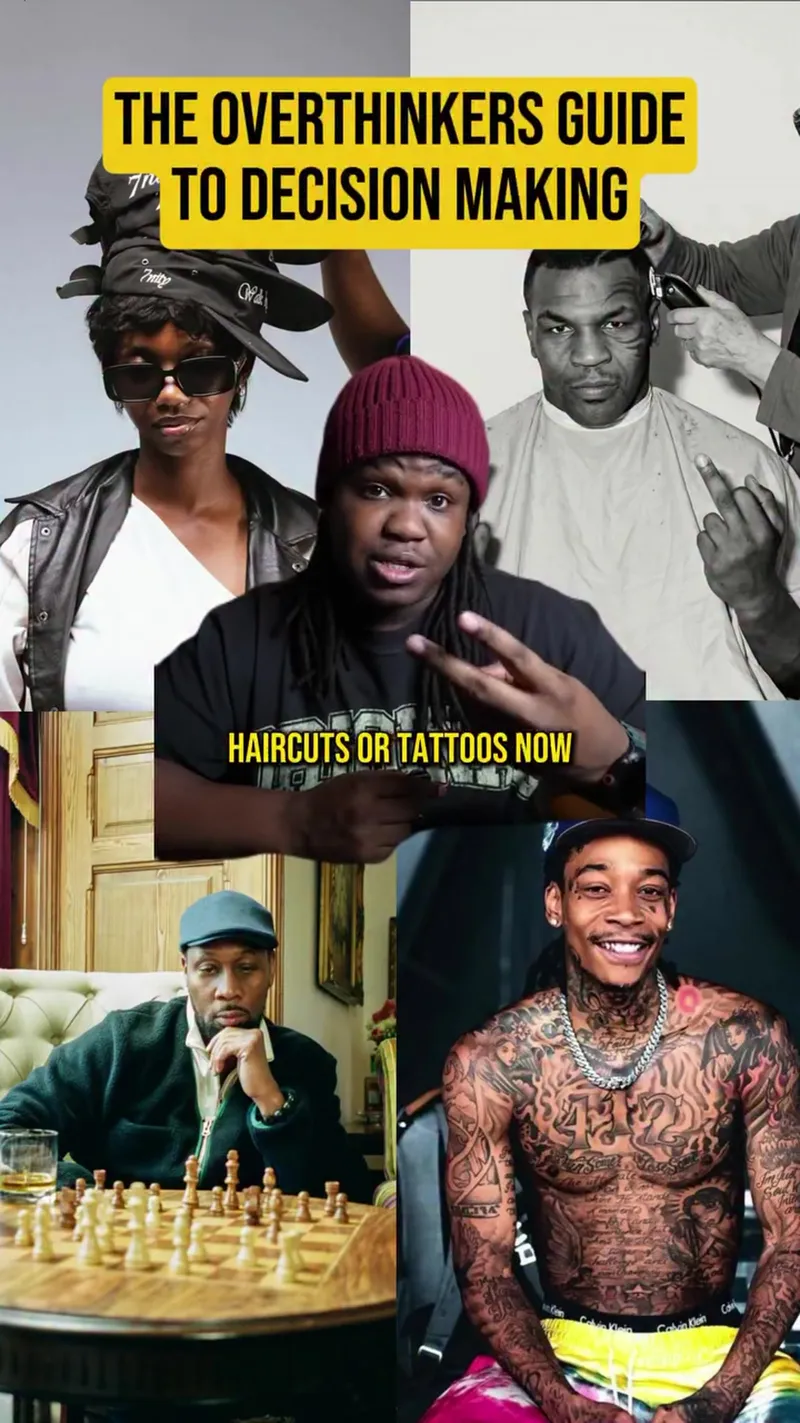
This video explains a mental model that sorts decisions into hats, haircuts, and tattoos based on how permanent they are. It helps overthinkers realize that most choices are low-risk and encourages them to take faster action in their daily lives.
Stop Overthinking: The Hats, Haircuts, and Tattoos Rule
A presenter explains decisions as hats, haircuts, or tattoos, based on how reversible they are. He urges overthinkers to act quickly on low-risk choices and save careful thought for major, lasting decisions.
- Views
- 434.2K
- Likes
- 33.6K
- Comments
- 191
- Decision-making frameworkOverthinking and actionReversible versus lasting choices
Analysis
A presenter explains decisions as hats, haircuts, or tattoos, based on how reversible they are. He urges overthinkers to act quickly on low-risk choices and save careful thought for major, lasting decisions.
- Talking headVoiceoverExplainer
- Spoken
- Original
“All decisions are either hats, haircuts, or tattoos.”
- On-screen text
- Original
“THE OVERTHINKERS GUIDE TO DECISION MAKING”
- Visual
- Text-led collage with supporting category imageryA central speaker is layered over a collage of three large images that correspond to the decision categories; a bright headline sits prominently at the top.
- The visuals reinforce the analogy and examples: hats illustrate reversible choices, while the opening collage shows hats, a haircut, and tattoos. Later samples pair the presenter with scenes about overthinking and a failed haircut.
“All decisions are either hats, haircuts, or tattoos. Now, I heard this from James Clear, but just think about that for a second. A hat is something that you can put on and take off if you don't like it. These are decisions that can be made extremely quickly. We don't really need to think about them at all. Now, a haircut is something you might have to live with for a little bit. Yes, a bad haircut can be pretty embarrassing, but realistically, you will bounce back within about a month. It's definitely something you need to think about, but it's not going to ruin your life if you get it wrong. Now, tattoos, of course, are pretty permanent. You need to think that over fully and be ready to live with whatever decision you're making, because it's staying. Now, here's the thing. I think most overthinkers confuse hats for haircuts and haircuts for tattoos. We think for hours about posting a new piece of content or talking to someone at a coffee shop, and those are just hats. Just do it. Because if it goes wrong, you can always take it off and there's really no risk at all. And then things like launching a new product or taking a new job are haircut decisions, but we make them feel like they're tattoos. I say all of this to say, start taking fast action. You can try over 100 hats and have half a dozen bad haircuts because you really only only need one of them to go right. Tattoos are very rare decisions. We're talking marriage, having kids, committing a crime that puts you in prison. But if we're talking about social media, there are very few decisions that you're going to make that are going to last as long as a tattoo. Just don't commit a crime and don't ruin your life and you'll be fine.”
- 01Introduce the three levels
Sets up the decision-making scale that the rest of the explanation will unpack.
State a memorable three-part analogy for decisions with different degrees of permanence, then attribute the framework and invite the audience to consider it.
“All decisions are either hats, haircuts, or tattoos. Now, I heard this from James Clear, but just think about that for a second.”
- 02Explain the reversible tier
Establishes the low-stakes end of the scale as a contrast for the more consequential categories.
Explain that the first kind of choice is easy to undo and can be made quickly without much deliberation.
“A hat is something that you can put on and take off if you don't like it. These are decisions that can be made extremely quickly. We don't really need to think about them at all.”
- 03Qualify the temporary tier
Develops the middle tier by distinguishing it from both trivial choices and permanent ones.
Describe a choice with consequences that last for a while, acknowledge its immediate discomfort, then put that discomfort in perspective and recommend some thought without treating a mistake as life-ruining.
“Now, a haircut is something you might have to live with for a little bit. Yes, a bad haircut can be pretty embarrassing, but realistically, you will bounce back within about a month. It's definitely something you need to think about, but it's not going to ruin your life if you get it wrong.”
- 04Define the lasting tier
Completes the analogy's three levels and establishes the standard against which the later examples are judged.
Contrast temporary consequences with choices that are effectively permanent, advising careful consideration and readiness to live with the outcome.
“Now, tattoos, of course, are pretty permanent. You need to think that over fully and be ready to live with whatever decision you're making, because it's staying.”
- 05Apply the scale to overthinking
Applies the analogy to the audience's decision-making and supplies a concrete reason to act on low-stakes choices.
Identify a tendency to confuse the three levels, then illustrate how minor everyday choices are treated as though they were permanent and argue they can simply be tried.
“Now, here's the thing. I think most overthinkers confuse hats for haircuts and haircuts for tattoos. We think for hours about posting a new piece of content or talking to someone at a coffee shop, and those are just hats. Just do it. Because if it goes wrong, you can always take it off and there's really no risk at all.”
- 06Correctly classify bigger choices and close
Resolves the practical implication of the analogy: act promptly on choices that are not permanent, reserve extra care for truly consequential decisions, and finish with reassurance.
Place more substantial choices in the temporary tier rather than the permanent one, urge quick action where appropriate, contrast ordinary decisions with genuinely rare lasting ones, and end with a caution and reassurance.
“And then things like launching a new product or taking a new job are haircut decisions, but we make them feel like they're tattoos. I say all of this to say, start taking fast action. You can try over 100 hats and have half a dozen bad haircuts because you really only only need one of them to go right. Tattoos are very rare decisions. We're talking marriage, having kids, committing a crime that puts you in prison. But if we're talking about social media, there are very few decisions that you're going to make that are going to last as long as a tattoo. Just don't commit a crime and don't ruin your life and you'll be fine.”