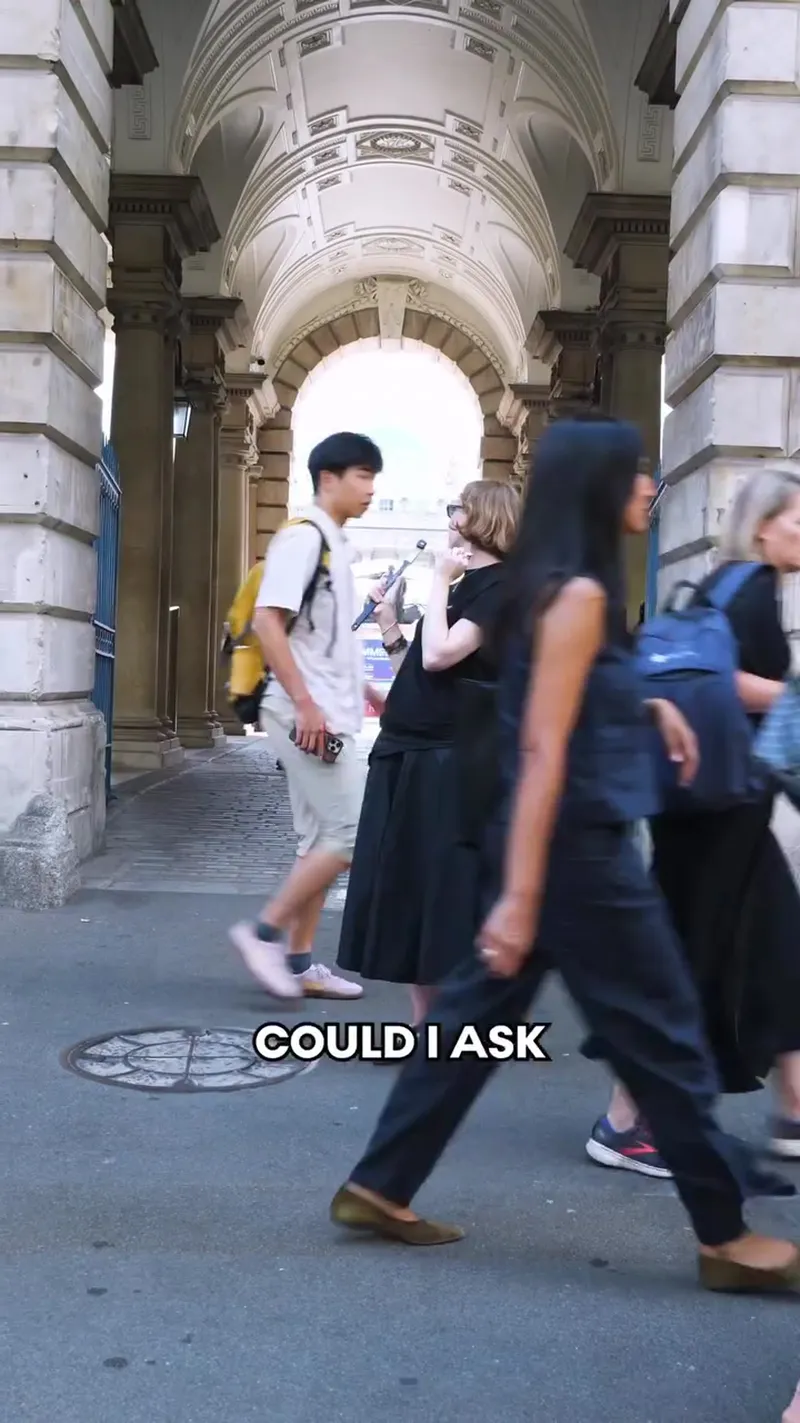
A street interviewer asks a passerby which famous work of art they would choose to own if they had the chance. The man explains his deep personal and nostalgic connection to Claude Monet's 'Impression, Sunrise' and describes where he would display it.
If You Could Own Any Famous Work of Art...
A street interviewer asks a passerby which artwork he would choose to own and why. He names Monet’s Sunrise, describing his love of Impressionism and a personal memory tied to the painting, then says he would display it in his living room.
- Likes
- 51.2K
- Comments
- 306
- Favorite artworkClaude Monet paintingImpressionismArt ownership
Analysis
A street interviewer asks a passerby which artwork he would choose to own and why. He names Monet’s Sunrise, describing his love of Impressionism and a personal memory tied to the painting, then says he would display it in his living room.
- Street interviewInterview
- Spoken
- Original
“Excuse me. Hi. Could I ask you a question about art?”
- Visual
- Street-interview setupA full-body interviewer holding a microphone stands near the center of a public stone walkway framed by a tall ornate arch; passersby cross the foreground in later samples.
- The samples show the interviewer speaking with a passerby in a public walkway, matching the transcript’s street-interview exchange. Subtitles repeat parts of the conversation.
“Excuse me. Hi. Could I ask you a question about art? About what? About art? Yeah. The question is if you could own any work of art in the world, what would it be and why? I'd say I would like to own Cloud Monet's Sunrise. Why? Why? Because me myself is always a big fan of Impressionism and that was a masterpiece that started the era, I would say. And I also had it as my. I had a huge sticker of it and I stick it on my dictionary that I used in high school. So I had some emotion with that painting. Yeah. What would you do with it if you owned it? If I owned it, I think I would have it in my living room. Yeah. In like the most obvious place. Yeah. Yeah, that's what I would do. Brilliant answer. Thank you so much. Have a nice day. Thank you. Thanks.”
- 01Open the exchange
Establishes the casual interview format and secures agreement before introducing the main hypothetical.
A person politely interrupts, greets the other, and asks permission to pose a topic-specific question; the other asks for clarification before agreeing.
“Excuse me. Hi. Could I ask you a question about art? About what? About art? Yeah.”
- 02Pose the hypothetical
Sets up the central choice and invites both a preference and its explanation.
The interviewer asks what item the person would choose if they could own any one in the world, and asks why.
“The question is if you could own any work of art in the world, what would it be and why?”
- 03Give the choice and personal reason
Answers both parts of the question: the choice is supported by an artistic rationale and a concrete autobiographical connection.
The respondent names a desired item, explains their interest in its style or significance, then adds a childhood memory that gives it personal meaning.
“I'd say I would like to own Cloud Monet's Sunrise. Why? Why? Because me myself is always a big fan of Impressionism and that was a masterpiece that started the era, I would say. And I also had it as my. I had a huge sticker of it and I stick it on my dictionary that I used in high school. So I had some emotion with that painting. Yeah.”
- 04Ask how they would use it
Extends the initial preference into a practical imagined scenario, producing a direct answer to the follow-up.
The interviewer follows up by asking what the respondent would do with the item if they owned it; the respondent says where they would put it.
“What would you do with it if you owned it? If I owned it, I think I would have it in my living room.”
- 05Confirm and close
Affirms the response with a light callback to its straightforward placement, then resolves the encounter with a courteous sign-off.
The interviewer playfully echoes the obviousness of the proposed location. The respondent agrees and restates the choice; the interviewer praises the answer, thanks them, and exchanges farewells.
“Yeah. In like the most obvious place. Yeah. Yeah, that's what I would do. Brilliant answer. Thank you so much. Have a nice day. Thank you. Thanks.”