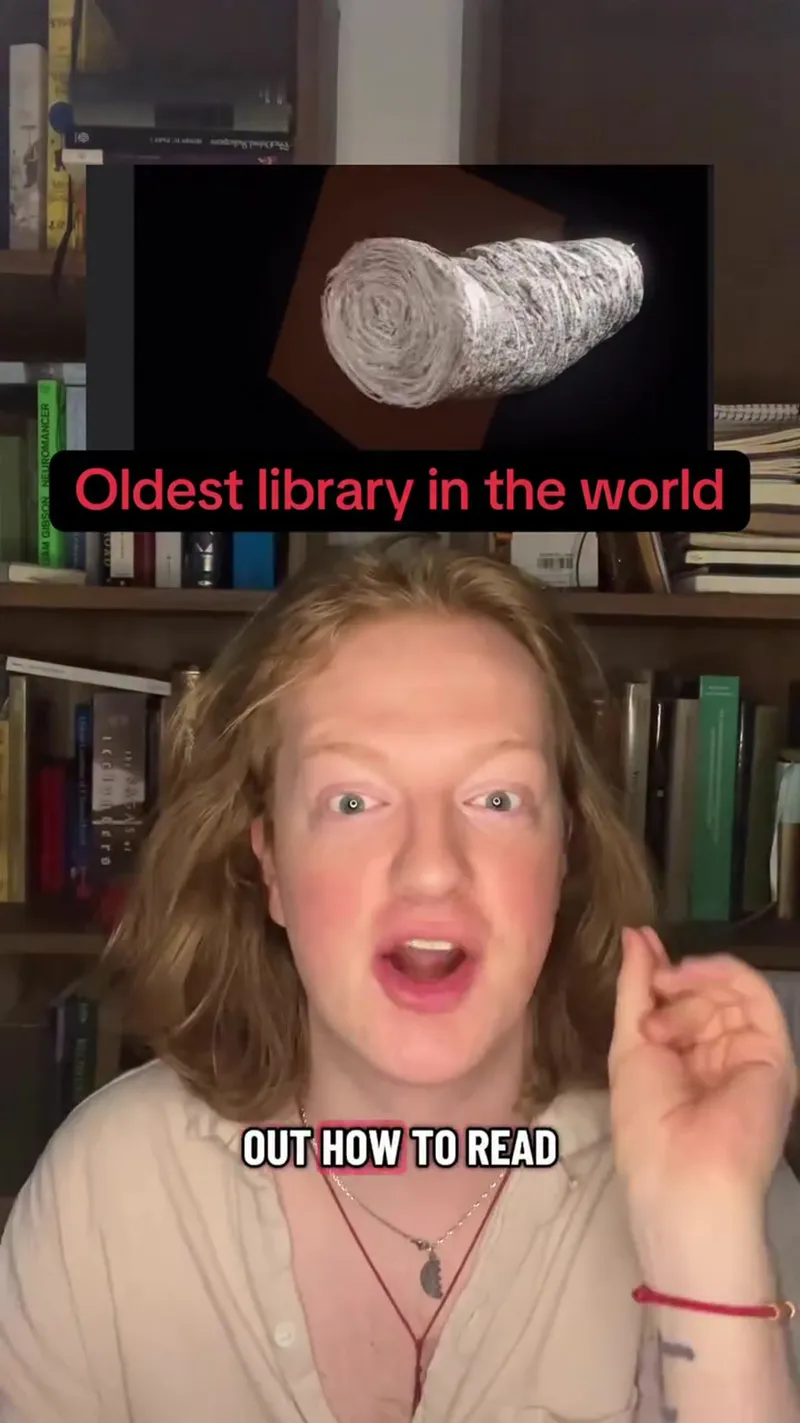
This video explains how scientists are using neural networks and 3D scanning to digitally read 2,000-year-old carbonized scrolls from the library at Herculaneum. It details how this non-invasive technology is recovering lost philosophical works that were previously considered unreadable charcoal remains.
How AI is Reading the World's Oldest Library
A presenter explains how scientists use 3D scans and neural networks to read carbonized scrolls from Herculaneum without unrolling them. The video shares a passage attributed to Philodemus and describes the chance to recover lost ancient writing.
- Views
- 5.2M
- Likes
- 423.7K
- Comments
- 2.7K
- Herculaneum scrollsDigital scroll readingAncient Greek textsPhilodemus writings
Analysis
A presenter explains how scientists use 3D scans and neural networks to read carbonized scrolls from Herculaneum without unrolling them. The video shares a passage attributed to Philodemus and describes the chance to recover lost ancient writing.
- Talking headExplainer
- Spoken
- Original
“Breaking news. Scientists have just figured out how to read from the oldest library in the world.”
- On-screen text
- Original
“Oldest library in the world”
- Visual
- Text-led composition with a supporting artifact imageA centered presenter appears in front of bookshelves, with a large inset image of a rolled scroll above and a prominent headline beneath it.
- The presenter speaks to camera while inset images show a scroll, Greek text, and a bust. These visuals illustrate the scroll-reading process and the historical figures discussed.
“Breaking news. Scientists have just figured out how to read from the oldest library in the world. Let's fucking go. The library at herculaneum is over 2000 years old and was perfectly preserved by the hot ash of Mount Vesuvius, carbonizing all of the scrolls and leaving them rock hard. But neural networks have allowed us to digitally unwrap the scrolls and find out what's inside. The section I just read from was written by the Greek author Philodemus, a 2nd century Epicurean philosopher who wrote on many subjects like music, poetry, and here talks about the gods. But all of their works were completely lost prior to this discovery at Herculaneum. See, before this, Renaissance scholars tried to physically unroll these scrolls, which were structurally just charcoal at that point, resulting in permanent damage without any readings whatsoever. But the method here is completely non invasive. We take a 3D scan of the scroll and then digitally unwrap it, detecting the slight traces of carbon ink that were left behind. Gosh, just think about all of the poetry that will be recovered from this amazing discovery.”
- 01Announce the breakthrough
Establishes the central discovery and its significance immediately, giving the explanation that follows a clear subject.
Presents a recent achievement in accessing an exceptionally old collection, then adds an emphatic celebratory reaction.
“Breaking news. Scientists have just figured out how to read from the oldest library in the world. Let's fucking go.”
- 02Explain the preservation problem and new method
Shows both why access was difficult and what changed, answering how the opening breakthrough works.
Explains how the ancient scrolls became brittle, then says neural networks made digital unwrapping and reading possible.
“The library at herculaneum is over 2000 years old and was perfectly preserved by the hot ash of Mount Vesuvius, carbonizing all of the scrolls and leaving them rock hard. But neural networks have allowed us to digitally unwrap the scrolls and find out what's inside.”
- 03Give a recovered example and its significance
Makes the breakthrough tangible through a particular recovered text and establishes why finding it matters historically.
Identifies an author and the subject of the passage, then explains that the author's works had been lost before this discovery.
“The section I just read from was written by the Greek author Philodemus, a 2nd century Epicurean philosopher who wrote on many subjects like music, poetry, and here talks about the gods. But all of their works were completely lost prior to this discovery at Herculaneum.”
- 04Contrast past damage with the current technique
Clarifies why previous access attempts were inadequate and explains the practical advantage of the new method.
Describes earlier attempts to physically unroll the scrolls and their damaging failure, then outlines scanning, digital unwrapping, and detecting traces of ink.
“See, before this, Renaissance scholars tried to physically unroll these scrolls, which were structurally just charcoal at that point, resulting in permanent damage without any readings whatsoever. But the method here is completely non invasive. We take a 3D scan of the scroll and then digitally unwrap it, detecting the slight traces of carbon ink that were left behind.”
- 05Close with the larger promise
Turns the demonstrated success into a forward-looking payoff: more material may become available.
Reflects on the additional works that may be recovered and ends by calling the discovery amazing.
“Gosh, just think about all of the poetry that will be recovered from this amazing discovery.”