The Best Computer Product Design EVER!
EEVblog@EEVblogThe Best Computer Product Design EVER!
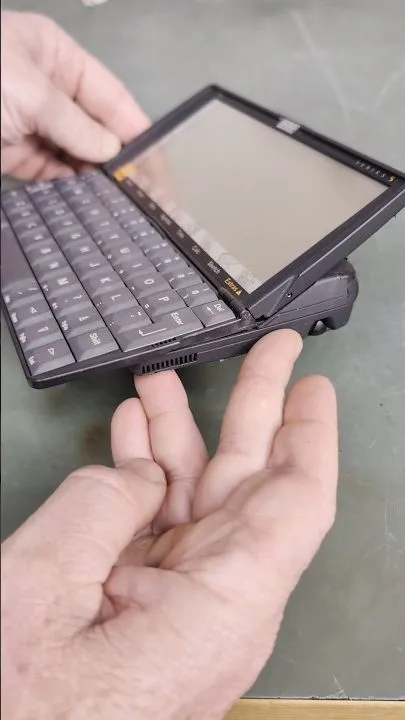
The speaker showcases the Psion Series 5, a 1997 subnotebook, praising its folding keyboard and screen design. He also describes its hardware, software, ports, battery life, and built-in features.
- Views
- 1M
- Likes
- 48.7K
- Comments
- 2.1K
- Psion Series 5 design1990s subnotebook featuresCompact computer hardware
Analysis
The speaker showcases the Psion Series 5, a 1997 subnotebook, praising its folding keyboard and screen design. He also describes its hardware, software, ports, battery life, and built-in features.
- Product showcaseDemoTalking head
- Spoken
- Original
“Hi, I just love amazing product design and this is one of the most beautifully engineered computers you'll ever see.”
“Hi, I just love amazing product design and this is one of the most beautifully engineered computers you'll ever see. It's the Psion Series 5. It dates from 1997, so it's almost 30 years old, but look at this product design. Check this out. Watch this. OH, LOOK AT THAT. BEAUTIFUL. This folding keyboard and screen mechanism. It's absolutely incredible. Amazing. That is brilliant product design. This comes from a industrial designer called Martin Riddiford and he designed the industrial look and feel for this Psion Series 5 and it has a 5.6 inch screen, 640 by 240 resolution, 16 gray colors. It is all entirely touch screen and it runs from just two AA batteries like this for like 10 to 20 hours of use. It's an infrared port. It's got an RS-232 and other serial interface here. So, this is classified as a subnotebook and it's also known as a PDA, personal digital assistant, but technically it is a subnotebook and it runs a Cirrus Logic CL-PS 7110 ARM 710A chipset and that one chipset basically runs this entire thing from the sniff of an oily rag and that chipset contains everything. It's got the ARM 710A processor in it, but it also has the LCD driver. It's got all the DMA controller. It's got the power management. It's got everything on that one system on chip from Cirrus Logic and the ARM 710 processor runs at 18 MHz and it comes with word processor, spreadsheet, database, and time and calc, and sketch, and you can program it. It runs the EPOC operating system, which is now known as Symbian OS. And you can import and export your files to Microsoft Word and Excel as well. And it's all entirely touchscreen. It's just absolutely fantastic. It's beautiful. A subnotebook. And it comes with a stylus built in if you want to use that for drawing or touching on the screen. It's got built-in voice recorder. So you slide that on and you can actually use it as a note taker. Record and playback without even opening the thing to turn it on. It's got a coin cell backup battery there. And it saves things up. It's a bit broken off. It saves things to compact flash card. Fantastic. Remember those? Before SD cards. They didn't exist back then. Just look at this foldout design. It's incredible. They don't make them like this anymore. Thing of beauty. Joy forever. Catch you next time.”
- 01Declare the standout and reveal the subject
Establishes the central opinion and frames the following tour as evidence for why this particular subject is remarkable.
Express strong appreciation, identify the subject as an exceptional example, name it, and give its age or context before inviting attention to its design.
“Hi, I just love amazing product design and this is one of the most beautifully engineered computers you'll ever see. It's the Psion Series 5. It dates from 1997, so it's almost 30 years old, but look at this product design. Check this out. Watch this.”
- 02Showcase the signature design and credit its creator
Turns the initial praise into a concrete design example, then provides attribution and transitions into a more detailed account.
React emphatically to a standout mechanism, name the feature, reinforce the praise, and credit the designer for the subject's overall look and feel.
“OH, LOOK AT THAT. BEAUTIFUL. This folding keyboard and screen mechanism. It's absolutely incredible. Amazing. That is brilliant product design. This comes from a industrial designer called Martin Riddiford and he designed the industrial look and feel for this Psion Series 5 and it has a”
- 03Build the case with specifications and capabilities
Supplies factual support for the opening judgment by showing how the design is equipped and what it can do.
List core specifications and interfaces, clarify the subject's classification, then explain its central system, processing, included tools, software, and compatibility.
“5.6 inch screen, 640 by 240 resolution, 16 gray colors. It is all entirely touch screen and it runs from just two AA batteries like this for like 10 to 20 hours of use. It's an infrared port. It's got an RS-232 and other serial interface here. So, this is classified as a subnotebook and it's also known as a PDA, personal digital assistant, but technically it is a subnotebook and it runs a Cirrus Logic CL-PS 7110 ARM 710A chipset and that one chipset basically runs this entire thing from the sniff of an oily rag and that chipset contains everything. It's got the ARM 710A processor in it, but it also has the LCD driver. It's got all the DMA controller. It's got the power management. It's got everything on that one system on chip from Cirrus Logic and the ARM 710 processor runs at 18 MHz and it comes with word processor, spreadsheet, database, and time and calc, and sketch, and you can program it. It runs the EPOC operating system, which is now known as Symbian OS. And you can import and export your files to Microsoft Word and Excel as well. And it's all entirely touchscreen. It's just absolutely fantastic. It's beautiful.”
- 04Tour practical extras and close on the signature design
Extends the appraisal from core specifications to everyday functions, then echoes the opening design praise for a concise final payoff.
Describe optional accessories and practical uses, note backup and storage details, then return to the foldout design and finish with a nostalgic, emphatic verdict and sign-off.
“A subnotebook. And it comes with a stylus built in if you want to use that for drawing or touching on the screen. It's got built-in voice recorder. So you slide that on and you can actually use it as a note taker. Record and playback without even opening the thing to turn it on. It's got a coin cell backup battery there. And it saves things up. It's a bit broken off. It saves things to compact flash card. Fantastic. Remember those? Before SD cards. They didn't exist back then. Just look at this foldout design. It's incredible. They don't make them like this anymore. Thing of beauty. Joy forever. Catch you next time.”