And Rory, when you call me, you can call me Ed.
And Rory, when you call me, you can call me Ed.
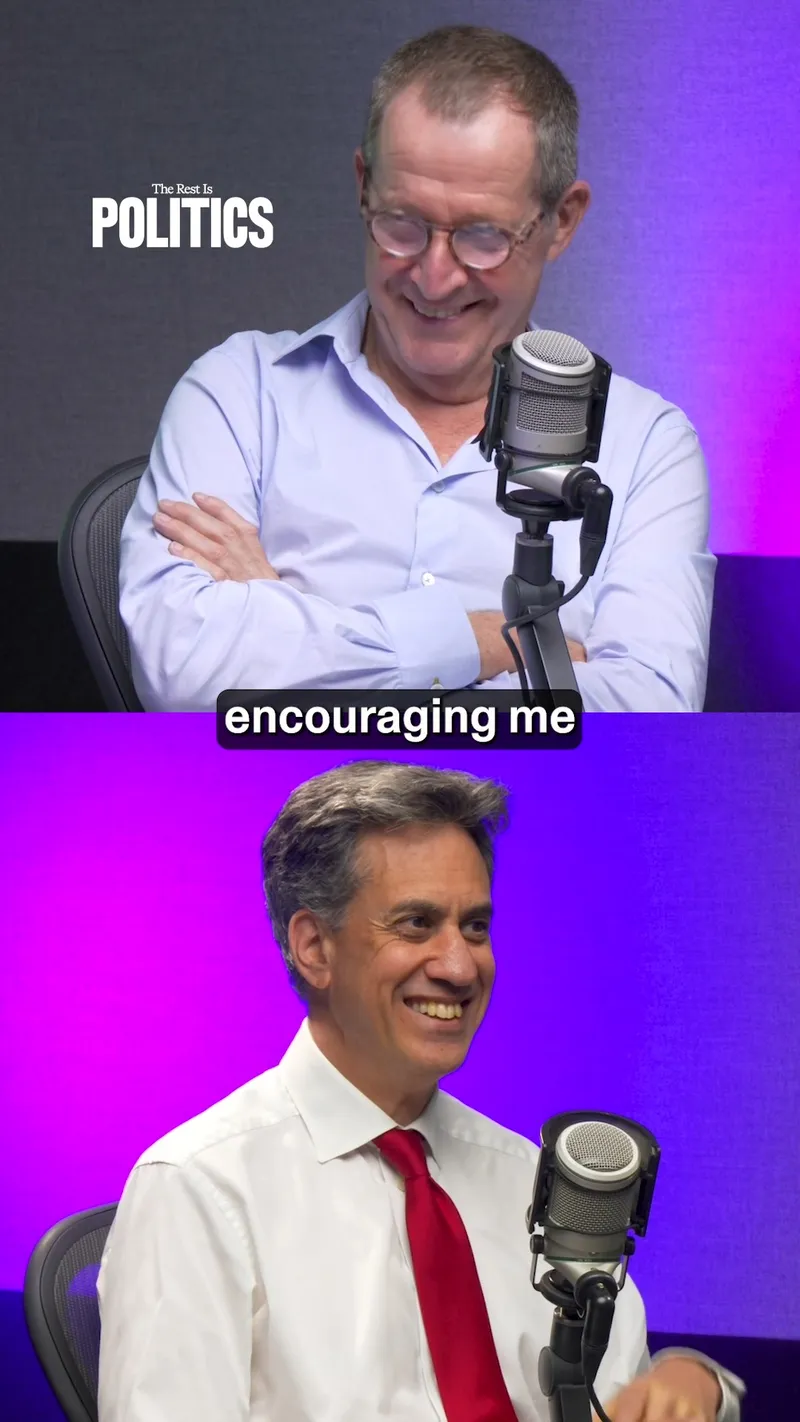
In a studio conversation, a guest asks the Foreign Secretary whether he can call him Ed. The exchange turns to the guest’s discomfort and the relationship between them.

- Views
- 1.4M
- Likes
- 25.9K
- Comments
- 301
- Political interview etiquetteUsing first names
Analysis
In a studio conversation, a guest asks the Foreign Secretary whether he can call him Ed. The exchange turns to the guest’s discomfort and the relationship between them.
- InterviewTalking head
- Spoken
- Original
“So far. This is a question. Coming.”
- On-screen text
- Original
“So, Foreign Secretary,”
- Visual
- Interview framingAlternating close-ups show two formally dressed people at microphones against a purple-and-gray studio background. The camera framing establishes a recorded interview.
- The sampled close-ups show the speakers as the captions follow their exchange; the guest smiles in one sample, matching the lightly awkward tone.
“So far. This is a question. Coming. Coming up. Call me Ed, I think. Thank you. I'm very uncomfortable. He doesn't like doing that. All right. Okay. He respects the position, not the person. Maybe it's that. Ed, even if he apologized to you on air last week. I love the person, but I feel uncomfortable calling you Ed. He's known you for so long. Okay. All right. I'll call you Ed. Foreign Secretary Stroke Ed, which is very kindly encouraging me to ask you.”
- 01Set up the question and request
Introduces the small but socially awkward request that the following reactions and explanation address.
The exchange signals a question is coming, then one person asks to be called by a particular name and tentatively thanks the other.
“So far. This is a question. Coming. Coming up. Call me Ed, I think. Thank you.”
- 02Discomfort and rationale
Develops why the request is uncomfortable, while the terse interjections keep the dialogue moving toward a more personal explanation.
One person voices discomfort; the other is described as disliking the act. The exchange then offers a position-versus-person distinction and a possible explanation.
“I'm very uncomfortable. He doesn't like doing that. All right. Okay. He respects the position, not the person. Maybe it's that.”
- 03Personal complication and reluctant agreement
Explains the tension between personal regard and discomfort, resolves it with agreement, and ends on a light observational tag.
The response acknowledges a prior apology and affection for the person, restates the discomfort, then notes their long relationship before agreeing to use the requested name. A closing aside characterizes the encouragement to ask.
“Ed, even if he apologized to you on air last week. I love the person, but I feel uncomfortable calling you Ed. He's known you for so long. Okay. All right. I'll call you Ed. Foreign Secretary Stroke Ed, which is very kindly encouraging me to ask you.”