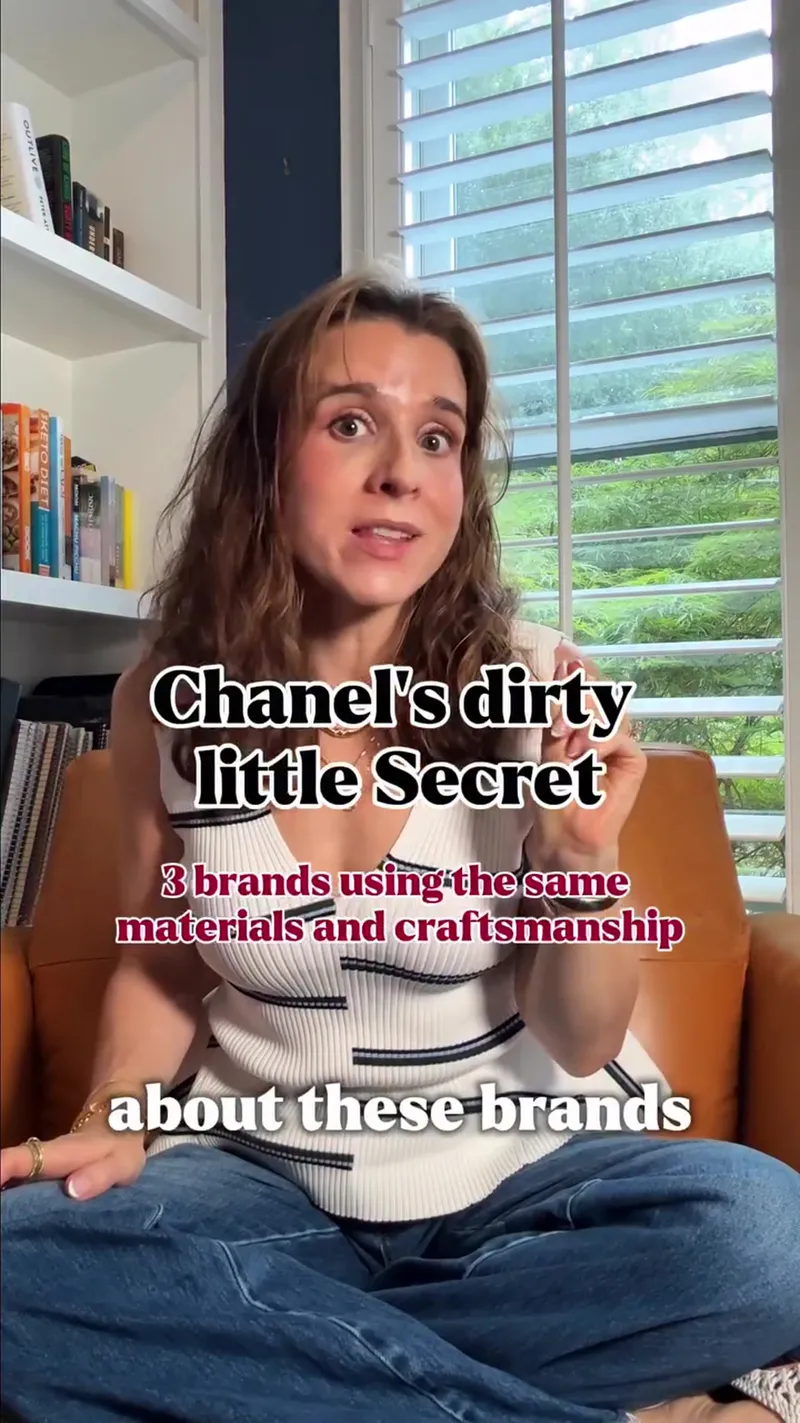
The video reveals three fashion brands that share the same high-end factories and material suppliers as major luxury houses like Chanel and Ferragamo. It highlights how these brands offer heritage-level craftsmanship by tapping into the same specialized supply chains for clothing, footwear, and leather goods.
Luxury Fashion Secrets: Brands Sharing Chanel's Supply Chain
A presenter highlights three fashion brands said to share suppliers or craftsmanship with major luxury houses: Me and M, NIA's, and Savette. She describes their materials, factories, and makers, and argues that luxury houses do not own the craftsmanship themselves.
- Likes
- 60.4K
- Comments
- 16.8K
- Luxury fashion supply chainsHeritage tweed jacketsArtisan-made shoesItalian leather handbagsLuxury craftsmanship
Analysis
A presenter highlights three fashion brands said to share suppliers or craftsmanship with major luxury houses: Me and M, NIA's, and Savette. She describes their materials, factories, and makers, and argues that luxury houses do not own the craftsmanship themselves.
- Talking headListicleExplainer
- Spoken
- Original
“Chanel doesn't want you to know about these brands because they are sourcing from the exact same supply chain as the big luxury houses.”
- On-screen text
- Original
“Chanel's dirty little Secret 3 brands using the same materials and craftsmanship”
- Visual
- Text-led compositionA centered presenter faces the camera in a medium shot, with a large outlined headline across the torso and a smaller contrasting line below it. The room background is visible but does not supply a separate demonstration.
- The presenter speaks directly to camera with captions matching her speech; a handbag image appears as she discusses leather goods.
“Chanel doesn't want you to know about these brands because they are sourcing from the exact same supply chain as the big luxury houses. I'm your favorite intentional bitch on Living Rich. And this is my series on brands quietly built inside luxury's own supply chain across clothing, shoes and handbags. For clothing, we have Me and M, the British brand founded by an ad executive who cut out the middleman and put the markup back into the fabric. Their heritage jackets are woven by linton tweeds, a 100-year-old English mill that has supplied Chanel since Coco's era. And it was not off the Shel opened its archive to the design team and wove a bespoke tweed that exists nowhere else. The heroes are the heritage jackets in Linton Tweed and the famously flattering tailoring. And for shoes, we have NIA's, founded by a former Harper's Bazaar accessories editor. Their shoes are handmade in an Italian factory that for decades produced exclusively for Ferragamo. So the same hands that stitch the shoes from one of the most iconic heritage houses now stitch these sculptural works of art instead. And that's what no one tells you, because the luxury houses don't actually own the craftsmanship, the fact factories do. They're best known for their simple but impactful strappy sandals. And for handbags, we have Savette. The founder, Amy Zurich designed bags for the row and created Kate's signature luggage before starting her own house. Her bags are handmade outside of Florence in Santa Croce, same tanning district that supplies leather to all of the heritage houses in a factory run by a family of third generation artisans. And she won't name which heritage houses her artisans have produced for. And honestly, that's probably the tell. In this industry, the factories that matter sign NDAs. The heroes are the tondo and the symmetry pochette worn by the likes of Zoe Kravitz and Sofia Richie.”
- 01Hidden-overlap claim and series setup
Establishes the central comparison and promises a multi-category set of examples to support it.
Claims a prominent incumbent would prefer the audience not notice alternatives drawing on the same supply chain, then introduces the creator’s series and its product-category scope.
“Chanel doesn't want you to know about these brands because they are sourcing from the exact same supply chain as the big luxury houses. I'm your favorite intentional bitch on Living Rich. And this is my series on brands quietly built inside luxury's own supply chain across clothing, shoes and handbags.”
- 02First category and production evidence
Begins substantiating the shared-supply-chain claim with specific production evidence and continues the promised category-by-category tour.
Names an alternative in the first category, explains its founder’s business approach, and supports the quality comparison with a supplier’s history and a bespoke production detail.
“For clothing, we have Me and M, the British brand founded by an ad executive who cut out the middleman and put the markup back into the fabric. Their heritage jackets are woven by linton tweeds, a 100-year-old English mill that has supplied Chanel since Coco's era. And it was not off the Shel opened its archive to the design team and wove a bespoke tweed that exists nowhere else.”
- 03First category payoff and second category
Pays off the first example with recognizable product attributes, then advances the promised tour and sets up a direct maker-to-maker comparison.
Identifies the first category’s standout products, then introduces a shoe brand through its founder’s credentials and its factory’s former work for an established house.
“The heroes are the heritage jackets in Linton Tweed and the famously flattering tailoring. And for shoes, we have NIA's, founded by a former Harper's Bazaar accessories editor. Their shoes are handmade in an Italian factory that for decades produced exclusively for Ferragamo.”
- 04Second category comparison and industry interpretation
Makes the shared-craftsmanship claim explicit and gives the shoe example a concrete product payoff before moving to the final category.
Connects the factory’s former and current work, argues that craftsmanship belongs to factories rather than luxury houses, and adds a concise product description.
“So the same hands that stitch the shoes from one of the most iconic heritage houses now stitch these sculptural works of art instead. And that's what no one tells you, because the luxury houses don't actually own the craftsmanship, the fact factories do. They're best known for their simple but impactful strappy sandals.”
- 05Final category, secrecy clue, and product close
Completes the three-category tour, uses the nondisclosure detail to reinforce the hidden-supplier theme, and closes with concrete product examples.
Introduces a handbag brand through its founder’s prior design work and local production network, notes that the founder will not name past clients, interprets that silence as a clue about NDAs, and ends with signature products and public figures associated with them.
“And for handbags, we have Savette. The founder, Amy Zurich designed bags for the row and created Kate's signature luggage before starting her own house. Her bags are handmade outside of Florence in Santa Croce, same tanning district that supplies leather to all of the heritage houses in a factory run by a family of third generation artisans. And she won't name which heritage houses her artisans have produced for. And honestly, that's probably the tell. In this industry, the factories that matter sign NDAs. The heroes are the tondo and the symmetry pochette worn by the likes of Zoe Kravitz and Sofia Richie.”