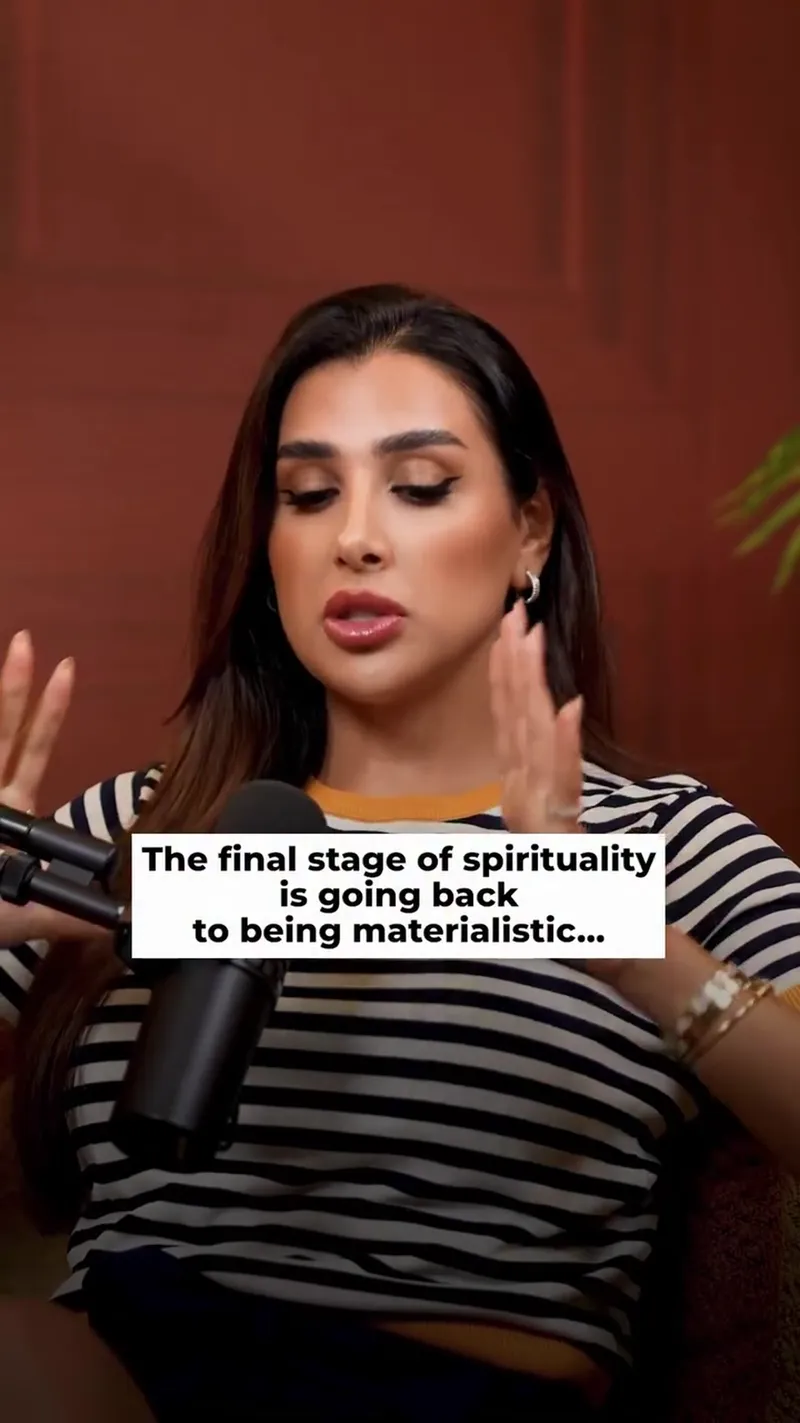
This video challenges the idea that spirituality requires rejecting the material world, arguing that the final stage of growth is being able to enjoy wealth without being defined by it. The creator explains that performative poverty is just another ego-driven identity and that true freedom is wanting things freely without being controlled by them.
Why the Highest Level of Spirituality is Actually Materialistic
A woman argues that spiritual freedom does not require rejecting wealth or material pleasures. She says people can enjoy success without making money or possessions their identity or letting desire control them.
- Likes
- 50.9K
- Comments
- 1.8K
- Spirituality and materialismWealth without attachmentSpiritual identity
Analysis
A woman argues that spiritual freedom does not require rejecting wealth or material pleasures. She says people can enjoy success without making money or possessions their identity or letting desire control them.
- Talking headHot takeMonologue
- Spoken
- Original
“The final stage of spirituality is going back to being materialistic.”
- On-screen text
- Original
“The final stage of spirituality is going back to being materialistic...”
- Visual
- Text-led compositionA centered, waist-up speaker faces the camera in a vertically framed shot. A large microphone sits in the lower-left foreground, and a bold white headline block crosses the speaker's chest.
- The speaker appears on camera as she delivers the argument; sampled captions highlight parts of her speech, including the opening claim and the idea of being controlled by material things.
“The final stage of spirituality is going back to being materialistic. And I know that sounds wrong, but stay with me, because there is a phase that almost everyone goes through. You start waking up, you start questioning your entire life. The money chase starts feeling empty. The ego starts feeling exhausting. So you detach, you simplify, you go inward, and for a while that feels like the destination. But then something else happens. You start realizing that rejecting the material world is just another form of ego. That's saying, oh, I don't care about money is just a sophisticated way of being afraid of it. That choosing poverty as a spiritual identity is still an identity, still a performance, just a different costume. True freedom is not needing to reject anything. The most evolved person in the room is not the one who gave up everything. It's the one that can hold everything without being owned by any of it. Who can have the money without becoming the money. Who can enjoy the life without the life becoming the prison. And that's the part nobody talks about. Because spirituality is not absence of desire. It's the freedom from being controlled by it. So when you see someone who has built real wealth, real success, real abundance, and is completely at peace, still grounded, still themselves, that's not contradiction. That's the destination. The goal was never to want less. The goal was to want freely.”
- 01Counterintuitive claim and invitation
Creates a question about how the apparently contradictory claim could make sense and promises an explanation through a recognizable experience.
States a provocative endpoint, admits it sounds wrong, and asks the audience to stay while introducing a broadly familiar process.
“The final stage of spirituality is going back to being materialistic. And I know that sounds wrong, but stay with me, because there is a phase that almost everyone goes through.”
- 02The withdrawal phase
Builds the promised familiar phase and sets up the later realization that this apparent destination is incomplete.
Describes awakening and questioning, dissatisfaction with the old pursuit, and a temporary move toward detachment and inward focus.
“You start waking up, you start questioning your entire life. The money chase starts feeling empty. The ego starts feeling exhausting. So you detach, you simplify, you go inward, and for a while that feels like the destination.”
- 03Reversal and reframing
Reverses the initial withdrawal-phase conclusion and supplies the central argument that both pursuit and rejection can become identities.
Introduces a new realization: rejecting the subject can also be ego. It illustrates this with fear disguised as indifference and rejection adopted as a performed identity, then defines freedom as not needing to reject anything.
“But then something else happens. You start realizing that rejecting the material world is just another form of ego. That's saying, oh, I don't care about money is just a sophisticated way of being afraid of it. That choosing poverty as a spiritual identity is still an identity, still a performance, just a different costume. True freedom is not needing to reject anything.”
- 04Define the destination through contrasts
Turns the argument into a clear principle and sharpens it with parallel contrasts before the concrete example.
Contrasts giving everything up with being able to hold and enjoy it without being possessed by it, then states that the overlooked distinction is freedom from control rather than absence of desire.
“The most evolved person in the room is not the one who gave up everything. It's the one that can hold everything without being owned by any of it. Who can have the money without becoming the money. Who can enjoy the life without the life becoming the prison. And that's the part nobody talks about. Because spirituality is not absence of desire. It's the freedom from being controlled by it.”
- 05Concrete example and closing principle
Makes the principle tangible, resolves the apparent contradiction, and closes by replacing suppression of desire with freedom in how one relates to it.
Describes someone who has attained visible success while remaining peaceful and grounded, names this as the destination, and concludes with a parallel restatement of the goal.
“So when you see someone who has built real wealth, real success, real abundance, and is completely at peace, still grounded, still themselves, that's not contradiction. That's the destination. The goal was never to want less. The goal was to want freely.”